قاعدة حية للخلايا الشمسية سريع
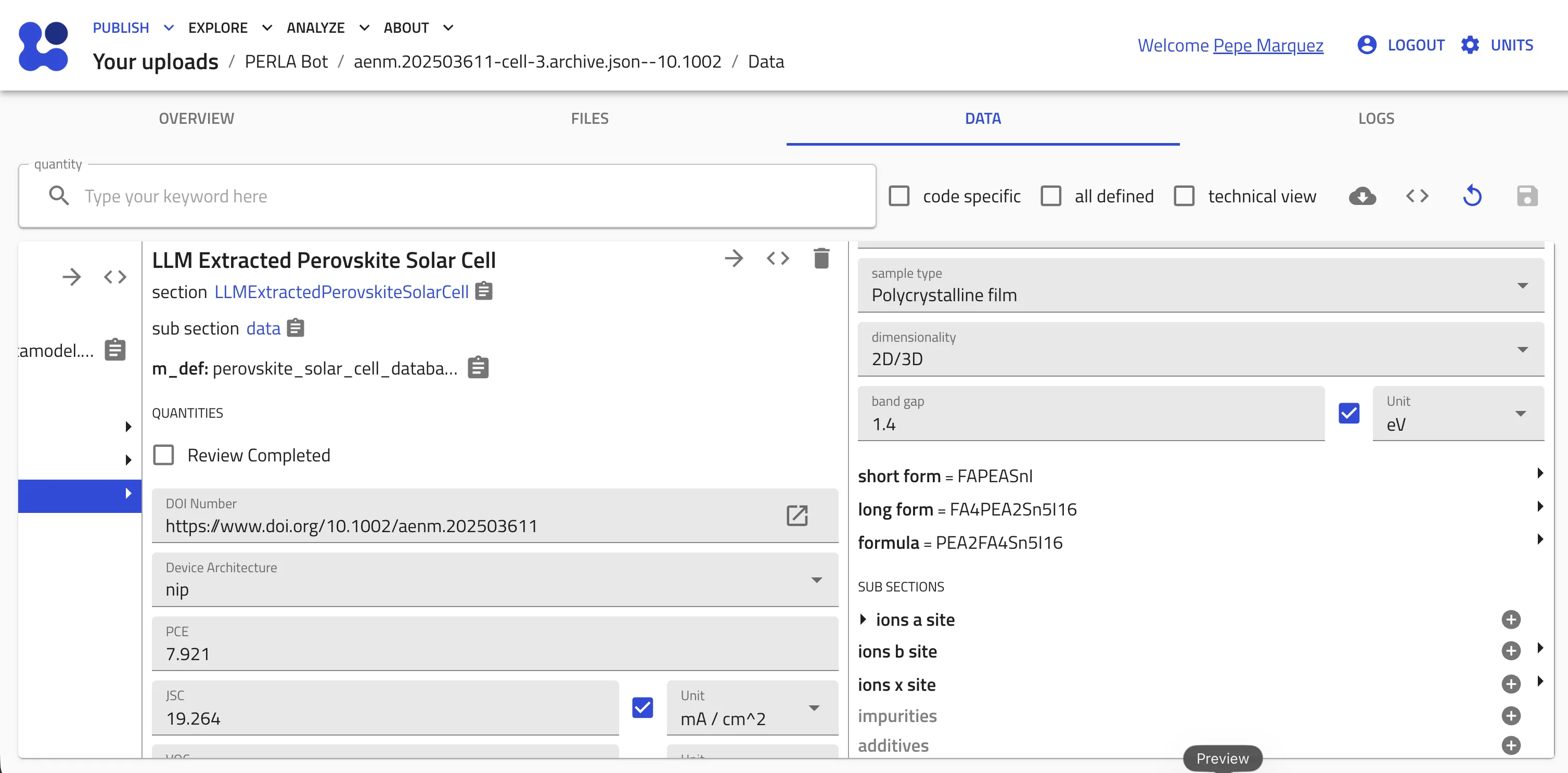
تظهر المقالات العلمية أسرع مما يستطيع البشر قراءتها وتنظيمها. في مجال خلايا البيروفسكايت الشمسية، توقفت قاعدة البيانات الرئيسية عند عام 2021، رغم أن الأبحاث مستمرة بكثافة. الآن جاءت PERLA للإنقاذ — قاعدة حية مستقلة تتابع بنفسها تدفق المنشورات.
تستخدم PERLA النماذج اللغوية الكبيرة لاستخراج البيانات المعقدة حول الأجهزة من النصوص، ثم تتحقق منها باستخدام القواعد الفيزيائية. دقة الاستخراج تتجاوز 90%، وعلى عكس البشر، لا تعاني النظام من التباين في التقييمات. إنها مثل أمين مكتبة مجتهد لا يتعب ولا يخطئ بسبب الإرهاق.
بفضل PERLA، تتحول المنشورات الثابتة إلى مورد معرفي ديناميكي. الآن يمكن للباحثين الاعتماد على بيانات حديثة والتحرك بسرعة أكبر نحو اكتشافات جديدة. تنمو القاعدة مع تقدم العلم، دون أن تتخلف عنه ولو ليوم واحد.
الملخص الأصلي
كما كتبه المؤلفون، بالإنجليزية arXiv:2601.17807
Scientific discovery is severely bottlenecked by the inability of manual curation to keep pace with exponential publication rates. This creates a widening knowledge gap. This is especially stark in photovoltaics, where the leading database for perovskite solar cells has been stagnant since 2021 despite massive ongoing research output. Here, we resolve this challenge by establishing an autonomous, self-updating living database (PERLA). Our pipeline integrates large language models with physics-aware validation to extract complex device data from the continuous literature stream, achieving human-level precision (>90%) and eliminating annotator variance. By employing this system on the previously inaccessible post-2021 literature, we uncover critical evolutionary trends hidden by data lag: the field has decisively shifted toward inverted architectures employing self-assembled monolayers and formamidinium-rich compositions, driving a clear trajectory of sustained voltage loss reduction. PERLA transforms static publications into dynamic knowledge resources that enable data-driven discovery to operate at the speed of publication.
دقة استخراج البيانات في PERLA تتجاوز 90% — وهذا يعادل عمل خبير متمرس، لكن دون أخطاء بشرية أو تعب.