شبكة تحس بالتشققات قبل ظهورها سريع
المادة العادية تنهار بصمت. في البداية تتمزق داخلها خيوط جسرية غير مرئية، وعندها فقط يظهر شق يمكن رؤيته بالعين. مهندسون من جامعة كارنيغي ميلون علّموا المادة أن «تتكلم» عن هذه الأضرار الخفية.
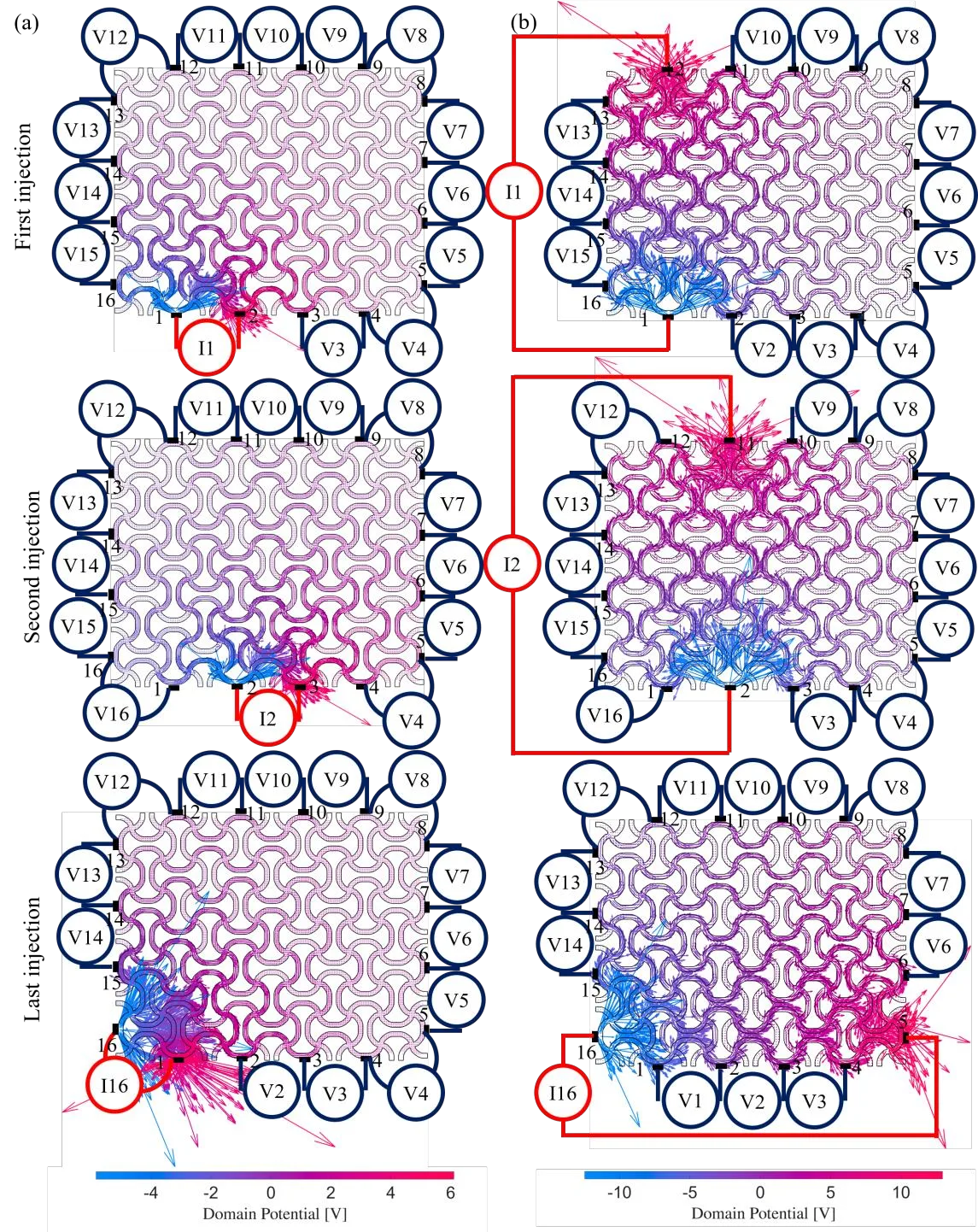
طبعوا بتقنية الطباعة ثلاثية الأبعاد شبكة تشبه أقراص العسل، لكن بنمط أكثر تعقيدًا. أضافوا إلى الراتنج أنابيب كربون نانوية — موصلات متناهية الصغر بسمك بضعة ذرات. وضعوا على حواف الشبكة ستة عشر قطبًا كهربائيًا، مثل ميكروفونات حول مسرح. يمررون عبرها تيارًا ضعيفًا ويراقبون كيفية انتشاره في البنية.
عندما تُشد المادة، تنقطع الجسور في الشبكة واحدًا تلو الآخر. كل خيط منقطع هو «ثقب» في الشبكة الكهربائية: يلتف التيار حوله، فتتغير خريطة التوصيلية. يلاحظ الحاسوب ذلك فورًا ويُظهر موضع الانقطاع بالضبط — حتى لو كان بعيدًا عن الأقطاب. تُسمى هذه الطريقة التصوير المقطعي بالممانعة الكهربائية: من تغير المقاومة يُستنتج ما يحدث في الداخل.
بتغيير نمط الشبكة، يمكن ضبط حساسية المادة: جعلها «بصرًا» لأبكر الشقوق، أو على العكس، للكسور الكبيرة. هذا يشبه ضبط وضوح الصورة في الكاميرا — لكن بدل الضوء، تلتقط الأضرار.
هذه المادة خطوة نحو «المنشآت الذكية» التي تراقب صحتها بنفسها. جناح طائرة، أو غرسة عظمية، أو هيكل بطارية — كلها ستتمكن من الإبلاغ عن مشكلة قبل وقوع الكارثة بوقت طويل. أما النسخة الرقمية — التوأم الرقمي — فستعكس حالة القطعة الحقيقية في الزمن الحقيقي.
الملخص الأصلي
كما كتبه المؤلفون، بالإنجليزية arXiv:2602.15048
Electrical impedance tomography (EIT) enables non-invasive, spatially continuous reconstruction of internal conductivity distributions, providing full field sensing beyond conventional point measurements. Here, we report the first in situ implementation of EIT within a tunable architected lattice materials framework, enabling systematic exploration across a broad lattice design space while achieving real time monitoring of damage evolution, including early stage, prefracture events, in 3D printed multifunctional lattice composites. Lattices are designed via Voronoi based branch trunk branch motifs inspired by 2D wallpaper symmetries and fabricated using CNT infused photocurable resins, with nanoscale filler dispersion confirmed by field emission scanning electron microscopy. Sixteen electrodes distributed along the lattice periphery enable EIT measurements during quasi static tensile loading. Conductivity maps reconstructed using adjacent and across current injection schemes resolve sequential ligament fracture with high temporal resolution, with localised conductivity loss quantitatively coinciding with fracture sites, including regions remote from electrodes. Architectural tunability allows systematic control of EIT imaging sensitivity to early stage damage, while pronounced resistance discontinuities at failure further corroborate spatial localisation; global end to end resistance measurements complement macroscopic stress strain responses. Collectively, these results establish in situ EIT as a scalable, full field sensing modality for architected multifunctional materials, providing an experimentally validated pathway toward autonomous, intelligent materials and data rich material states that can inform digital twin frameworks for structural, biomedical, and energy related applications.
الأنابيب الكربونية النانوية في الراتنج تجعل المادة موصلة للكهرباء، لكنها لا تمنعها من أن تبقى خفيفة. الشبكة بهذه الخيوط تزن مثل البلاستيك، وتحس بالأضرار مثل الجهاز العصبي.