كيف نسمع مقدّمًا أزمة القشرة الأرضية سريع
يلتقط علماء الزلازل كل هزة أرضية كما يستمع الطبيب إلى نبض القلب. لكن إشارة الزلازل الصغيرة ضعيفة وغير واضحة — يصعب فهم أين انزلقت الصخور بالضبط. عادةً ما ينظر العلماء إلى أول تذبذبات الموجة: هل هي انضغاط أم تمدد؟ لكن إذا بدأت الهزة بهدوء، دون نقرة حادة، تصبح الصورة مشوشة.
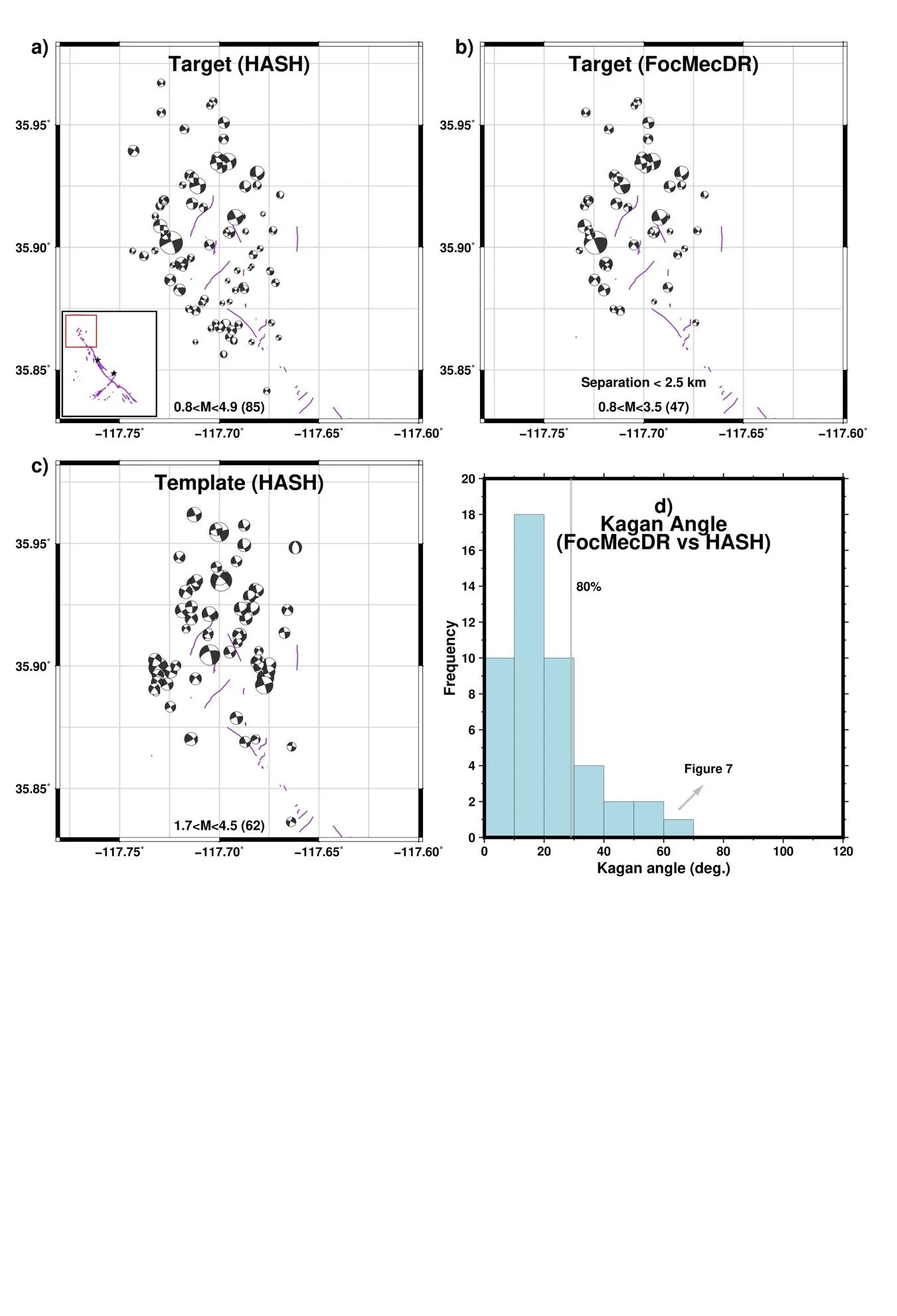
الطريقة الجديدة FocMecDR تتصرف بشكل مختلف. فبدلًا من تحليل كل هزة على حدة، تقارن زلزالين متجاورين لهما مسارات موجية شبه متطابقة. أحدهما هو «المرجع» بآلية انزلاق معروفة بالفعل. والثاني يُضبط ليطابقه، كما يدقق المترجم جملة صعبة مع جملة مترجمة سابقًا. وبهذا يمكن استخراج الاتجاه الدقيق للتمزق حتى من إشارة ضعيفة.
يفتح هذا النهج الطريق لتقييم «جاهزية» الصدع لزلزال قوي. إذا أصبح التوتر في القشرة منتظمًا، مثل وتر مشدود، فهذا جرس إنذار. ربما في يوم من الأيام سيتمكن علماء الزلازل من التحذير من الهزات الكبيرة ليس قبل ثوانٍ، بل قبل أيام.
الملخص الأصلي
كما كتبه المؤلفون، بالإنجليزية arXiv:2603.27860
Focal mechanisms of small earthquakes are critical for characterizing faults and regional stress. P-wave polarities and S/P amplitude ratios (e.g., in HASH) are widely used to determine focal mechanisms for small earthquakes, but first-motion picking can be difficult for emergent onsets, and S/P ratios are often highly inconsistent because of imperfect velocity models and unknown site responses. Here, I present FocMecDR, a relative focal-mechanism inversion method that uses relative polarities and double ratios of S/P amplitudes. Analogous to double-difference earthquake location, FocMecDR uses a reference event with a known focal mechanism to solve focal mechanisms for nearby earthquakes by minimizing the misfit between observed and theoretical S/P amplitude double ratios while enforcing cross-correlation-based relative polarities. Extensive synthetic tests demonstrate the effectiveness and accuracy of the method. Field verification using an antisimilar earthquake pair and aftershocks from the northwestern end of the 2019 Ridgecrest rupture zone further confirms its reliability. Application to the foreshocks preceding the 2019 Ridgecrest mainshock reveals a highly uniform stress field during nucleation, suggesting a possible framework for evaluating fault-zone stress and rupture readiness before large earthquakes.
كلمة «سيزموغراف» تأتي من الكلمتين اليونانيتين «seismos» بمعنى اهتزاز و«grapho» بمعنى أكتب. اخترع هذا الجهاز لأول مرة العالم الصيني تشانغ هنغ في عام 132: وعاء برونزي بداخله بندول، كان يُسقط كرة في فم ضفدع عند حدوث هزة أرضية.
في رواية إسحاق أسيموف «نهاية الأبدية»، يتحكم التقنيون بالزمن، لكن حتى هم لا يستطيعون التنبؤ بالزلازل — فديناميكيات القشرة الأرضية فوضوية للغاية.