الخلايا العصبية تكشف أسرارها في دقائق بدلاً من ساعات سريع
تشبه الخلية العصبية آلة موسيقية معقدة. لفهم كيفية استجابتها للمس، كان لا بد سابقاً من الاتصال بكل وتر على حدة — وهي عملية دقيقة وبطيئة ومتاحة فقط للخلايا المفردة. مصفوفات الأقطاب الدقيقة (شبكات من مئات الحساسات) تسمع الأوركسترا بأكملها دفعة واحدة، لكن فك رموز أي آلة تعزف بالضبط من الطنين الجماعي ظل صعباً لفترة طويلة.
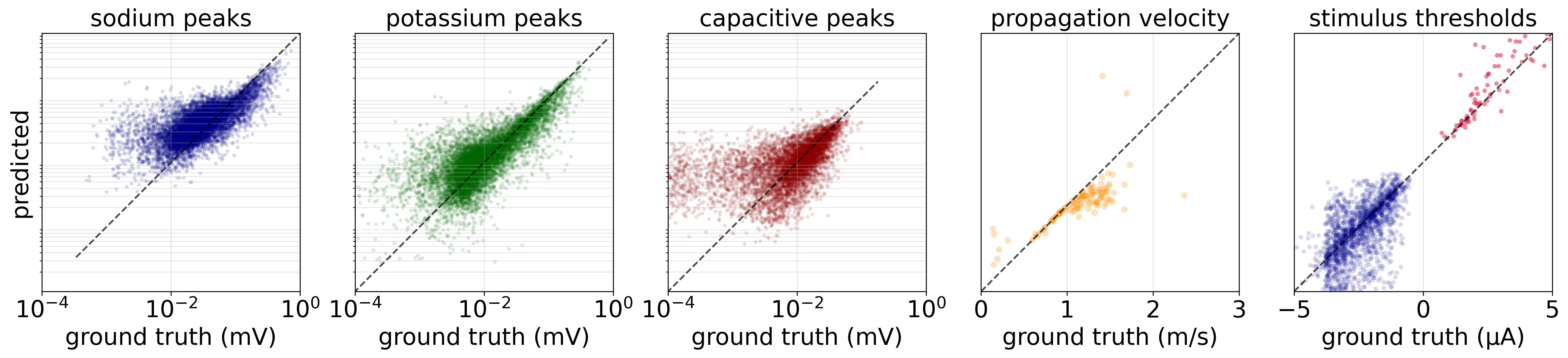
ابتكرت مجموعة من الباحثين «مترجماً» يضبط نسخة افتراضية من الخلية العصبية — نموذج هودجكين-هكسلي — من تسجيل قصير من هذه المصفوفة. للتحقق، استخدموا شبكية عين قرد المكاك ومصفوفة من 512 قطباً بمسافة 30 ميكرومتراً. النموذج، الذي تم تدريبه في بضع دقائق فقط، تنبأ بالاستجابة لمحفزات جديدة بدقة 90.6%.
هذا النهج يغني عن البحث الطويل في الإعدادات. بدلاً من اختبار عشرات خيارات التحفيز بشكل أعمى، يحصل الطبيب أو الباحث على توقع جاهز. الأمر يشبه ضبط جهاز استقبال الراديو: بدلاً من إدارة المقبض ببطء، تدخل التردد مباشرة وتسمع إشارة نقية.
في المستقبل، قد تساعد هذه الطريقة في ضبط الغرسات العصبية بدقة أكبر — الأجهزة التي تعيد البصر أو السمع. بدلاً من الاختبارات المرهقة مع المريض، سيكون من الممكن حساب نمط التحفيز الأمثل لكل قطب بسرعة.
الملخص الأصلي
كما كتبه المؤلفون، بالإنجليزية arXiv:2607.04063
Multi-compartment Hodgkin-Huxley (HH) models provide a principled framework for predicting neural dynamics and responses to electrical stimulation. However, fitting HH biophysical parameters typically requires intracellular recordings, which are invasive and low-throughput, limiting the ability to capture the geometry and cell-specific properties of many neurons in a given neural circuit. Multi-electrode arrays (MEAs) offer a scalable alternative - high-density extracellular measurements from full neural populations, but HH model complexity has so far precluded reliable biophysical inference from extracellular data alone. Here, we introduce a framework to rapidly infer HH parameters from designed features of extracellular MEA measurements by leveraging differentiable biophysical simulation and simulation-based inference, unlocking a wide range of downstream applications. In this work, we focus on a central goal of translational neuroengineering: predicting neural spiking responses to candidate neurostimulation patterns that would take hours to measure clinically. To validate our approach, we collected hundreds of hours of stimulation and recording data from isolated macaque retina with a 30 um-pitch 512-electrode array. Our framework predicted previously unseen multi-electrode stimulation responses with 90.6% accuracy using HH models fit from only a few minutes of recording, replacing hours of stimulus testing.
المصفوفة المكونة من 512 قطباً المستخدمة في التجربة تبلغ مسافة أقطابها 30 ميكرومتراً — أي ما يعادل نصف سمك شعرة الإنسان تقريباً.