فصل صور الدماغ: أين المرض وأين التشوه سريع
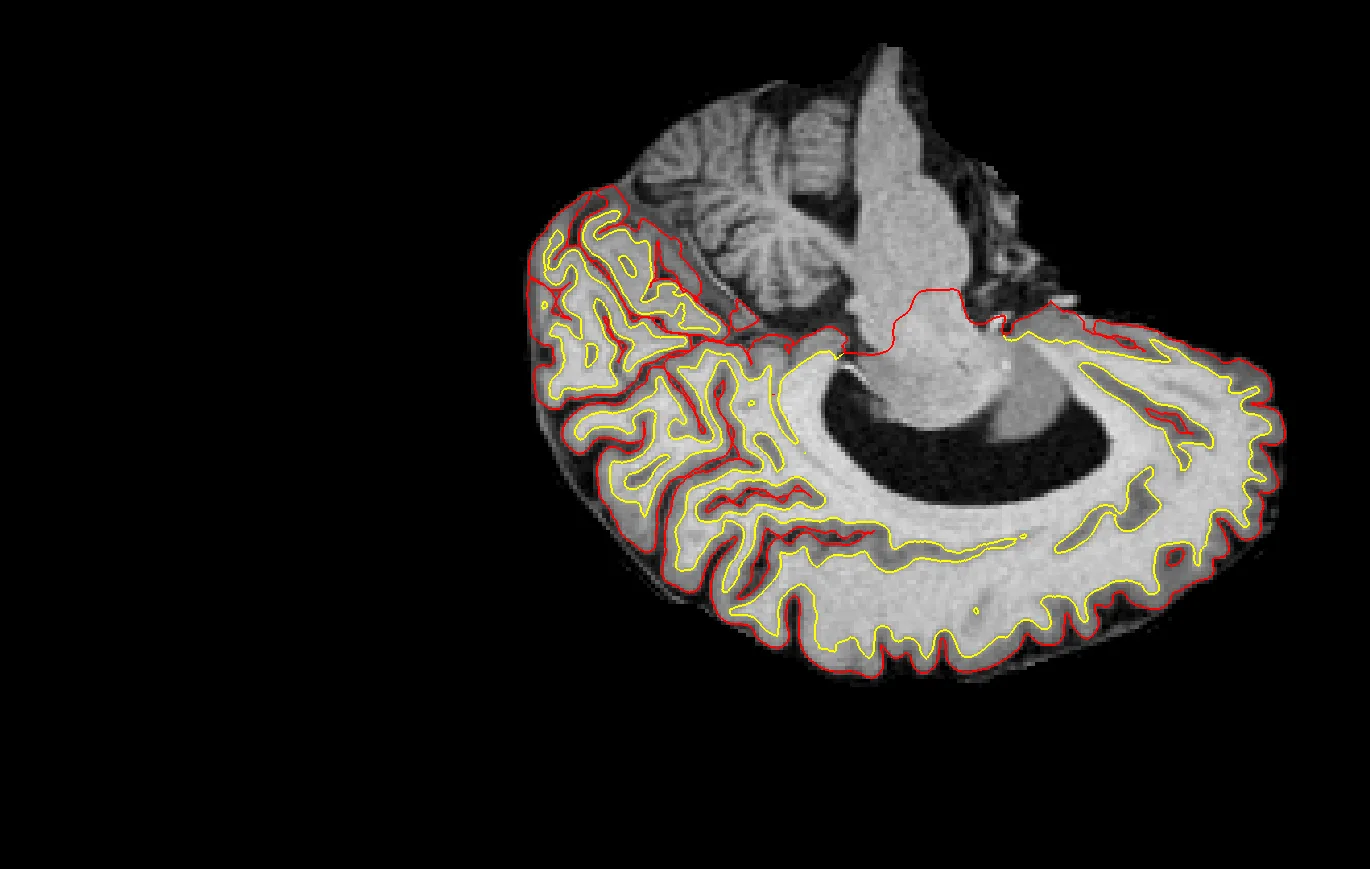
صورتان لنفس الدماغ، مأخوذتان في وقتين مختلفين، تشبهان صورتين لنفس المنزل قبل وبعد التجديد. لفهم ما تغير، تُطبق الصورتان فوق بعضهما وتُفحص الفروق. لكن جهاز التصوير ليس كاميرا مثالية: فهو يضيف تشوهات بنفسه، وكأن الصورة التُقطت عبر زجاج غير مستوٍ قليلاً. سابقًا، لم تكن البرامج تميز بين التغيرات الحقيقية وتلك الناتجة عن الجهاز.
الشبكة العصبية DisMorph تتعلم من أمثلة اصطناعية بالكامل، حيث يُعرف مسبقًا أي جزء من التشوه تقني وأي جزء تشريحي. ثم تفصل الفروق بين الصورتين إلى مسارين: أحدهما مسؤول عن تشوهات الجهاز، والآخر عن التغيرات الحقيقية في الأنسجة. هذا النهج يشبه عمل المرمم الذي يفصل الشقوق عن الطلاء القديم ليفهم ما كانت عليه اللوحة في الأصل.
على أزواج صور لمرضى بالزهايمر، كشف الأسلوب تغييرات في بنى الدماغ المرتبطة بالمرض، وفي الوقت نفسه أشار إلى تشوهات متبقية بعد التصحيح القياسي. هذا كما لو حصل الطبيب على صورتين واضحتين بدلاً من صورة ضبابية واحدة: واحدة تُظهر الدماغ نفسه، والأخرى تُظهر عيوب التصوير.
هذا الأسلوب يفتح الطريق لقياسات أكثر دقة لتغيرات الدماغ في العيادات، حيث لا تكون الأجهزة والإعدادات دائمًا موحدة. بدلاً من التخمين حول ما في الصورة — مرض أم تشوه — سيتمكن الطبيب من رؤيتهما منفصلين.
الملخص الأصلي
كما كتبه المؤلفون، بالإنجليزية arXiv:2608.08173v1
Longitudinal MRI enables sensitive measurement of structural brain change for studying aging and neurodegenerative disease. Deformable image registration is a key tool for estimating such change by computing a dense deformation that captures geometric differences between longitudinal scans. However, MRI scanners introduce geometric distortions that vary across acquisition systems and protocols, such as gradient non-linearity (GNL) distortion. Existing registration methods estimate a single field that conflates biological and technical effects, potentially biasing downstream morphometric measurements if distortions remain (partially) uncorrected. We propose $$\texttt{DisMorph}$$, a registration framework trained entirely on synthetic data that explicitly decomposes longitudinal deformation into technical and anatomical transforms. It predicts two dense deformations, each encoding one effect. During training, a novel generative model synthesizes both effects separately to provide disentanglement supervision, while domain randomization promotes generalization across imaging protocols. We evaluate our method in three complementary settings. On simulated data with known ground truth, our method detects anatomical change more accurately and consistently than conventional registration. On real image pairs that differ only by GNL distortion, our method assigns most geometric change to the distortion field, demonstrating specificity in the absence of anatomical change. On longitudinal Alzheimer's disease (AD) pairs, our method detects anatomical change in AD-related brain structures while identifying residual distortion left after standard correction. By disentangling MRI-induced distortion from biological change in the longitudinal deformation, our method paves the way for more accurate longitudinal morphometry in clinical settings where maintaining acquisition consistency is challenging.
اللاخطية التدرجية هي تشوه تجعل الخطوط المستقيمة في الصورة تبدو منحنية، مثل الانعكاس في مرآة محدبة. تنشأ بسبب عدم مثالية المجال المغناطيسي لجهاز التصوير.
في مسلسل «المرآة السوداء» توجد حلقة تُسجل فيها الذكريات وتُعاد مشاهدتها، لكن التقنية تشوه التفاصيل. يحل DisMorph مشكلة مشابهة: يفصل التشوهات التقنية عن التغيرات الحقيقية، لكن لصور الدماغ.