Как звук помог найти космический камень над Аляской экспресс
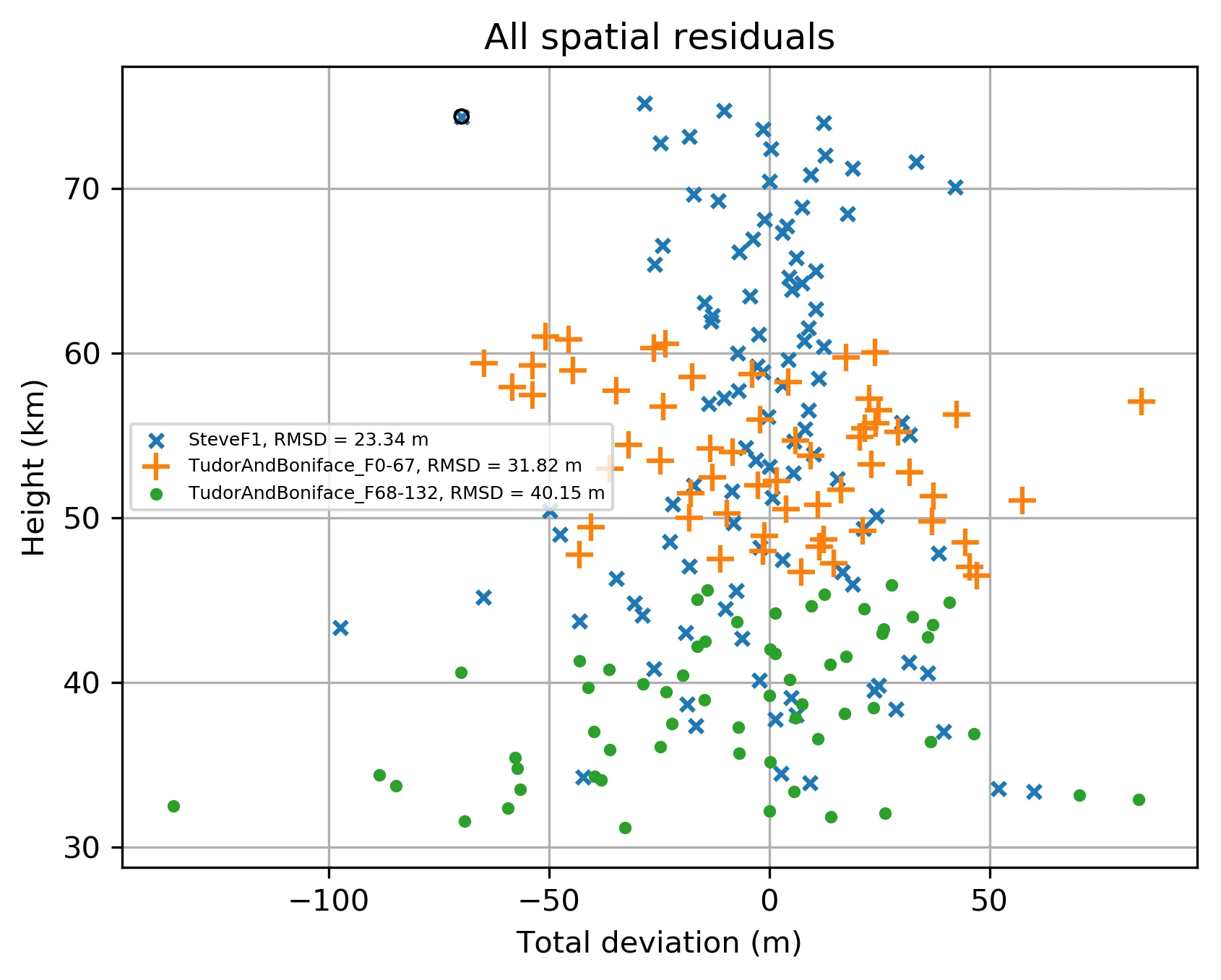
24 апреля 2025 года над Аляской грянул небесный барабан. Солнечный свет затмил вспышку, и спутники проморгали метеор. Зато земля и воздух сработали как огромный ударный инструмент: десятки наземных микрофонов приняли низкий гул, а датчики колебаний — дрожь. Это дало точную «мелодию» пролёта.
Ударная волна от быстрого камня (25 км/с) заставила воздух звучать, будто мембрану, а грунт — вибрировать, словно корпус барабана. Сеть датчиков, созданная для другой цели — слежки за ядерными испытаниями, — помогла вычислить размер (70 см) и энергию (38 тонн тротила) незваного гостя. Оказалось, это обычный каменный хондрит типа L.
Метод дёшев и не боится полярного дня. Теперь наземные «уши» станут надёжным дополнением спутниковым «глазам» для защиты от космических пришельцев.
Оригинальная аннотация
как её написали авторы, на английском arXiv:2603.22630
On 24 April 2025 at 18:30:57 UTC, a bright daytime fireball over Southcentral Alaska was detected by 37 seismic stations, 16 single infrasound sensors, and four infrasound arrays, yielding 30 ballistic and multiple fragmentation arrivals. The unprecedented density of seismoacoustic coverage enabled detailed reconstruction of the event using acoustic signals, with fragmentation source locations further guiding the identification of Doppler weather radar signatures of a meteorite fall. Incorporation of a radar-derived terminal point yielded a final trajectory solution, which agreed closely with an independent optical trajectory solution from video analysis. The reconstructed entry parameters from seismoacoustic analysis indicate a velocity of 25.3 km/s, an entry angle of 19{\deg}, and an energy release of ~38 t TNT equivalent. Assuming a chondritic composition, the pre-entry object diameter was ~0.7 m. Using orbital parameters from the optical solution, we estimate meteoroid composition as most likely a L-type ordinary chondrite. The event occurred in the sub-Arctic, where space-based optical systems face challenges in detection, demonstrating the critical role of dense ground-based seismoacoustic networks in characterizing highlatitude atmospheric entries. This uniquely well-recorded event demonstrates the capability of dense seismoacoustic networks to constrain bolide trajectories, energetics, and fragmentation, with radar and optical data providing critical confirmation and complementary perspectives. These results bridge the methodological gap between planetary-defense monitoring of natural impactors and space-traffic analyses of artificial reentries, illustrating how multi-sensor integration can deliver calibration-grade trajectories even for unpredicted events.
Метеор оставил целых 30 ударных волн — словно от одного брошенного камня по воде разошлись десятки кругов, но здесь круги были ещё и в толще земли.