صائدو المادة المظلمة: كيف نرى غير المرئي؟ سريع
المادة المظلمة هي مادة غير مرئية تربط المجرات ببعضها لكنها لا تصدر ضوءًا. التقاط جسيماتها يشبه سماع همس في قاعة صاخبة. الكاشفات العادية لا تسمع إلا الضربات العالية، بينما تغرق الإشارات الضعيفة في الضوضاء.
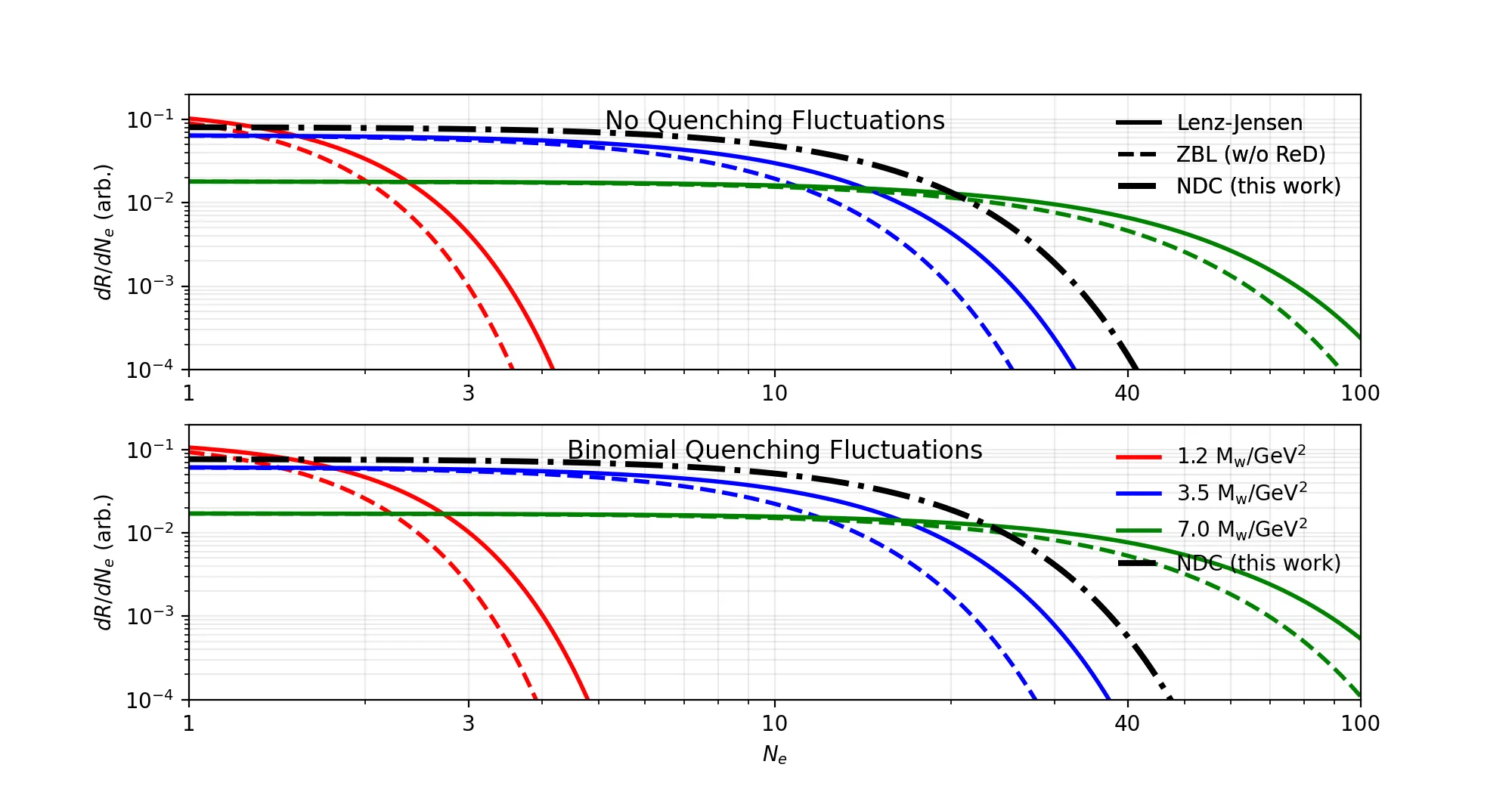
في الأرجون السائل، عندما يصطدم جسيم المادة المظلمة بنواة ذرة، يُحدث شرارة ضوئية وسحابة من الشحنات. لكن عند الارتطام الضعيف، تكون الشرارة خافتة بالكاد. أضاف العلماء تصحيحًا للحسابات يراعي كيفية تعزيز المجال الكهربائي داخل النواة للتفاعل عند التصادمات البطيئة. هذا يشبه ضبط ميكروفون ليلتقط الأصوات الهادئة. الآن، يمكن للكاشف المزود بمضاعفات ضوئية سيليكونية (التي تعدّ كل فوتون) رصد ارتطام أضعف بألف مرة من ذي قبل.
أما النهج الآخر فهو كاشف يعتمد على البتات الكمومية. البت الكمومي (qubit) يشبه بندولًا فائق الحساسية يتأرجح مع أدنى نسمة. رقاقتان متجاورتان: إحداهما تلتقط الاهتزازات والأخرى تقرأها. عندما يمر جسيم مادة مظلمة، يجعل الذرات في الرقاقة تهتز، ويلتقط الكيوبت ذلك. يمكن لهذا الكاشف أن يستشعر طاقة مقدارها 30 ملي إلكترون فولت — أي أصغر بمليار مرة من الطاقة اللازمة لرفع ذرة غبار بمقدار شعرة.
ستساعد هذه الحيل في البحث عن جسيمات المادة المظلمة الخفيفة التي كانت تمر عبر الكاشفات دون أن تُلاحظ سابقًا. ربما سنسمع همسها قريبًا لأول مرة.
الملخص الأصلي
كما كتبه المؤلفون، بالإنجليزية arXiv:2601.05397
We investigate novel strategies to extend the sensitivity of dark matter direct detection experiments to energy deposits well below the thresholds of conventional detectors. In liquid-argon time-projection chambers equipped with silicon photomultipliers (SiPMs), we show that improved optical readout, combined with a nuclear dielectric constant (NDC) correction to the WIMP nucleus interaction, enhances the response to low-momentum-transfer nuclear recoils. The NDC effectively amplifies the interaction strength at small recoil energies, increasing the expected ionization and scintillation yields without modifying the high-energy behavior constrained by calibration data. When coupled to SiPM based light collection, this mechanism lowers the effective detection threshold to the subKeV regime, significantly improving sensitivity to low-mass WIMPs and other weakly interacting particles. Complementarily, we present the design and projected performance of a qubit-based detector optimized for ultra-low-energy depositions. A novel two-chip architecture is employed to minimize signal dissipation, while quantum parity measurements enable enhanced single-phonon sensitivity. Full simulations of phonon propagation and quasiparticle dynamics demonstrate that energy deposits at the level of $$\gtrsim 30 meV$$ can be detected with nearly unit efficiency and high energy resolution. This capability is expected to advance sensitivity to dark-matter scattering for masses $$m_\chi \gtrsim 0.01 MeV$$ by several orders of magnitude for both light and heavy mediators, and to enable competitive searches for axion and dark-photon absorption in the $$0.04 - 0.2 eV$$ mass range.
طاقة 30 ملي إلكترون فولت صغيرة جدًا لدرجة أنها تكفي فقط لتحريك إلكترون واحد مسافة بضعة ذرات.