مفاجأة الميون تتبخر سريع
الميون (muon) هو الأخ الأثقل للإلكترون، يعيش فقط جزءًا من مليوني جزء من الثانية. في مجال مغناطيسي، يدور مثل القمة، لكنه أسرع قليلاً مما تتنبأ به المعادلات. قبل عشرين عامًا، لاحظوا هذا "الأسرع قليلاً" في مختبر بروكهافن، ومنذ ذلك الحين يتجادل الفيزيائيون: هل تكذب الأجهزة، أم أن جسيمات غير معروفة تختبئ في الفراغ؟
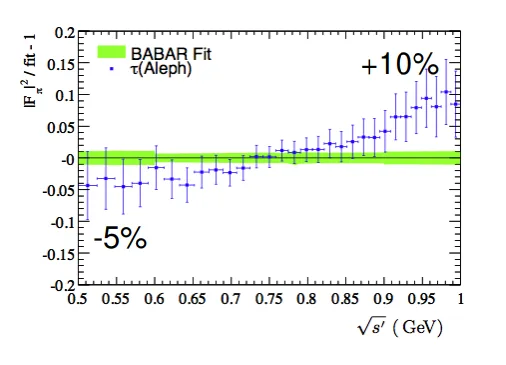
الآن، في مختبر فيرميلاب، قاموا بقياس دوران الميون بدقة أكبر بأربع مرات — واتضح أنه "سريع جدًا" مرة أخرى. لكن في الوقت نفسه، أعاد المنظرون حساب مساهمة الفراغ على الحواسيب الفائقة: اتضح أن الفراغ ليس فارغًا، بل يعج بالجسيمات الافتراضية التي تُدير الميون قليلاً. الحسابات الجديدة، التي تأخذ في الاعتبار اختلاط نوعين من الجسيمات، رفعت القيمة النظرية تقريبًا إلى القيمة التجريبية. الاختلاف تبخر.
النموذج القياسي صمد مرة أخرى. إنه لا يفسر المادة المظلمة ولا الكتل الصغيرة للنيوترينوات، لكن بالنسبة للميون، تتفق توقعاته الآن مع التجربة. هذا ليس فشلاً، بل انتصار للدقة: لقد تعلمنا كيف نحسب الفراغ بشكل أفضل.
الملخص الأصلي
كما كتبه المؤلفون، بالإنجليزية arXiv:2601.08101
Recently, the exciting new Fermilab (FNAL) Muon g-2 measurement impressively confirmed the final Brookhaven (BNL) result from 2004, and with a result four times more precise, has launched a new serious attack on the Standard Model (SM). On the theoretical side, ab initio lattice QCD (LQCD) calculations of hadronic vacuum polarization have made remarkable progress. They are now the new standard for studying the leading non-perturbative contributions, which have previously hindered matching with the precision required for full exploitation of the experimental results. The lattice results affected both leading hadronic contributions the hadronic vacuum polarization (HVP) and the hadronic light-by-light (HLbL) contributions by increasing the previously generally accepted $$e^+e^-$$ to hadrons based dispersion relation results. The shifts reduced the discrepancy between theory and experiment, leaving nothing missing. One of the most prominent signs of Beyond the Standard Model (BSM) physics has disappeared: the SM appears validated more than ever, in agreement with what other searches at the Large Hadron Collider (LHC) at CERN tell us! A triumph of the SM, even though the SM cannot explain known cosmological puzzles like dark matter or baryogenesis, and why neutrino masses are so tiny, the absence of strong CP violation, for example. I also argue that the discrepancy between the data-driven dispersive result and the lattice QCD results for the hadronic vacuum polarization can be largely explained by correcting the $$e^+e^-$$ data for 'rho-gamma' mixing effects.
الميون ثقيل جدًا لدرجة أن ولادته في مصادم الهادرونات الكبير تُسجَّل على أنها "وابل" من عشرات الجسيمات — لكنه يعيش أقل من الوقت الذي يحتاجه الضوء لعبور حبة رمل.