مدينة الخلايا العصبية: لماذا يفكر البعض بسرعة والبعض الآخر ببطء سريع
يحتوي دماغ الفأر على حوالي 70 مليون خلية عصبية، والروابط بينها موزعة بشكل غير متساوٍ إطلاقًا: بعض الخلايا لديها بضع عشرات من الاتصالات فقط، بينما البعض الآخر لديه آلاف. الأمر يشبه مدينة فيها أزقة هادئة وساحات مزدحمة. لكن حتى الآن لم يكن واضحًا كيف يؤثر هذا التباين على عمل الدماغ نفسه.
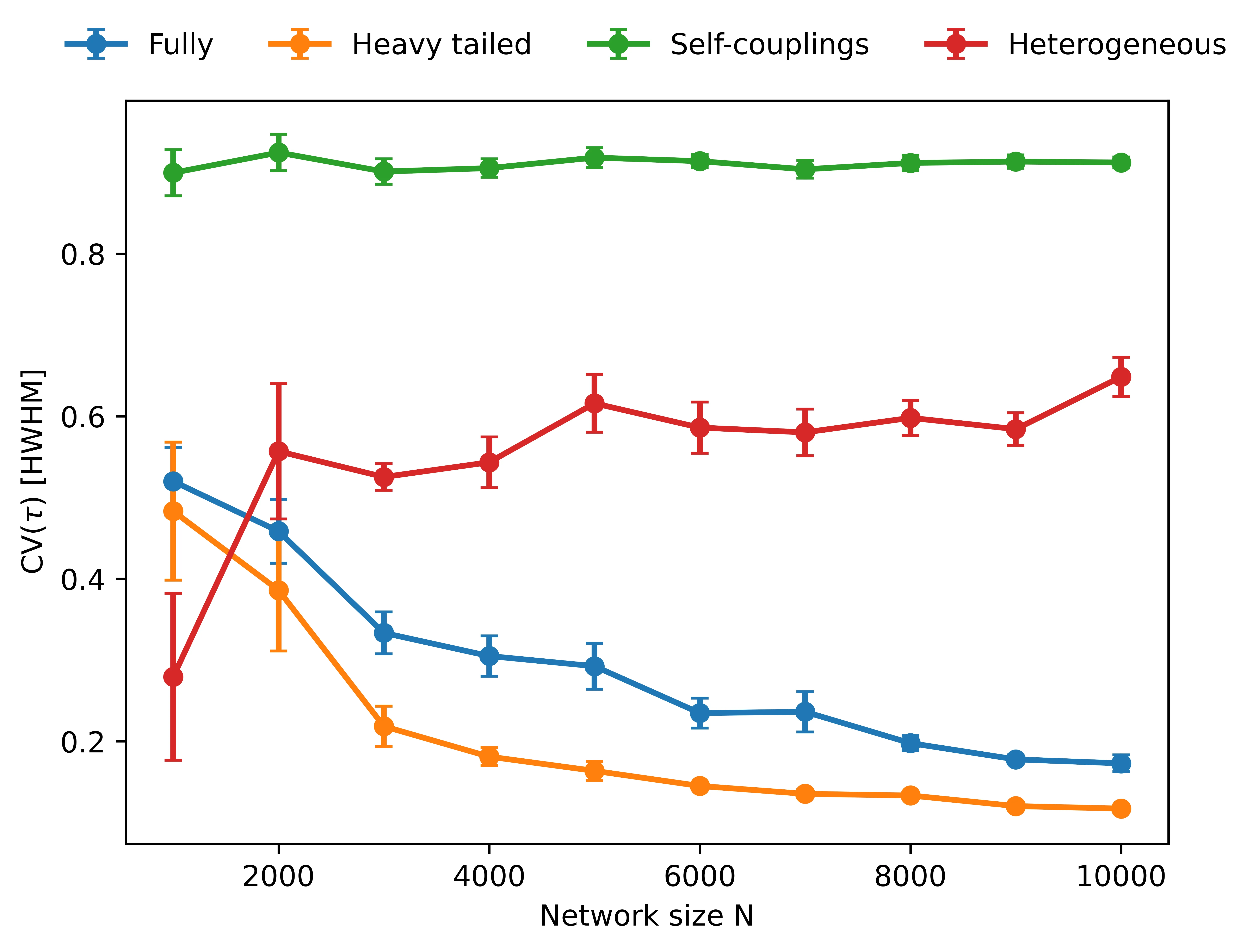
قام الباحثون ببناء نموذج حاسوبي يمكن فيه جعل الروابط بين الخلايا أكثر أو أقل عدم انتظام. واتضح أن الخلايا ذات الروابط الأكثر — العُقد — تبدأ في العمل بشكل أبطأ: فهي كما لو كانت تتراكم الإشارات الواردة قبل أن تستجيب. أما الخلايا ذات الروابط الأقل، فهي على العكس تستجيب بسرعة. وهكذا تظهر في الشبكة الواحدة خلايا عصبية «سريعة» و«بطيئة»، على الرغم من أن القواعد واحدة للجميع.
أكد الاختبار على البيانات الحقيقية النظرية: في قطعة صغيرة جدًا من دماغ الفأر، والتي رسمها العلماء بدقة تصل إلى جزء من الألف من المليمتر، كانت الخلايا العصبية ذات الروابط الواردة الأكثر تمتلك بالفعل أوقات استجابة أبطأ. وهذا يعني أن عدم انتظام الروابط ليس ضجيجًا عشوائيًا، بل آلية مهمة تسمح للدماغ بمعالجة الإشارات السريعة (مثل الحركة) والبطيئة (مثل المزاج) في الوقت نفسه.
هذا المبدأ قد يكون مفيدًا أيضًا في الشبكات العصبية الاصطناعية: إذا جعلنا الروابط غير متساوية، يمكن للشبكة معالجة البيانات بسرعات مختلفة، تمامًا كما يفعل الدماغ.
الملخص الأصلي
كما كتبه المؤلفون، بالإنجليزية arXiv:2603.04149
Structural and functional heterogeneity are hallmarks of cortical circuits, from broad degree distributions in the mouse connectome to diverse intrinsic neuronal timescales. Yet a mechanistic link between connectivity heterogeneity and functional diversity is lacking. To bridge this gap, we introduce a random recurrent network in which connectivity is generated by a configuration model with tunable degree heterogeneity and synaptic weights exhibiting varying levels of correlation. Using generating-functional methods, we derive a heterogeneous dynamical mean-field theory (hDMFT) with degree-conditioned stochastic dynamics. The theory shows that the interaction of partial symmetry in the weights and degree heterogeneity induces a non-Markovian memory term in the form of an emergent self-coupling whose strength scales with degree and produces a broad distribution of activity timescales. We obtain analytic stability criteria demonstrating that degree heterogeneity lowers the critical gain and localizes unstable modes onto hubs. The resulting rich dynamical landscape includes silent, chaotic, and multistable regimes, which we uncover via spectral, replica, and Lyapunov exponent analyses. We highlight the computational benefits of the observed timescale heterogeneity by revealing that, under an external input drive featuring a broadband spectrum, slow hub neurons act as integrators, demixing slow input components. Finally, instantiating the model with the empirically measured topology from the MICrONS cubic-millimeter mouse connectome explains the broad range of single-neuron timescales and their positive correlation with in-degree observed in resting-state recordings. Our results provide a mechanistic link between connectome topology, neural dynamics, and computation, identifying hubs in partially symmetric networks as a natural substrate for multiplexed processing across timescales.
في المليمتر المكعب من دماغ الفأر يوجد حوالي 100 000 خلية عصبية وما يقرب من مليار مشبك عصبي — وهذا أكثر من عدد النجوم في مجرتنا في نفس الحجم.