سرب زلازل: كيف تستيقظ صخور الجرانيت سريع
في عام 2019، شعر سكان منطقة بالغار في غرب الهند بأن الأرض تتحرك من تحت أقدامهم — ليس مرة واحدة، بل آلاف المرات. على مدى عامين، سجلت أجهزة قياس الزلازل نحو 50 ألف هزة. هذا ليس زلزالًا عاديًا بضربة رئيسية وهزات ارتدادية، بل سرب: سلسلة من الأحداث تارة تخفت وتارة تشتعل من جديد، مثل جمر يختبئ تحت الرماد وتُلقى عليه أغصان.
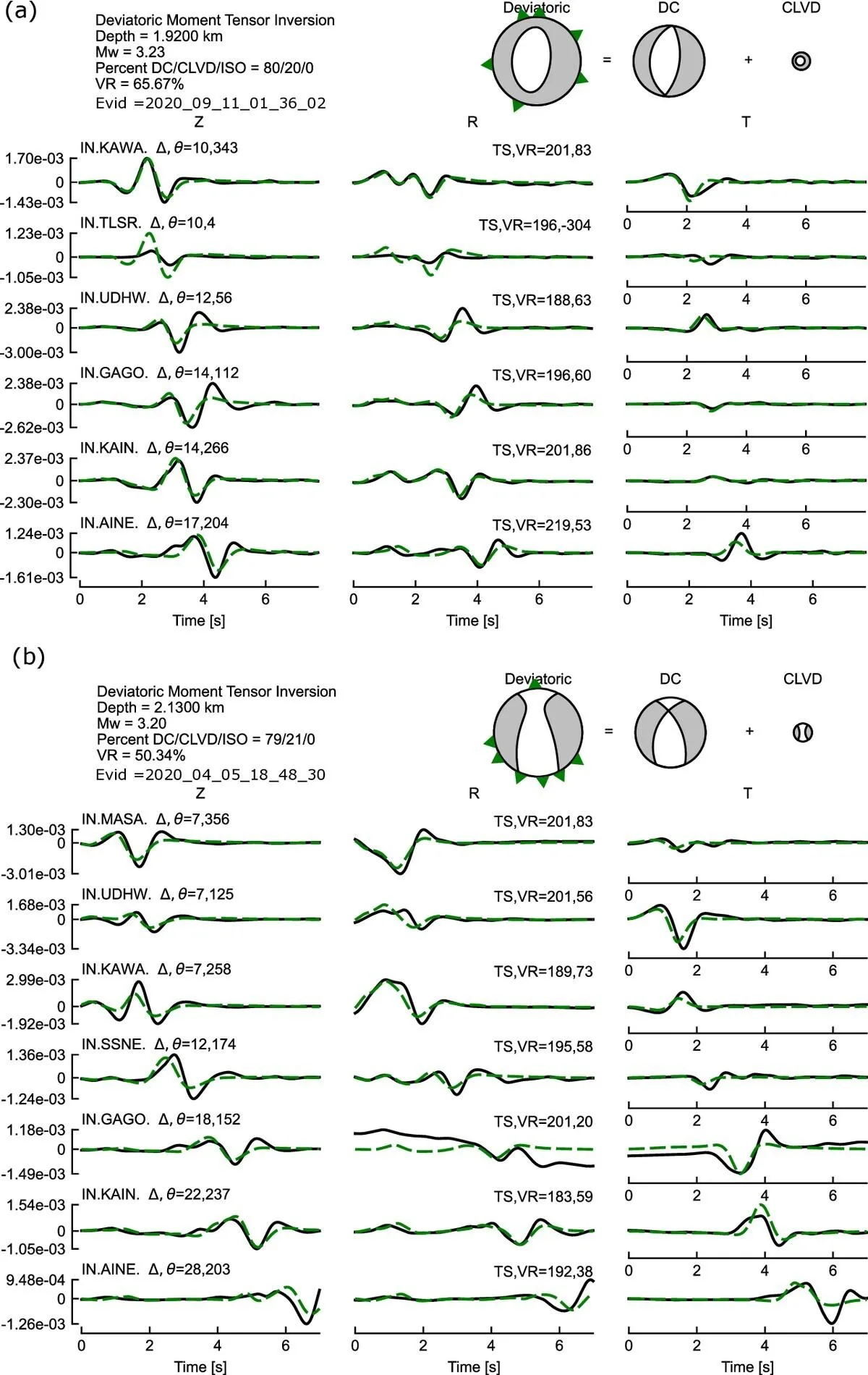
طبق العلماء التعلم الآلي لالتقاط حتى الإشارات الضعيفة، وأعادوا فحص كل حدث. اتضح أن الهزات تولد على صدعين ضحلين في القاعدة الجرانيتية — وهي صخرة تُعتبر عادة صلبة وهادئة. في البداية اهتز الشق الغربي، ثم انتقل النشاط إلى الشق الشرقي، ثم امتد إلى منطقة الضرر بينهما. هذا الترتيب يشبه تتابع العدائين في سباق التتابع، لكن بدلًا من العدائين، هناك أجزاء من القشرة الأرضية.
عادةً ما يُفسر السرب إما بحركة المياه الجوفية التي تزيّت الصدوع، أو بالانزلاق البطيء دون هزات قوية. لكن في بالغار، لا تعمل أي من هاتين الآليتين بمفردها. أظهرت الملاحظات مزيجًا: ساعد الماء في التشوه، وانتقل الإجهاد من صدع إلى آخر، كما لو كانت تروس متجاورة تتشابك مع بعضها. هذا الاكتشاف يغير النظرة إلى سلوك القشرة القارية المستقرة، ويساعد على فهم أفضل لمتى ولماذا تقرر الأرض أن تذكّرنا بوجودها.
الملخص الأصلي
كما كتبه المؤلفون، بالإنجليزية arXiv:2608.16317v1
Earthquake swarms provide a natural window into fault response to transient perturbations, yet their driving processes are commonly interpreted using fluid-driven and aseismic-slip-driven end-member models. Intraplate swarms offer a unique setting to test these models because low secular tectonic loading heightens the sensitivity of faults to transient, non-tectonic forcing. We use a machine-learning-enhanced catalog of $$\sim$$50,000 earthquakes from the 2019--2020 Palghar earthquake swarm in western India to test this end-member framework. High-resolution relocations, together with moment tensor solutions, reveal two shallow normal faults in a granitic basement, with seismicity sequentially migrating from the western to the eastern fault before expanding into the intervening damage zone. Although the swarm exhibits an overall diffusion-like expansion, the relocated seismicity reveals a persistent $$\sim$$5-km-deep localized seismicity band and repeated migration fronts sometimes propagating faster than expected from fluid diffusion alone. The velocity--duration scalings of these intermittent episodes span both fluid- and slow-slip-driven regimes. Sequential fault activation and contrasting migration styles throughout the swarm duration reveal dynamics that cannot be explained by either end-member mechanism alone. Instead, the Palghar swarm evolved through coupled fluid-assisted deformation and transient stress transfer within an interacting fault network, with migration episodes consistent with aseismic deformation. These observations reveal that high-resolution catalogs can disentangle transient processes hidden within apparently diffusive swarm behavior. More broadly, intraplate earthquake swarms provide powerful natural laboratories for resolving how coupled transient processes govern earthquake triggering and fault interaction in stable continental crust.
خلال السرب في بالغار، أبلغ السكان المحليون عن هدير تحت الأرض يشبه قصف الرعد، رغم أن مراكز الزلازل كانت على عمق نحو 5 كيلومترات.