بطارية بإلكترود لا يريد أن يفرّغ شحنته سريع
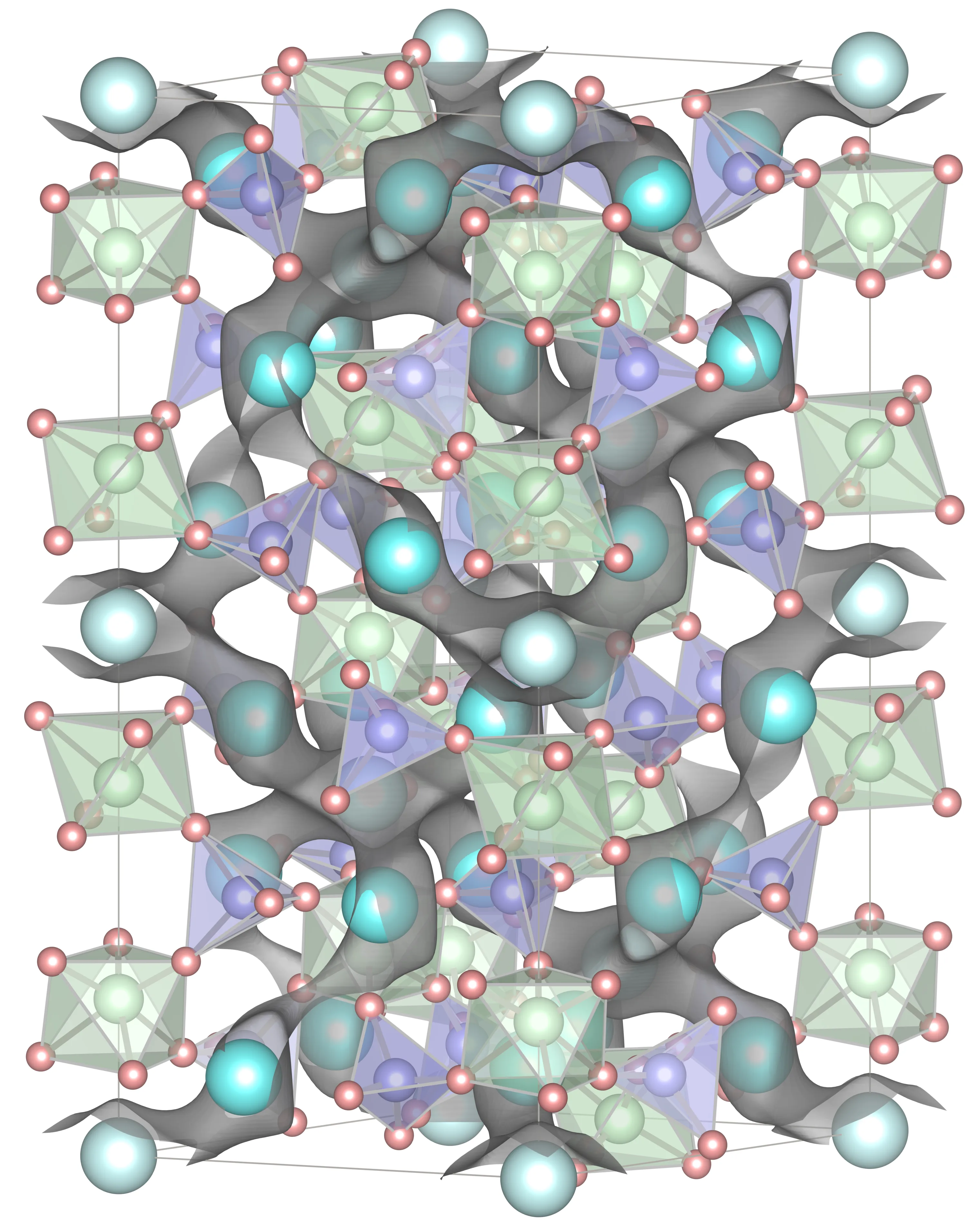
حصّالة تسقط فيها العملات بسهولة، لكن لا يمكنك إخراجها إلا بكسرها. شيء مشابه يحدث مع مادة جديدة لبطاريات الصوديوم. إنها تقبل أيونات الصوديوم عن طيب خاطر أثناء الشحن، لكنها لا تُعيد شيئًا تقريبًا عند التفريغ.
المادة ذات الصيغة Na4NiCr(PO4)3 تنتمي إلى عائلة NASICON — وهي هياكل إطارية حيث يمكن لأيونات الصوديوم أن تتنقل عبر شبكة ثلاثية الأبعاد من القنوات. أظهرت الحسابات أن حاجز حركة الأيونات منخفض — فقط 0.468 إلكترون فولت، أي ما يعادل تقريبًا طاقة الحركة الحرارية عند درجة حرارة الغرفة. أي أن الأيونات يمكنها التحرك بحرية.
بعد دورة شحن وتفريغ، بقيت الشبكة البلورية سليمة، وأظهرت الحسابات أن أيونات الصوديوم ما زالت قادرة على الهجرة. إذن المشكلة ليست في حركة الأيونات. على الأرجح، السبب هو ضعف التوصيل الإلكتروني: لا تستطيع الإلكترونات الوصول إلى الأماكن التي توجد فيها الأيونات لإتمام التفاعل.
هذا يشبه منزلًا فيه أنابيب مياه سليمة لكن المضخة لا تعمل. الماء (الأيونات) موجود، والأنابيب (القنوات) سليمة، لكن بدون المضخة (الإلكترونات) لا يتدفق.
لكي تعمل هذه المادة، يجب تحسين توصيلها الإلكتروني — على سبيل المثال، بإضافة شوائب أو تعديل البنية. عندها ستبدأ الحصّالة في الاستقبال والإعطاء معًا.
الملخص الأصلي
كما كتبه المؤلفون، بالإنجليزية arXiv:2601.07012
We examine a new NASICON-type Na$$_4$$NiCr(PO$$_4$$)$$_3$$ material designed for high-voltage and multi-electron reactions for the sodium-ion batteries (SIBs). The Rietveld refinement of the X-ray diffraction pattern, using the R$$\bar{3}$$c space group, confirmed the stabilization of the rhombohedral NASICON framework. Furthermore, the Raman and Fourier transform infrared spectroscopy are employed to probe the structure and chemical bonding. The core-level photoemission analysis reveals the Cr$$^{3+}$$ and mixed Ni$$^{2+}$$/Ni$$^{3+}$$ oxidation states in the sample. Moreover, the bond valence energy landscape (BVEL) analysis, based on the refined structure, revealed a three-dimensional network of well-connected sodium sites with a migration energy barrier of 0.468 eV. The material delivered a good charge capacity at around 4.5 V, but showed no sodium-ion intercalation during discharge, resulting in negligible discharge capacity. The post-mortem analysis confirmed that the crystal structure remained intact. The calculated energy barrier values indicated a reversal in sodium site stability after cycling, though the barriers can still permit feasible ion migration. This suggests that ion transport alone cannot explain the lack of reversibility, which likely arises from intrinsically poor electronic conductivity. These findings highlight key challenges in achieving stable, reversible capacity in this system and underscore the need for doping, structural modification, and electrolyte optimization to realize its full potential as a high-voltage SIB cathode.
الصوديوم هو سادس أكثر العناصر وفرة في القشرة الأرضية، ويمكن استخراجه من مياه البحر. لذلك تُعتبر بطاريات الصوديوم بديلًا أرخص من بطاريات الليثيوم.