جسور هوائية فوق الرقاقة سريع
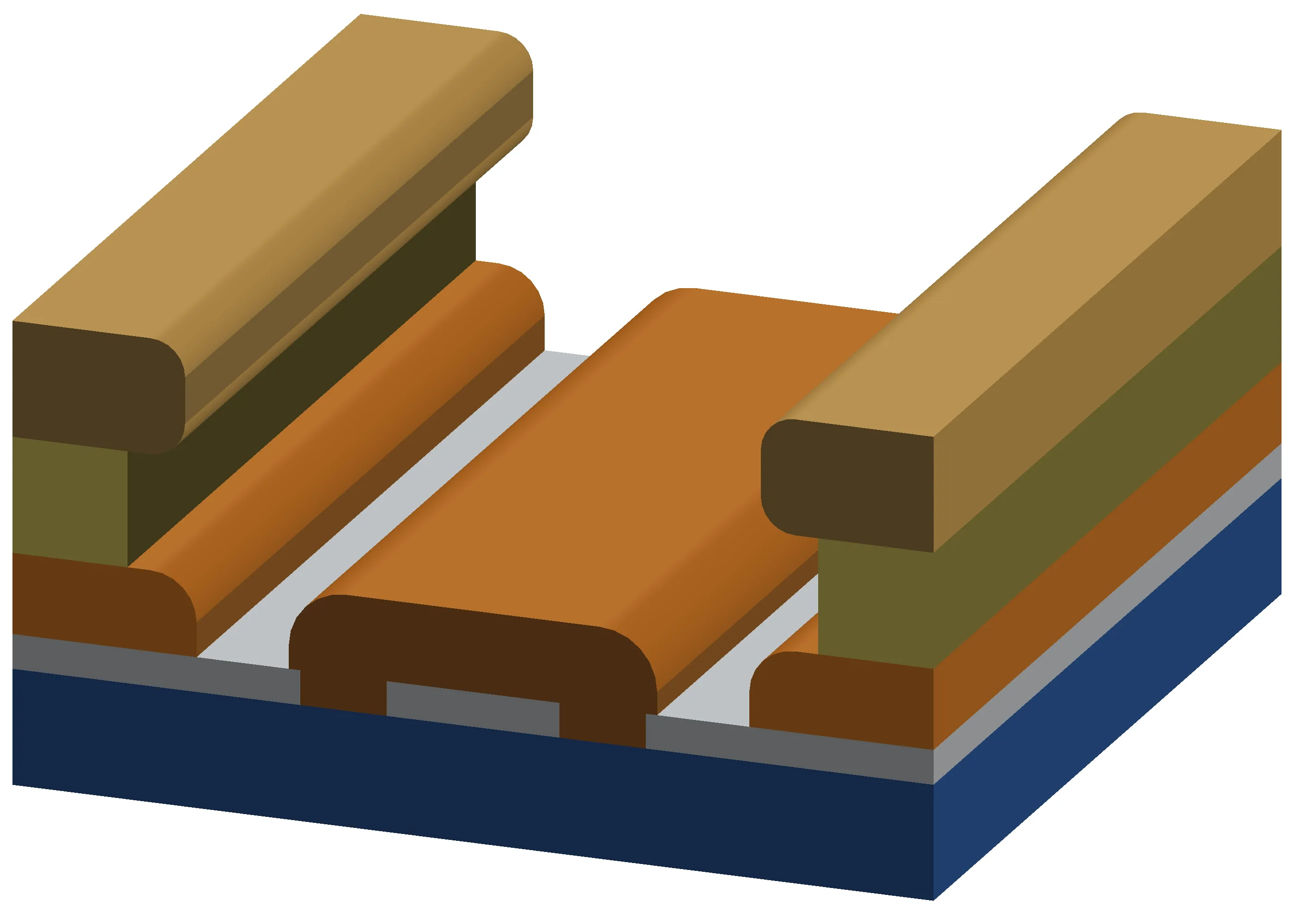
في الرقاقات الإلكترونية، عادةً ما تكون الأسلاك ممددة على السطح، مثل القضبان على الأرض. لكن في بعض الأحيان، نحتاج إلى أن يقفز سلك فوق سلك آخر دون أن يلمسه. لهذا الغرض، تُبنى جسور هوائية — أقواس معدنية رفيعة معلقة فوق اللوحة.
في السابق، كان بناء مثل هذا الجسر يتم على عدة مراحل: وضع طبقة، تعريضها للإشعاع، حفرها، ثم التكرار. كل مرحلة كانت فرصة لإفساد شيء ما. العمل الجديد يُظهر أن تمريرة واحدة لشعاع الإلكترون تكفي. يرسم الشعاع الجسر بأكمله دفعة واحدة، ثم تُسخَّن الرقاقة قليلًا — فينحني المعدن تلقائيًا على شكل قوس منتظم، مثل ورقة تنحني فوق النار.
اختُبرت الجسور على رقاقات كمومية: فهي لا تعيق الإشارة، بل تحميها من التشويش الزائد. الزمن الذي يحتفظ فيه البت الكمومي بطوره تضاعف مرتين ونصف. وهذا يعني أن الحواسيب الكمومية ستتمكن من الحساب لفترة أطول دون أخطاء.
هكذا تحولت واحدة من أكثر مراحل التصنيع حساسية إلى طباعة بسيطة. كلما قلّت الخطوات، قلّ العيب وانخفضت تكلفة الأجهزة المستقبلية.
الملخص الأصلي
كما كتبه المؤلفون، بالإنجليزية arXiv:2601.16416
Airbridges are essential for creating high-performance, low-parasitic interconnects in integrated circuits and quantum devices. Conventional multi-step fabrication methods hinder miniaturization and introduce process-related defects. We report a simplified process for fabricating nanoscale airbridges using only a single electron-beam lithography step. By optimizing a multilayer resist stack with a triple-exposure-dose scheme and a thermal reflow step, we achieve smooth, suspended metallic bridges with sub-200-nm features that exhibit robust mechanical stability. Fabricated within a gradiometric SQUID design for superconducting transmon qubits, these airbridges introduce no measurable additional loss in the relaxation time $$T_1$$, while enabling a 2.5-fold enhancement of the dephasing time $$T_2^*$$. This efficient method offers a practical route toward integrating high-performance three-dimensional interconnects in advanced quantum and nano-electronic devices.
الجسور الهوائية لم تكن ضرورية في البداية للرقاقات الكمومية، بل للدوائر الراديوية العادية: لمنع تأخر الإشارة عند تقاطعات الأسلاك.