كيف تخطط السحالي والثعابين لسقوطها سريع
السحلية التي تسقط من غصن لا تتقلب فحسب، بل تلتقط الهواء بجسدها وتحول السقوط إلى انزلاق. لطالما راقب المهندسون مثل هذه الحيل، لكن لم تكن هناك لغة مشتركة لمقارنة طيران الثعبان والسحلية والجناح الاصطناعي. يقدم العمل الجديد هذه اللغة: خريطة ثلاثية الأبعاد للسرعات تُظهر أين تتجه أي حركة حتمًا.
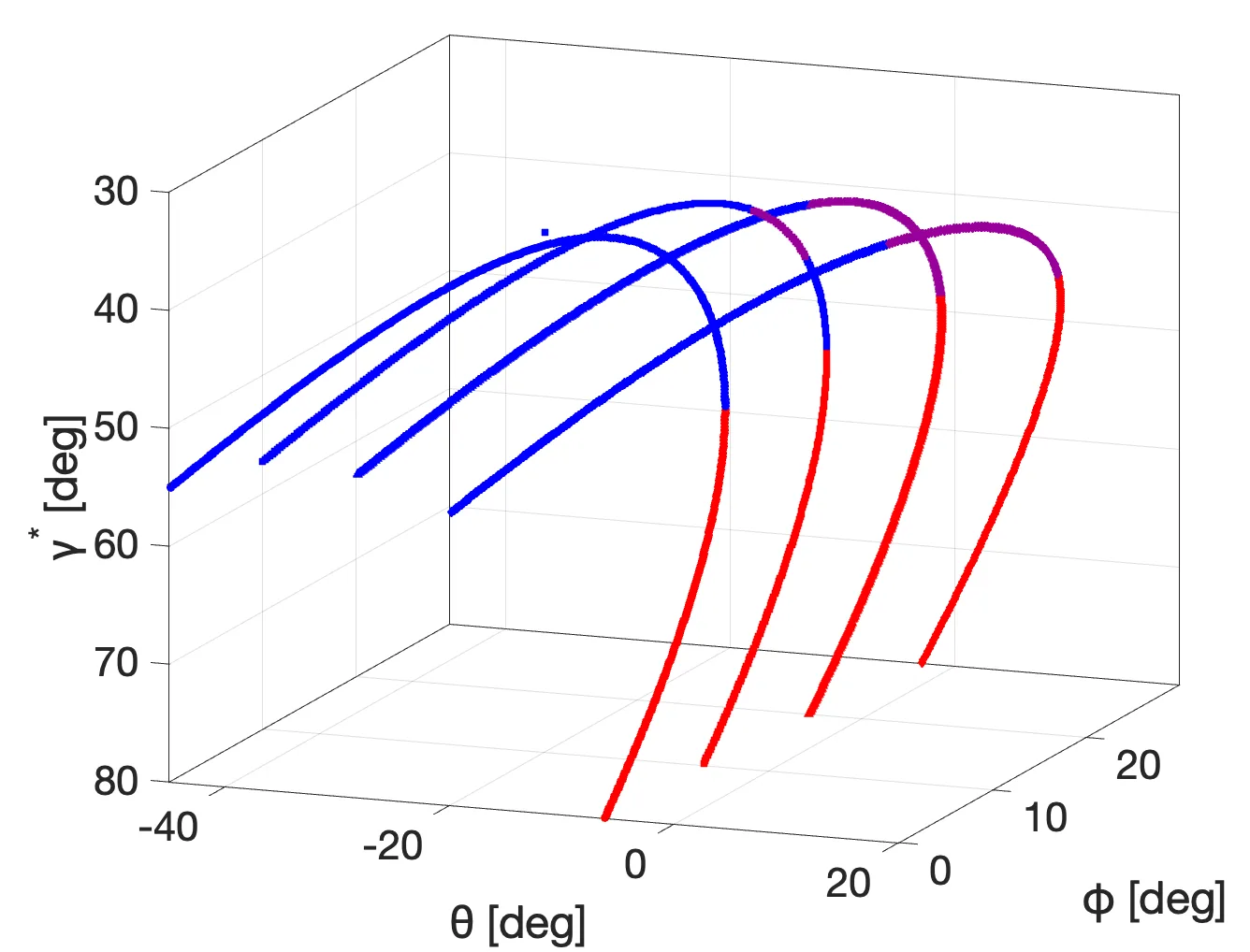
لاحظ المؤلفون أولاً: مهما قذفت الطائرة الشراعية، فإن سرعتها تلتصق بسرعة بسطح غير مرئي — أُطلق عليه سطح السرعات المستقرة (المشعب النهائي). بعد ذلك، يزحف الحركة ببطء على هذا السطح نحو نقطة التوازن — الطيران الشراعي المستقر. لكن على السطح توجد طية تفصل المصائر: على جانب واحد هبوط سلس وطويل، وعلى الجانب الآخر سقوط حاد حيث لا يرفع الهواء بل يعيق.
بُنيت هذه الهندسة لثلاثة مقاطع: مستوحى من الثعبان الطائر، وسحلية Draco، والجناح الجوي التقليدي. اتضح أن المقاطع البيولوجية لها طية مدمجة، لذا حتى مع تباين كبير في الشروط الابتدائية (كيف قفزت السحلية، وبأي سرعة وتحت أي زاوية) فإنها غالبًا ما تدخل في وضع الطيران الشراعي السلس. أما الجناح التقليدي فمنطقة الطيران المستقر أضيق — يتطلب إطلاقًا دقيقًا.
يوحد العمل علم الأحياء والهندسة في إطار هندسي واحد. الآن يمكن تقييم موثوقية الطيران الشراعي ليس عبر سلسلة من التجارب، بل من خلال شكل السطح الفاصل — كما يُحكم على إمكانية عبور الجبال من خريطة الممرات.
الملخص الأصلي
كما كتبه المؤلفون، بالإنجليزية arXiv:2602.15234
We develop a three-dimensional dynamical-systems framework for passive gliding and identify the global phase-space structures that organize its motion. Extending previous two-dimensional models of non-equilibrium gliding, we show that the 3D velocity dynamics possess an attracting, normally hyperbolic invariant surface, the terminal velocity manifold (TVM), onto which all trajectories rapidly collapse before evolving slowly toward a glide equilibrium. There is also a separatrix surface associated with an invariant manifold of an unstable equilibrium within the TVM, which partitions initial conditions into qualitatively distinct descent behaviors: efficient shallow glides versus steep, drag-dominated descent. Using lift-drag data from three representative airfoils--a snake-inspired bluff body, the Zimmerman planform characteristic of Draco lizards, and the classical NACA 0012--we compute the full equilibrium surfaces, analyze their pitch-roll bifurcations, and reconstruct the TVM and separatrix geometry in three dimensions. The results reveal that (i) equilibrium stability changes with both pitch and roll, rather than pitch alone; (ii) separatrix geometry determines the dynamic accessibility of shallow glides; and (iii) bio-inspired airfoils possess compact separatrix regions that make efficient gliding robust across a wide range of initial jump conditions. This work unifies biological and engineered gliders within a single global geometric framework and establishes separatrix geometry on the TVM as a principled diagnostic for glide robustness.
سحالي Draco في الطيران تفرد أضلاعها، محولة الجسم إلى ما يشبه طائرة شراعية معلقة، ويمكنها الطيران حتى 60 مترًا من شجرة إلى أخرى.