كيف يلتقط التلسكوب التركيز دون نجم ساطع سريع
سماء الليل ترتجف. تيارات الهواء الدافئ والبارد تموّج صورة النجم، فيرى التلسكوب الكبير بقعة ضبابية بدلًا من نقطة. لاستعادة الحدة، يشعل علماء الفلك نجمًا اصطناعيًا في السماء — شعاع ليزر ينعكس عن طبقة ذرات الصوديوم على ارتفاع نحو 90 كيلومترًا. بارتعاشه، ينحني مرآة التلسكوب مئات المرات في الثانية لتعويض الاهتزاز.
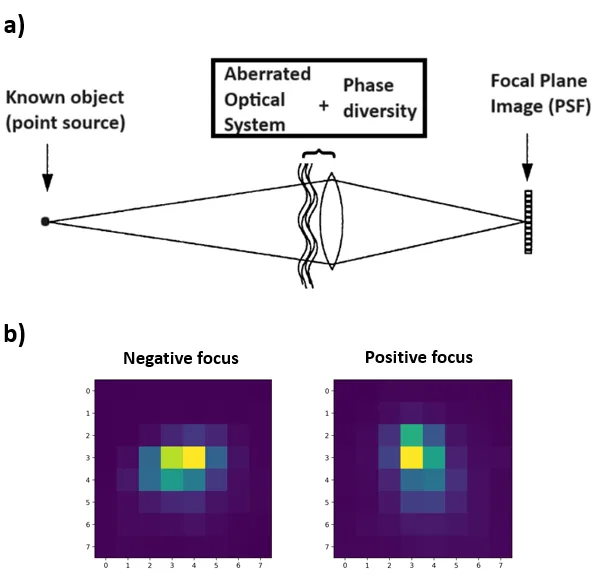
لكن للنجم الليزري نزوة: طبقة الصوديوم المتوهجة نفسها تزحف ببطء صعودًا وهبوطًا، فينزلق تركيز التلسكوب. سابقًا، كان التصحيح يتطلب نجمًا حقيقيًا قريبًا — وهو غير متوفر دائمًا. جرّب مهندسون في تلسكوب كيك في هاواي مسارًا آخر: مراقبة التركيز مباشرة من صورة الكاميرا، دون نجم ثانٍ. قارنوا ثلاث خوارزميات كما يُقارن الطهاة في المطبخ: من الأدق، ومن الأسرع، ومن لا ينهار عند ضعف الإشارة. فازت الطريقة التي تعيد بناء شكل بقعة الضوء، كما نخمّن قيمة عملة معدنية من لمعة.
أظهرت الاختبارات في السماء: حتى عندما كان الهواء يغلي بشدة، أعادت الخوارزمية الوضوح.
الآن سيحظى كيك بليالٍ أكثر يرى فيها المجرات البعيدة بحدة، لا كما لو كانت خلف الماء. نفس الأسلوب سيفيد التلسكوبات العملاقة المستقبلية بمرايا قطرها ثلاثون مترًا.
الملخص الأصلي
كما كتبه المؤلفون، بالإنجليزية arXiv:2602.15746
Laser guide stars (LGSs) have been deployed for the last 20-30 years in ground-based astronomical telescopes to overcome the limited sky coverage of classical adaptive optics (AO) systems. Unfortunately, slow altitude drifts of the sodium layer compromise focus measurements, generating the so-called slow focus error, and, consequently, a natural guide star (NGS) is needed to compensate for that error. Our goal is to develop and operationalize a focal plane wavefront sensing (FPWFS) technique for slow focus tracking for the Keck I telescope, which can significantly increase sky coverage and allow slow focus tracking at higher frequencies, reducing the lag error. We develop, characterize, and compare three different FPWFS algorithms, namely Gerchberg-Saxton (GS), linearized focal plane technique (LiFT), and Gaussian fit (Gf). These algorithms were studied for the specific purpose of slow focus sensing in the NIR (H and K bands) using numerical simulations and data collected at Keck in 2025 (bench and on-sky). The three algorithms were studied and characterized against different criteria such as linearity, computational costs, and resistance to low signal-to-noise ratio and/or residuals. From the results obtained, the main candidate for an on-sky deployment was GS. On-sky tests showed promising results, with GS successfully compensating for purposely introduced focus errors, even under the presence of high turbulence conditions. This work can also be extrapolated to other existing 8-10 m class telescopes, or even future 30-40 m class telescopes, where the use of FPWFS can significantly improve sky coverage and reduce the lag error.
طبقة الصوديوم التي يضيئها الليزر تقع على ارتفاع نحو 90 كيلومترًا — أعلى من الشهب، لكنها أقل من مدار محطة الفضاء الدولية.