جزر صغيرة وحواجز غير مرئية سريع
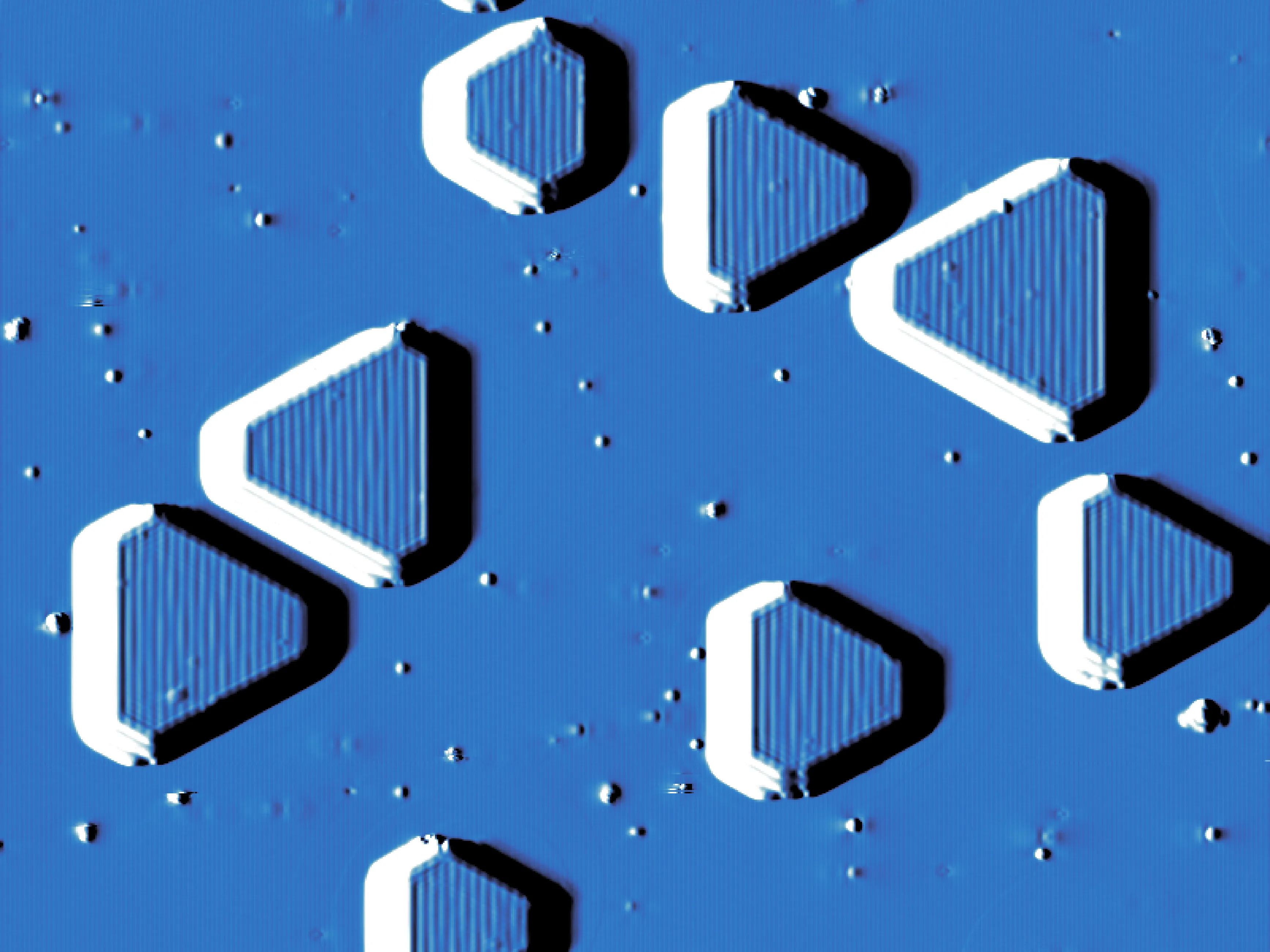
قطرة معدن على سطح شبه موصل تشبه جزيرة في البحر. لكي يصل الإلكترون إلى هذه الجزيرة، يجب أن يدفع "رسومًا": تجاوز الحاجز الذي ينشأ لأن الجزيرة صغيرة جدًا، وأي شحنة إضافية تغير طاقتها بشكل كبير. تُعرف هذه الظاهرة باسم حصار كولوم (Coulomb blockade). وهي أساس الترانزستورات أحادية الإلكترون، حيث يتدفق التيار إلكترونًا واحدًا في كل مرة.
درس العلماء جزر الإنديوم على الفوسفور الأسود باستخدام مجهر مسح نفقي (scanning tunneling microscope) — وهو جهاز يتحسس السطح بإبرة على مسافة أقل من نانومتر. لاحظوا أن الحاجز أمام الإلكترون ليس موحدًا عبر الجزيرة بأكملها: في نقاط مختلفة يكون منزاحًا في الجهد ومنحنيًا بشكل مختلف. وبالمقارنة مع الحسابات، فهم الباحثون أن السبب هو اختلاف "دالة الشغل" (work function) بين الجزيرة والركيزة — أي الطاقة اللازمة للإلكترون للانفلات من المادة. ونتيجة لذلك، يكون المجال الكهربائي حول الجزيرة غير متماثل.
لذا، لضبط الأجهزة أحادية الإلكترون المستقبلية بدقة، يجب مراعاة ليس فقط حجم الجزر، ولكن أيضًا كيفية تفاعلها مع الركيزة. وإلا سيعمل الجهاز بشكل غير متوقع — مثل بوابة دوارة تعمل أحيانًا وأحيانًا لا.
الملخص الأصلي
كما كتبه المؤلفون، بالإنجليزية arXiv:2603.03783
Coulomb blockade (CB) arises in nanoscale systems with ultra-small capacitance, where discrete charging effects dictate electron transport, enabling wide-ranging applications based on single-electron transistors. Despite established electrostatic control of charge states in quantum dots and nanoislands, a rigorous quantitative link between junction parameters and the CB spectrum remains elusive. Here, using scanning tunneling spectroscopy, we investigate the spatial variation of CB in indium nanoislands on semiconducting black phosphorus. We observe spatially dispersive charging resonances whose trajectories exhibit a finite shift of the symmetry axis in bias as well as a pronounced asymmetric curvature. By comparing the experimental results with calculations based on orthodox theory, we show that these features originate from work function differences in the junctions, underscoring the importance of junction-specific electrostatics in nanoscale charge transport.
الإنديوم معدن ينصهر عند 156.6 درجة مئوية: يمكن إذابته في الماء الساخن.