مشرط الإشعاع يصبح أكثر حدة سريع
يشبه العلاج الإشعاعي إطلاق النار من بندقية كبيرة العيار على هدف صغير: حتى الطلقة الدقيقة تصيب مساحة واسعة حول الهدف. سمك "الأثر" — الذي يسمى شبه الظل — في الأجهزة القياسية يتراوح بين 2 إلى 3 مليمترات. بالنسبة لورم في الرئة، هذا ليس مشكلة كبيرة، ولكن بالقرب من عصب أو وعاء دموي، هذه المليمترات تحدد ما إذا كان الشخص سيبقى بصحة جيدة.
جرّب فيزيائيون من عيادة وجامعة خطوة غير تقليدية: خفضوا طاقة الحزمة من 6 إلى 2.5 ميغافولت وأبعدوا المريض عن المصدر إلى أربعة أمتار بدلاً من متر واحد المعتاد. كل خطوة على حدة تضعف الحزمة، لكنها معًا تعطي تأثيرًا غير متوقع — يتقلص شبه الظل إلى مليمتر واحد. ومع ذلك، لا تزال الحزمة تصل إلى الورم على عمق عشرة سنتيمترات.
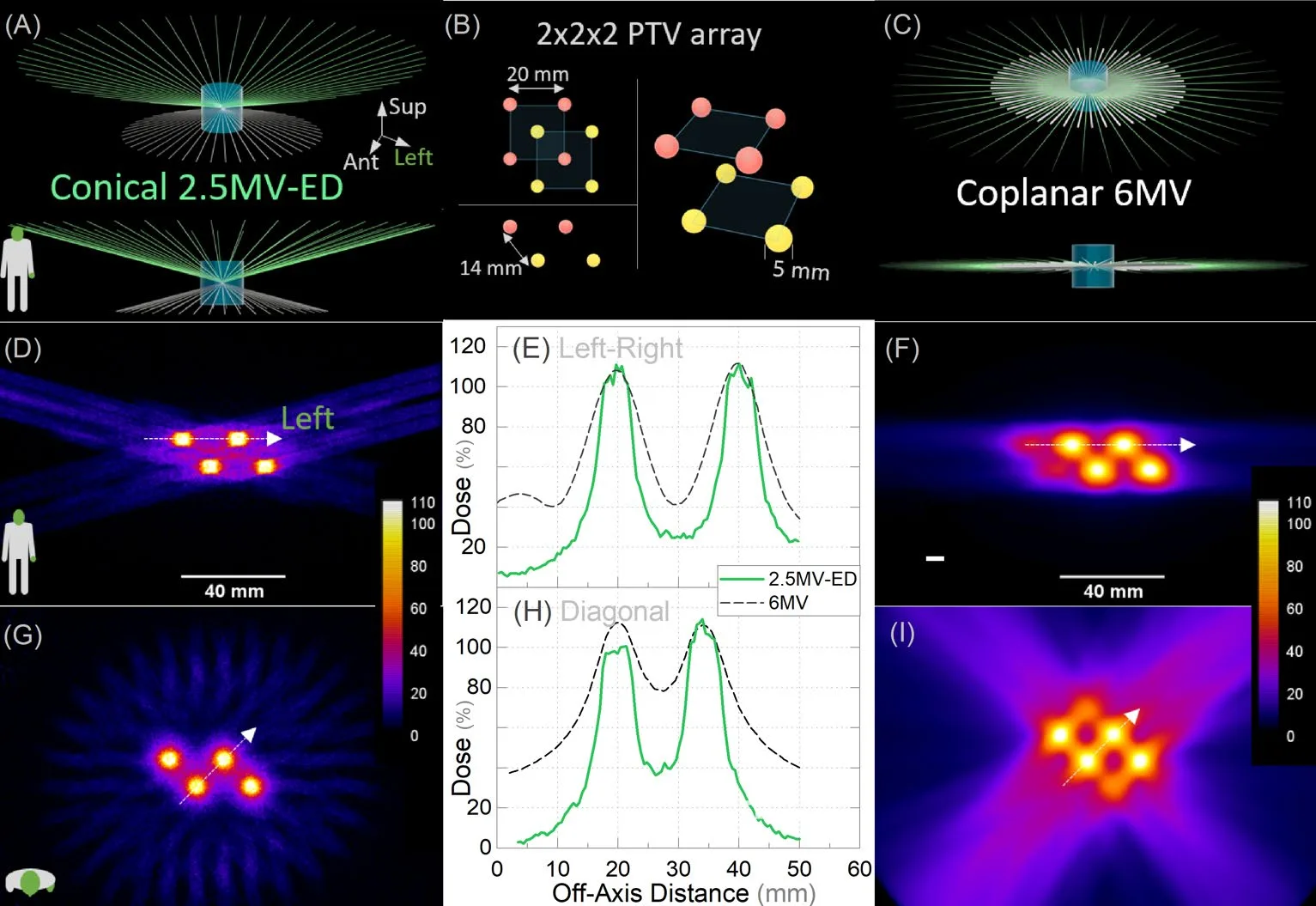
للتحقق من الفكرة، بنى العلماء جهازًا يجلس فيه المريض عموديًا، وتوضع مصادر الإشعاع حوله بشكل مخروطي. في النموذج الحاسوبي، أعطى هذا التصميم توزيع جرعة أكثر تباينًا بمقدار 1.7 مرة من التصميم القياسي. في أحد الأمثلة — تشعيع كرات بقطر 5 مليمترات داخل الورم — زاد الفرق بين النقاط "الساخنة" و"الباردة" من 2.6 إلى 4.5.
هذا يعني أن الطبيب سيتمكن من حرق عقيدات صغيرة جدًا داخل الورم دون لمس الأنسجة السليمة بينها. بالنسبة للمريض، هناك خطر أقل لحروق الجلد وتلف الأعضاء المجاورة — وبالنسبة لعلاج السرطان، هذه خطوة نحو جعل سكين الإشعاع أداة جراحية حقيقية.
الملخص الأصلي
كما كتبه المؤلفون، بالإنجليزية arXiv:2603.07103
Standard 6 megavolt (MV) radiotherapy is limited by source size and secondary electron range to minimum radiological penumbra widths of ~2-3 mm. This study investigates sharper beams via upright radiotherapy with lower energies and extended source-to-patient distances. A 2.5 MV beam from a clinical linac was delivered at a 4 m source-to-phantom distance (2.5 MV-ED). Lateral profiles and percent depth doses were measured in a solid water phantom with radiochromic film and an ion chamber. These single beam measurements were used to benchmark TOPAS Monte Carlo simulations. The validated 2.5 MV-ED model was then used to simulate upright deliveries with a conical beam geometry. These simulations were compared against equivalent plans generated for standard 6 MV-FFF coplanar deliveries at 1 m from the source. The 2.5 MV-ED single 28x28 mm^2 beam produced a measured 80%-20% penumbra of 1.0 +-0.1 mm, compared to 2.4 mm Jaw-defined penumbra for a standard 6MV-FFF beam. The doses at 10 cm depth were 52% vs. 56%, and the surface doses were 22% vs. 38% for the 2.5MV-ED and standard 6 MV-FFF respectively. Conical geometry Monte-Carlo simulations using the 2.5 MV-ED beams demonstrated significantly sharper composite dose fall-off in all cardinal directions compared to coplanar 6MV-FFF plans. For a spatially fractionated lattice example plan with 5 mm diameter high dose spheres, the 2.5 MV-ED conical approach achieved a peak-to-valley dose ratio of 4.5-5.2, compared to the 2.6-2.9 achievable with a standard 6 MV-FFF clinical system. Low-energy, extended-distance photon beams can provide sharper penumbra and lower surface dose, while maintaining comparable depth-dose penetration as standard 6 MV setups. Combined with upright patient setups, ultra-sharp dose distributions with enhanced treatment conformity, reduced toxicity, and higher-fidelity dose modulation are possible.
شبه الظل هو المسافة التي تنخفض فيها الجرعة من 80% إلى 20% من الحد الأقصى. في الحزمة الجديدة، يبلغ مليمترًا واحدًا فقط — أرق من شعريتين بشريتين معًا.
في الخيال العلمي، غالبًا ما تُصوَّر الأسلحة الإشعاعية على أنها سيف ضوئي رفيع. التقنية الجديدة تجعل هذه الصورة شبه حقيقية في الطب: يمكن شحذ الحزمة إلى حافة مليمترية.