الزينون السائل بدلًا من البلورات: الماسح الضوئي يرى بدقة أكبر بثلاث مرات سريع
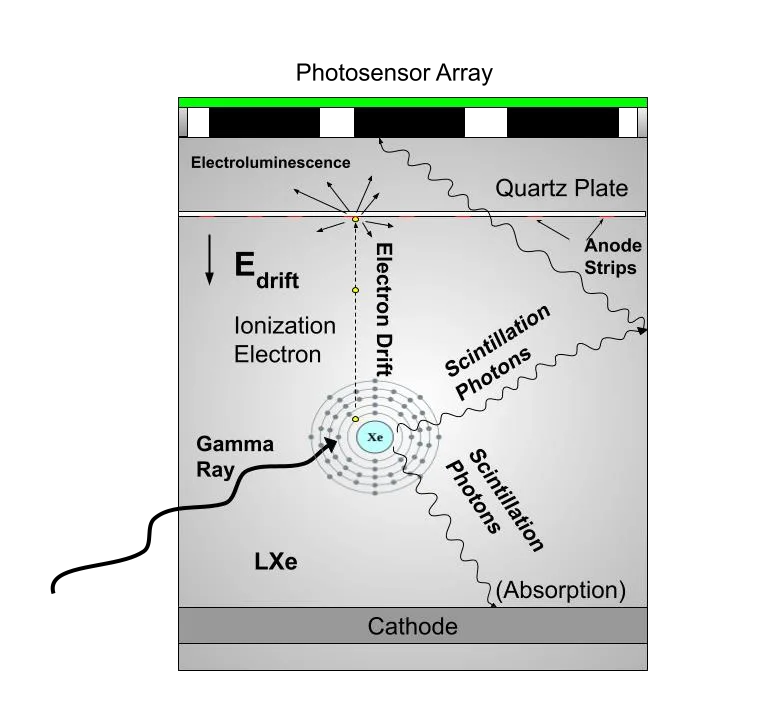
الكاميرا التي تبحث عن الأورام تعمل مثل كاميرا فوتوغرافية حساسة للغاية: فهي تلتقط توهجًا خافتًا من مادة تتراكم في الخلايا المريضة. في الأجهزة التقليدية، يولد الضوء داخل بلورة — قطعة صلبة تشبه الزجاج. لكن البلورة لا تنقل دائمًا بدقة مكان انبعاث الضوء، فتصبح الصورة ضبابية قليلًا.
الفكرة الجديدة هي استبدال البلورة بالزينون السائل. وهو سائل شفاف يتوهج ذاتيًا عند اصطدام جسيم ضوئي به. يكون التوهج نقيًا جدًا: فالزينون لا يخلط بين الدرجات اللونية تقريبًا، لذلك يسهل على الجهاز التمييز بين الضوء "المفيد" والتشويش العشوائي. كما أن السائل يُظهر العمق الذي وُلدت فيه الإشارة داخله — مثل الماء في كوب يكشف مكان سقوط القطرة.
هذه الدقة مهمة عندما يكون الورم صغيرًا أو قريبًا من أعضاء حيوية. يرى الطبيب حدوده بوضوح ولا يمس ما لا ينبغي. كما أن السائل سهل الصب في حاويات بأي شكل — يمكن صنع جهاز أوسع لفحص مساحة أكبر من الجسم في المرة الواحدة.
هذا نموذج حاسوبي حتى الآن، لكنه يحاكي فيزياء الأجهزة الحقيقية. إذا تأكدت الحسابات، فستتمكن أجهزة التصوير المقطعي بالزينون السائل من النظر داخل الجسم بدقة لا نحلم بها اليوم.
الملخص الأصلي
كما كتبه المؤلفون، بالإنجليزية arXiv:2603.25974
Liquid xenon time projection chambers offer a homogeneous detection medium with excellent intrinsic energy resolution, fast scintillation, and true three-dimensional position sensitivity, making them an attractive alternative to crystal-based detectors for positron emission tomography (PET). In this work, we present a new single-phase liquid xenon time projection chamber (TPC) concept optimized for medical imaging, employing combined scintillation and electroluminescence-based ionization readout to enable low-noise signal amplification and intrinsic depth-of-interaction measurement. We evaluate the system-level performance of this detector concept using Monte Carlo simulations based on OpenGATE and Geant4, with direct comparison to conventional LYSO-based PET systems. The study focuses on detection sensitivity, energy-based event selection efficiency, and reconstructed spatial resolution. While LYSO detectors provide higher absolute stopping efficiency due to their higher density, liquid xenon detectors exhibit improved photopeak purity as a result of superior intrinsic energy resolution, leading to enhanced rejection of scattered events. Point-source reconstruction studies demonstrate that the intrinsic three-dimensional position sensitivity of the liquid xenon TPC translates into a reconstructed spatial resolution of approximately 1~mm full width at half maximum (FWHM) at the system level, compared to approximately 4~mm for LYSO-based systems under comparable conditions. These results indicate that liquid-xenon-based PET detectors can achieve competitive or superior imaging performance, particularly for applications requiring high spatial resolution, large axial acceptance, and scalable detector geometries.
الزينون هو الغاز الذي تملأ به مصابيح السيارات الأمامية. في حالته السائلة، يكون شفافًا مثل الماء ويتوهج عند تعرضه لإشعاع غير مرئي.