غرسة مسامية تحمل دواءً: كيف يتحكم تدفق الدم في الجرعة سريع
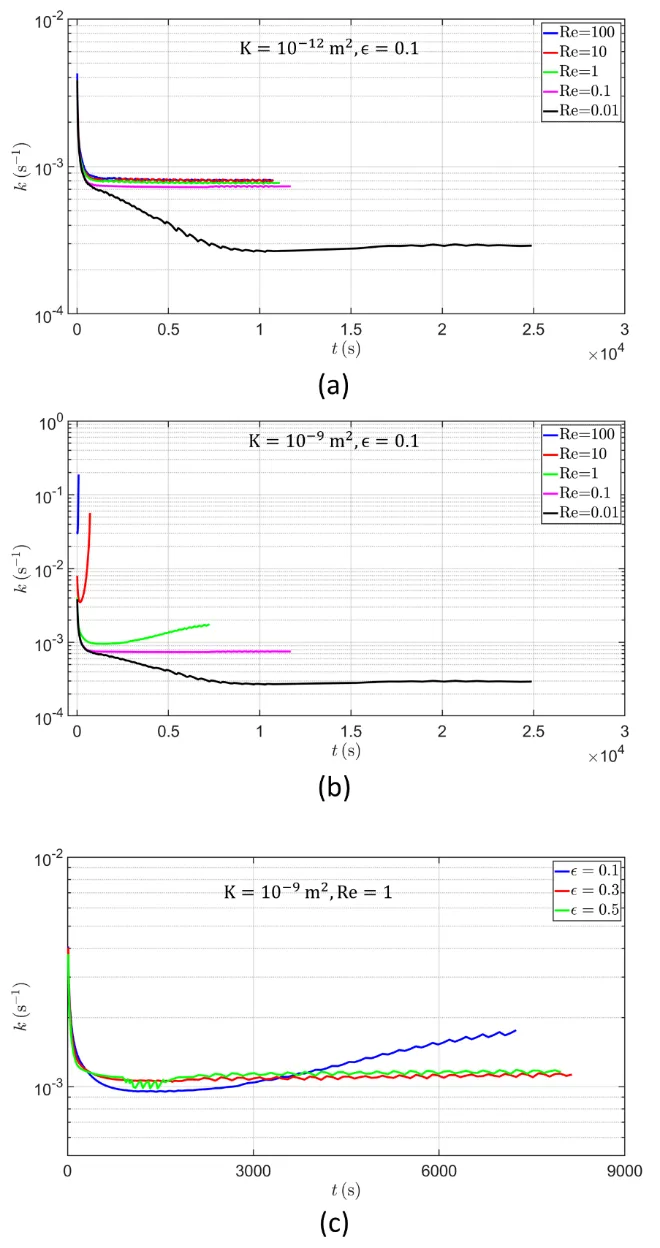
تعمل الغرسة المسامية المملوءة بالدواء مثل إسفنجة تطلق المادة ببطء في السائل المحيط. ولكن إذا كان السائل يتدفق بسرعة، فإنه يغسل الدواء بطريقة مختلفة عن البيئة الساكنة. وقد قام المؤلفون بحساب حاسوبي لكيفية تأثير سرعات التدفق المختلفة وخصائص البنية المسامية على إطلاق الدواء.
اتضح أنه عند سرعات التدفق العالية (أعداد رينولدز الكبيرة)، قد لا ينخفض معدل إطلاق الدواء بل يزداد نحو نهاية عمل الغرسة. هذا أمر غير معتاد: عادةً ما يُطلق الدواء بسرعة في البداية ثم يتباطأ تدريجيًا. يتيح هذا التأثير تمديد فترة إعطاء الدواء وتكييفها مع احتياجات الجسم.
الملخص الأصلي
كما كتبه المؤلفون، بالإنجليزية arXiv:2604.23191
Drug-Filled Porous Implants (DFPIs) are an innovative solution for delivering drugs in a controlled and sustained manner to target sites. To optimize their performance across various physiological conditions, it is essential to understand how fluid flow and porous media properties influence the drug release process. In this work, we numerically investigate a wide range of flow conditions and their effects on drug release from DFPI. The DFPI is modeled as a homogeneous, saturated porous medium, with flow through the porous structure modeled using the Forchheimer-extended Darcy law. Drug diffusion within the DFPI and its transport through the surrounding channel are simulated using a diluted species transport approach. The results reveal the impact of flow conditions and porous media characteristics on the drug release profile of the implant and drug availability within the channel. The variations in drug release behavior are analyzed by modeling the release as an apparent first-order process with a time-dependent rate constant. Notably, the results highlight specific conditions under which the rate constant increases during the later stages of drug release from the DFPI, particularly at high Reynolds numbers, while also ensuring a prolonged operational time period of the implant. These findings suggest the potential for developing intelligent DFPI designs capable of delivering drugs in a manner more attuned to the specific needs of the application.
عدد رينولدز هو نسبة قوى القصور الذاتي إلى قوى اللزوجة في التدفق. بالنسبة للماء في أنبوب، فإنه يحدد ما إذا كان التدفق صفحيًا أم مضطربًا.