صياد حرارة الأرض في الأعماق سريع
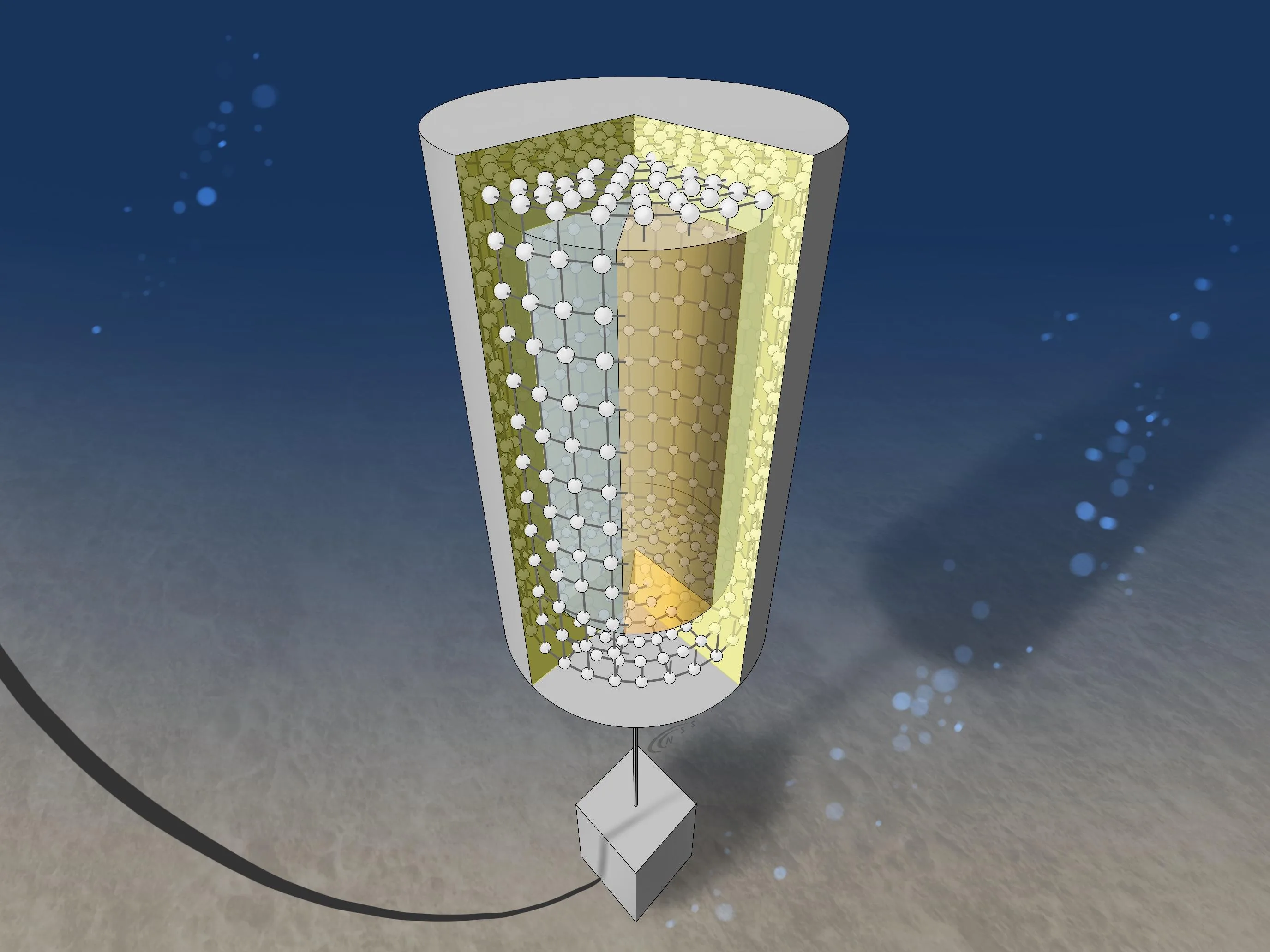
في أعماق المحيط، حيث لا يصل الضوء، تولد خطة لاصطياد جسيمات لا تتفاعل تقريبًا مع أي شيء. الجيوتريونات (geoneutrinos) — رسل صغيرة من الوشاح الملتهب — تنطلق عند تحلل اليورانيوم والثوريوم. تدفقها يحمل معلومات عن كمية الحرارة المخبأة تحت أقدامنا.
تعاني الكاشفات الأرضية من خلفية قوية: إشارة القشرة تطغى على صوت الوشاح الخافت. الجهاز الجديد، المغمور على بعد كيلومترات في المحيط، يستخدم عمود الماء كدرع. تظهر الحسابات أن التداخل سينخفض بمقدار 50 إلى 100 مرة. هذا مثل الاستماع إلى همسة في غرفة هادئة بدلاً من محطة قطار صاخبة.
يقوم الباحثون بالفعل بتجميع النماذج الأولية واختبار المعدات. في المستقبل، سيكون نفس الجهاز مفيدًا لمهام متعددة التخصصات — من علم المحيطات إلى فيزياء الجسيمات. صياد حرارة الأرض بدأ رحلته للتو.
الملخص الأصلي
كما كتبه المؤلفون، بالإنجليزية arXiv:2606.20780
This report introduces the concept, prototype design, projected costs, and scientific goals of a mobile experiment for detecting geoneutrinos originating from uranium and thorium decay chains in the Earth's mantle. This will constrain the planet's radiogenic heat production and unearth its geochemical makeup. This design of a deep-ocean mobile neutrino experiment, which is not mirrored by any active or planned experiments, supports physics and geoscience's goal of multi-modal data on the Earth's internal composition and structure. Based on geoscientific studies, this design is expected to achieve a 50--100-fold reduction in crustal background compared to similarly sized continental detectors, thereby enabling direct measurements of mantle geoneutrinos. The multiple stereoscopic projections enabled by the detector's unique mobility can map spatial variations in heat-producing elements within the mantle. Beyond discussing the design, we report on our collaboration's most recent hardware developments in the active prototyping of this detector. We briefly highlight the potential multiuse and interdisciplinary nature of this detector.
يمكن لجيوتريون واحد أن يعبر الكوكب بأكمله دون أن يصطدم تقريبًا بأي ذرة. لالتقاط بضع جسيمات فقط، نحتاج إلى كاشفات بحجم منزل صغير.