كيف تُنمّي نمطًا غير مستقر سريع
يريد بستاني أن يزرع زهرة نادرة. لا بد أن يكون الري والتسميد وفق جدول صارم، لا بشكل عشوائي: دفء أكثر قليلًا في الصباح، ورطوبة أقل قليلًا في المساء. وإلا ستغزو الأعشاب الضارة العادية الحديقة. هذا هو الحال تقريبًا مع الجزيئات على سطح المعدن.
عندما تستقر الجزيئات العضوية على المعدن، فإنها تتجمع في أنماط — مثل قطع الفسيفساء. قد يوصل أحد الأنماط الكهرباء بشكل أفضل، وآخر بشكل أسوأ. لكن النمط الأكثر رغبة غالبًا ما يكون غير مستقر: امنح النظام حرية التصرف، وسيعيد ترتيب نفسه في بنية أبسط، "أعشاب ضارة". التقاط اللحظة المناسبة وتثبيت النمط الهش — مهمة ذات مجاهيل كثيرة.
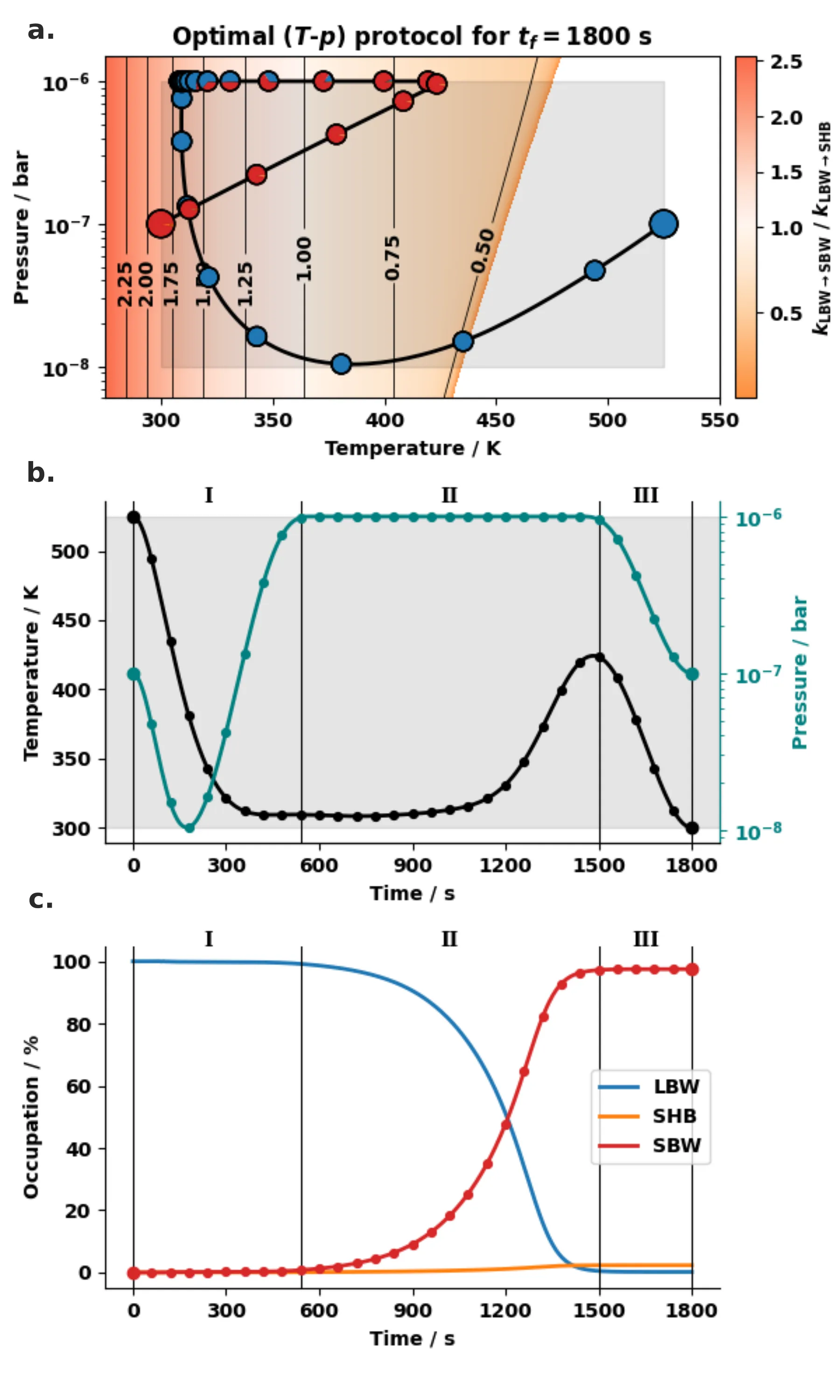
أظهرت الحسابات: إذا غيّرت الظروف ليس بشكل متدرج بل بسلاسة، على مسار ذكي، يمكنك تجاوز الفخاخ ورفع ناتج النمط المطلوب إلى 97%. الضبط اليدوي لبروتوكول من ثلاث خطوات أعطى 73% فقط. الفرق — مثل الفرق بين الحرفة اليدوية وخط التجميع.
هذا النهج ليس مرتبطًا بمواد محددة. إنه يشبه جهاز تحكم عالمي لنمو البلورات — من أجهزة الاستشعار إلى الألواح الشمسية. يحصل البستاني على ليس فقط إبريق الري، بل أيضًا جدول ري دقيق لكل زهرة نادرة.
الملخص الأصلي
كما كتبه المؤلفون، بالإنجليزية arXiv:2607.03371
The reliable growth of a desired target structure remains a central challenge for organic-inorganic interfaces. Specific interface structures can exhibit properties that are superior compared to those of other possible interface structures, but identifying growth conditions that selectively produce a given surface structure is difficult, particularly when the target structure is thermodynamically metastable. Here, we demonstrate how time-dependent temperature and pressure protocols can be optimized to promote the high-yield formation of a metastable surface polymorph. To this end, we combine kinetic Monte Carlo simulations with a parameterized nucleation-and-growth model and apply optimal control theory to predict growth recipes that maximize the yield of the desired target structure. Applying this approach to a prototypical model of an organic molecules adsorbed on a metal surface, we identify experimentally plausible protocols that guide the system through phase space while avoiding kinetic growth regimes in which formation of the thermodynamically stable structure is favored. Compared to a manually optimized three-step protocol, the optimized control trajectory increases the yield of the desired metastable phase from 73 % to 97 % for the same total protocol duration.
الفرق البالغ 24% بين التحسين اليدوي والتحسين التلقائي يمكن مقارنته بموقف يكون فيه من بين كل مئة قطعة، القطع المعيبة ليست 27 بل 3 فقط — إنتاج شبه مثالي.