تعلّم التصوير بالرنين المغناطيسي للدماغ ألا ينسى سريع
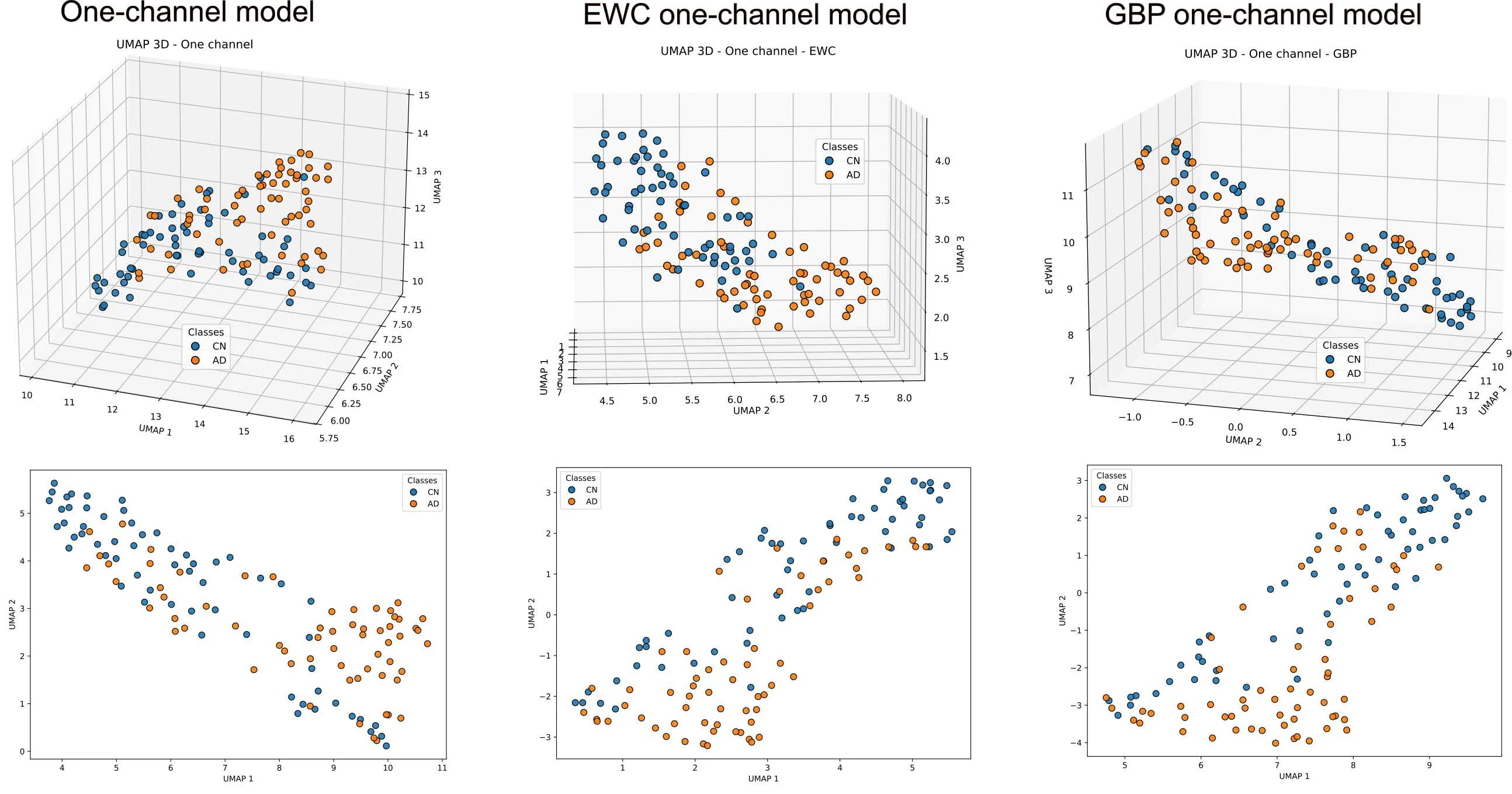
يقضي الطبيب سنوات في تعلّم تمييز الأمراض من صور الدماغ. في البداية، يرى علامات الشيخوخة بوضوح، ثم يتقن الأورام، وفجأة يبدأ بالخلط بين ما كان يعرفه سابقًا. وهذا ما تفعله العديد من الشبكات العصبية: المعرفة الجديدة تمحو القديمة.
النموذج الجديد Alcmaeon يحل هذه المشكلة بأسلوب يشبه الملاحظات على هوامش الكتاب. طريقة Graph-Blueprint Pruning تحدد في الشبكة "ملخصات مرجعية" — مجموعات من الروابط بالغة الأهمية للأمراض التي تم تعلمها بالفعل. تُجمَّد هذه الملخصات، بينما يتعلم باقي الشبكة بحرية على بيانات جديدة. اختُبر النموذج على أربعة مجالات: الشيخوخة الصحية، والتنكس العصبي، ونمو الدماغ، والأورام. عند الانتقال إلى الأورام، حُفظت المهارات القديمة بشكل أفضل — لم تنسَ الشبكة رؤية ما كانت تراه سابقًا.
المثير للاهتمام أن "الملخصات" اختلفت باختلاف المهام. لتصنيف الأمراض، عملت طبقات معينة من الشبكة بشكل أفضل، بينما للتنبؤ بالبقاء على قيد الحياة، عملت طبقات أخرى. لم يُعثر على وصفة عالمية، لكن النهج نفسه يعطي أملًا في إنشاء مساعدين طبيين دائمين حقًا. فالدماغ، على عكس الكمبيوتر، يعرف كيف يتعلم طوال الحياة دون محو الذكريات القديمة — وAlcmaeon يخطو خطوة في هذا الاتجاه.
الملخص الأصلي
كما كتبه المؤلفون، بالإنجليزية arXiv:2608.08319v1
Brain magnetic resonance imaging (MRI) is central to neuroscience and clinical assessment, but models are commonly developed for individual diseases, populations or imaging protocols. Foundation models promise more general representations, yet they are usually pretrained once and can lose earlier capabilities when updated with new data. Here we show that Alcmaeon, a three-dimensional brain MRI foundation model pretrained without manual labels on more than 425,000 volumes and derived imaging maps, can be expanded sequentially across clinical domains. Alcmaeon combines volumetric encoding and latent diffusion generation with Graph-Blueprint Pruning (GBP), which protects network modules important to earlier domains while leaving the remaining capacity trainable. Across expansion from healthy ageing and neurodegeneration to developmental, psychiatric and tumour imaging, GBP showed less forgetting than sequential adaptation and elastic weight consolidation across voxel-level reconstruction measures, with its largest advantage after adaptation to tumour imaging. The blueprints provided an inspectable record of how model capacity was protected and reused. Representations from different model levels supported image synthesis, disease classification, survival modelling and postoperative prediction, although no single representation was optimal for every task. These findings provide a route towards brain MRI foundation models that can grow with emerging data while retaining earlier capabilities.
تعمل طريقة Graph-Blueprint Pruning مثل "السجلات المحمية" في دفتر ملاحظات: لا يمكنك مسح الصيغ المهمة عن طريق الخطأ، لكن على الصفحات الفارغة يمكنك كتابة ما تشاء.