شعيرات مرنة في تيار: كيف تجعلها اللزوجة تنحني معًا سريع
شفرات العشب في الجدول تتمايل كلٌّ على حدة، لكن إذا نبتت عدة شفرات متجاورة، فقد تنحني كأنها واحدة. هذا تقريبًا ما فعلته الصفائح المرنة في تجربة جديدة مع سائل يغير كثافته عند التدفق.
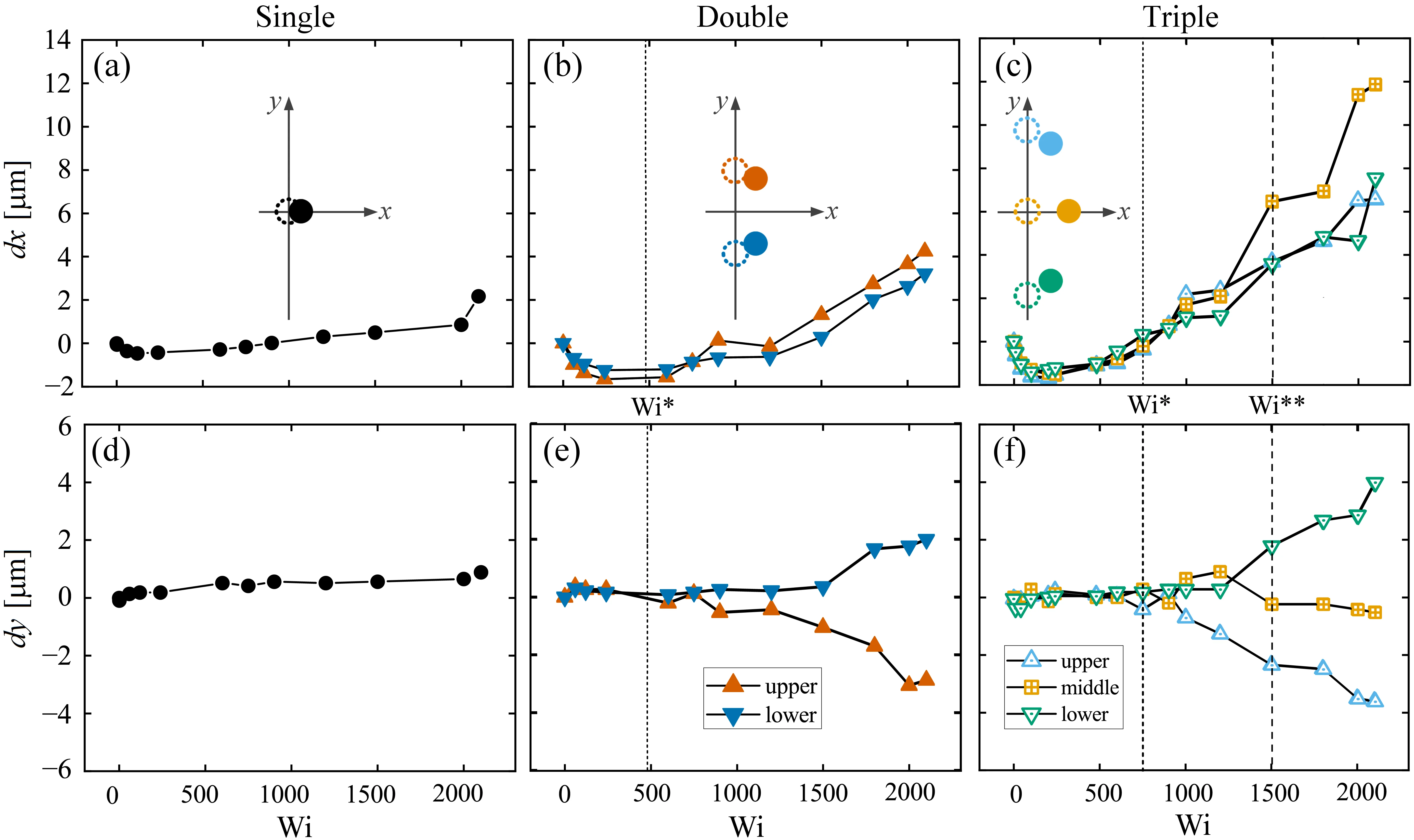
غمر العلماء صفوفًا من الصفائح المرنة في السائل — من واحدة إلى ثلاث — وراقبوا الأثر الذي يتبعها، الشبيه بالذيل. في سائل يصبح أكثر سيولة قليلًا عند الحركة السريعة، تركت الصفيحة الواحدة ذيلًا طويلًا. لكن عندما كانت هناك صفيحتان أو ثلاث، اندمجت ذيولها في تيار واحد عريض، وانحنت الصفائح نفسها نحو بعضها البعض. ولثلاث صفائح، كان لا بد من تسريع السائل بقوة أكبر مما هو الحال لصفيحتين.
في سائل آخر يفقد كثافته بشكل حاد جدًا، ظهرت الذيول لكنها لم تندمج، ولم تقترب الصفائح. إذن، مجرد ظهور الذيل ليس كافيًا: نحتاج إلى كل من السيولة الخاصة للسائل وتجاور الصفائح.
هذا الاكتشاف سيساعد في صنع أجهزة متناهية الصغر حيث يجب أن تتحرك الأجزاء المرنة بتناسق، مثل المضخات المجهرية بدون أجزاء متحركة.
الملخص الأصلي
كما كتبه المؤلفون، بالإنجليزية arXiv:2608.13908v1
Fluid-structure interaction (FSI) in viscoelastic flows past deformable structures at low Reynolds numbers remains poorly understood, despite its relevance to biological systems such as cilia and flagella, and to engineered microsystems. We investigate viscoelastic FSI in side-by-side flexible cantilever arrays using a bottom-up approach that systematically varies the number of cantilevers and the rheology of the test fluid, comparing weakly shear-thinning (WS) and highly shear-thinning (HS) polyethylene oxide solutions. For both fluids, with increasing Weissenberg number (Wi), an elongated elastic wake develops behind a single isolated cantilever. For multiple cantilevers, the WS fluid undergoes a transition at a critical Weissenberg number (Wi*) from separated to merged elastic wakes, accompanied by the emergence of a divergent flow field and coordinated inward spanwise cantilever deflection. The critical Wi* increases as the number of cantilevers in the array is increased from two to three, demonstrating a strong dependence of the onset on the array configuration. For the HS fluid, wake merger, flow divergence, and inward cantilever deflection are suppressed across the full range of Wi investigated, despite comparable elasticity and the formation of elastic wakes. This contrast shows that elasticity alone promotes wake formation but is insufficient to produce the collective instability, which instead requires both shear-thinning and interactions between neighboring cantilevers. These findings demonstrate that viscoelastic FSI in flexible arrays is governed by the combined effects of fluid elasticity, shear-thinning, and geometric configuration, with elastic wake interactions mediating the collective instability and linking local elastic wakes to array-scale structural response.
الأهداب في رئتينا تضرب في مخاط سائل يتصرف أيضًا ليس كالماء: عند الحركة السريعة يصبح أكثر سيولة.
في فيلم «الرحلة الرائعة»، يقلص العلماء غواصة إلى حجم الخلية — هناك يتصرف تيار السائل بشكل مختلف تمامًا عن عالمنا.