The Tree That Forgot to Defend Itself express
In the mountain forests of China grows a tree that remembers the dinosaurs. Cathaya argyrophylla is a living fossil; its lineage split from pines over a hundred million years ago. But instead of a mighty long-liver, we have a vulnerable species: it grows slowly and often falls ill. Why — was long a mystery.
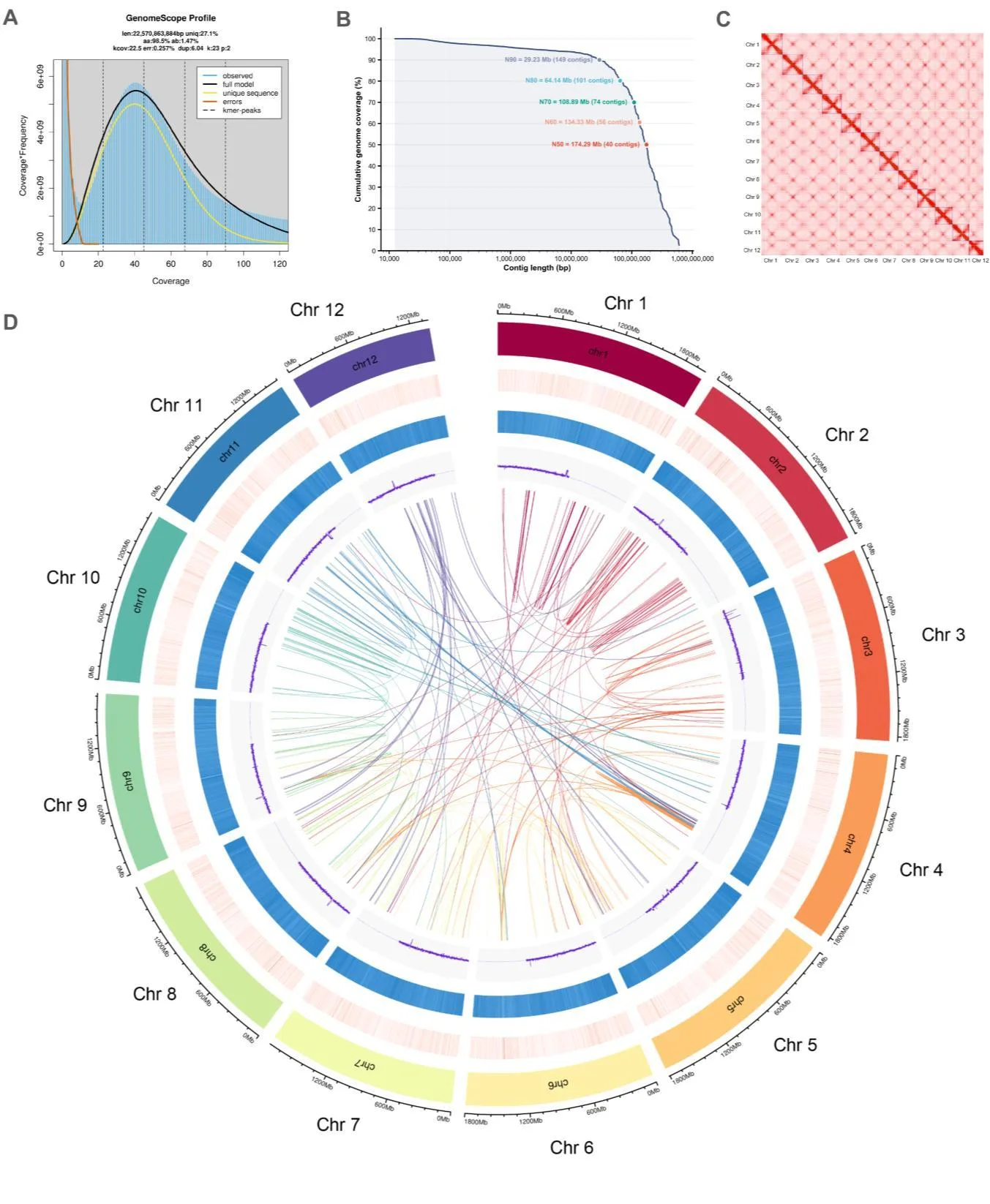
The answer was found in 22 billion letters of DNA. The genome of this tree resembles a bloated encyclopedia where useful articles drown in endless repeats. Nearly three-quarters of the genome consists of repetitive regions that code for nothing. But the main discovery is not the size. The genes responsible for defense against fungi and bacteria turned out to be compressed to a minimum. The plant seems to have unlearned how to defend itself on its own.
Instead, the genes that control the transport of substances across cell membranes are expanded. This is like a house with a leaky roof but a huge staff of couriers. The tree, it seems, survives thanks to symbiosis: it lets in needed molecules from fungi and helper bacteria through its roots. Without them, it is like a defenseless child in the forest.
Now biologists know the species' weak points at the molecular level. They can select the right microbial partners for seedlings or boost the fallen defense genes. The genome has become a treasure map for conservation programs.
Original abstract
as written by the authors arXiv:2604.22440
Cathaya argyrophylla is an endangered paleoendemic gymnosperm characterized by restricted ecological adaptability and high pathogen susceptibility. To elucidate its genomic architecture and evolutionary history, a de novo chromosome-level genome assembly was constructed using PacBio High-Fidelity long reads and Hi-C scaffolding. The resulting 22.73 Gb assembly resolves into 12 pseudochromosomes, demonstrating genome gigantism driven primarily by a 72.92 percent repeat sequence content and extensive intron expansion. Phylogenomic analysis using single-copy orthologs identifies C. argyrophylla as a sister lineage to the Pinus clade, with an estimated divergence time of 102.8 million years ago. Analysis of gene family dynamics reveals significant expansions in pathways related to membrane lipid metabolism, transmembrane transport, and translation machinery, indicating specific molecular adaptations for cellular homeostasis in resource-limited environments. Conversely, the genome exhibits massive contractions in endogenous defense networks, including plant-pathogen interactions, brassinosteroid signaling, and DNA repair mechanisms. This distinct genomic reduction correlates directly with the slow growth rate and weak innate immunity observed in the species, while the expanded transmembrane transport networks suggest an obligate physiological reliance on symbiotic microbiomes for survival. Ultimately, this reference genome establishes a critical molecular resource for future conservation and breeding programs.
The Cathaya genome is six times larger than the human genome, even though the tree itself is no taller than a pine — the extra bulk is all repeats and long noncoding insertions within genes.
In the novel Dune, the ecosystem of Arrakis depends on the symbiosis between sandworms and the spice — Cathaya reminds us that on Earth, too, there are species entirely dependent on invisible allies.