Genetic diagnostics is like comparing two photos taken with different cameras. If one camera slightly shifts the colors, the image will show "defects" that don't exist in reality.
A cell is like a kitchen where thousands of recipes (genes) are collected in one thick book (DNA). The chef-protein Klf4 flips through the pages and decides which recipe to cook today. But how does it find the right line among billions of letters? Previously, researchers thought the protein looked for a short 'password'—a few consecutive letters.
Youth can be poured into test tubes. That is exactly what researchers at Princeton did: they took young Caenorhabditis elegans worms, gently broke their cells apart, and got a liquid resembling a nutrient broth. Then they added this broth to living worms and watched how long they lived. The result was unexpected: average lifespan rose by 21%.
Inside a cell, work is in full swing: thousands of genes switch on and off like lights on a huge display. Neural networks trained to read this display have learned to guess what will happen if you 'turn off' one gene or add a drug. But how exactly they do it is a mystery.
You can edit a cell perfectly, and it still turns out useless. The gene is fixed exactly as planned, yet the cell behaves unpredictably: it drifts, changes fate, loses safety. It's like fixing one gear in a watch, but the watch still runs wrong because the whole mechanism is out of sync.
Previously, a cell was viewed as a list of independent parts.
Microbial communities are like a noisy orchestra: thousands of instruments, and it's hard to tell who's playing the lead. In the gut, ocean, or soil, millions of bacterial species live, and scientists need to figure out which ones truly matter for human health or soil fertility.
The new approach works like smart laundry sorting.
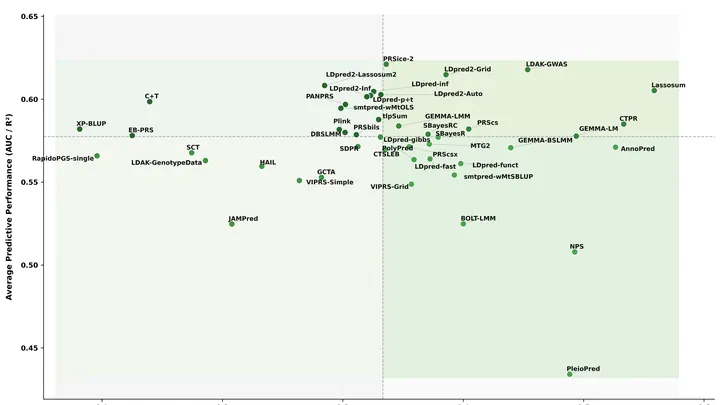
Geneticists read DNA like a long list of letters. From it, they compute a "polygenic risk score" — a number that shows how much higher or lower a person's chance of getting a disease, like diabetes, is compared to average.
An orchestra without a conductor. Each musician plays their own part, and the overall volume builds, but the melody falls apart — violins rush ahead, brass lags behind. Cells behave much the same way when their DNA is modified: they may shift, but some move far, while others stay put.
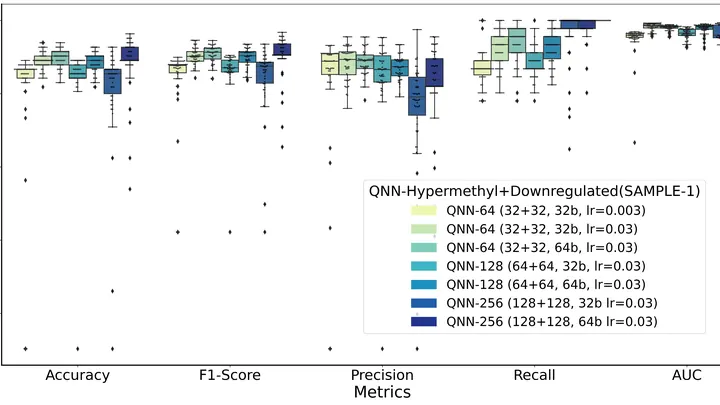
Two nearly identical locks are opened by the same pick. They look alike on the outside, but inside the mechanisms differ. Much the same can be said for the two main types of non-small cell lung cancer — adenocarcinoma and squamous cell carcinoma. Under a microscope, they can be confused, yet they require different treatments. That's where the quantum "magnifier" comes in.
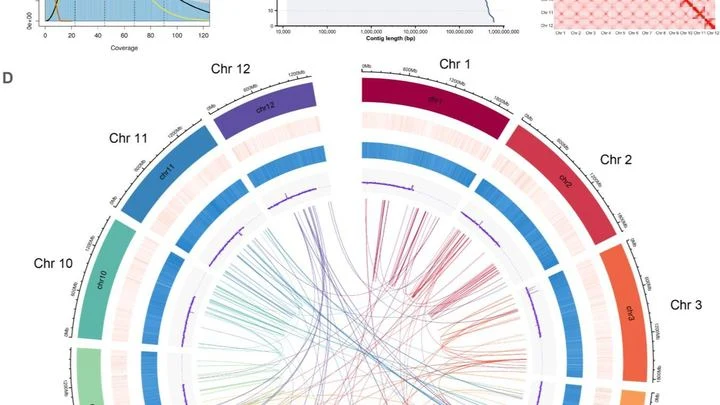
In the mountain forests of China grows a tree that remembers the dinosaurs. Cathaya argyrophylla is a living fossil; its lineage split from pines over a hundred million years ago. But instead of a mighty long-liver, we have a vulnerable species: it grows slowly and often falls ill. Why — was long a mystery.
The answer was found in 22 billion letters of DNA.
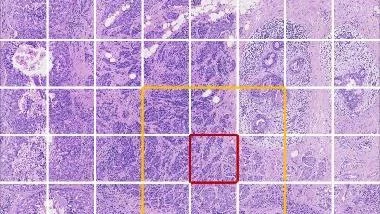
A tongue tumor is like a stranger in a crowd. On the surface, they all look much alike, but beneath the surface hide very different personalities. Some tumors behave aggressively, others grow slowly. Doctors need to understand who they're dealing with before surgery.
Usually, this means taking a tissue sample — a biopsy.
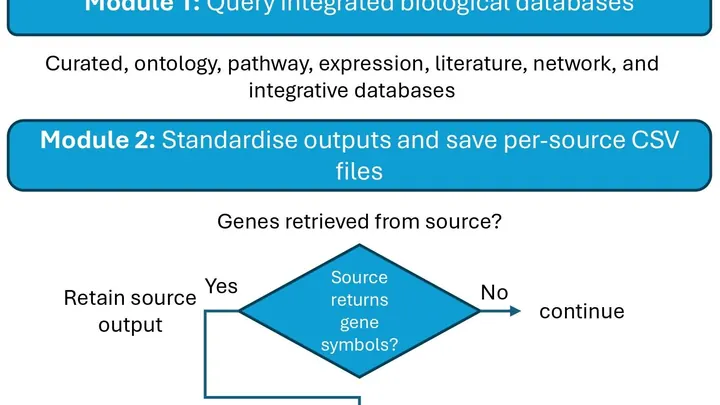
Assembling a puzzle when the pieces are scattered across 13 boxes with different numbering systems: that's roughly what it's like to search for genes linked to a specific disease. The data exist, but they're hidden in databases with their own interfaces, formats, and even descriptive languages.
On one side of the scale are the genes you inherited from your parents. On the other is how many hours you actually sleep. For a long time, it seemed genetics pulled harder. But a new study covering more than 200,000 people shows that real sleep can tip the balance, especially when it comes to excess weight and diabetes.
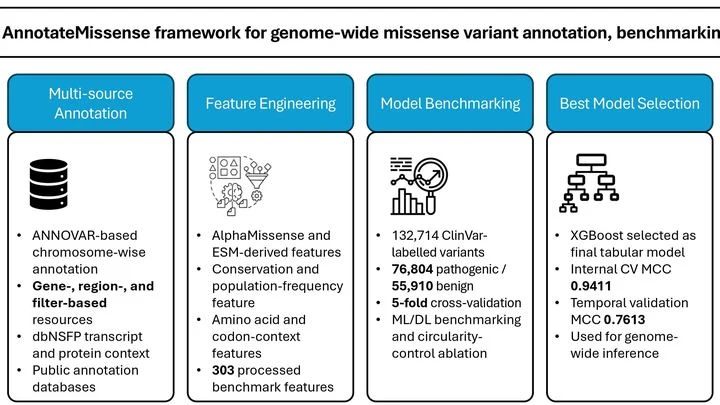
In a vast library where each book is a gene, you need to find a single typo. The error might be harmless, or it might completely change the meaning of the sentence. That's roughly what geneticists do when they hunt for harmful mutations among millions of harmless differences.
The program, named AnnotateMissense, works like a meticulous proofreader.
A translator doesn't learn a language from a textbook but by listening to live speech and immediately seeing what people do in response to words. That's exactly how the new method C3P reads bacterial DNA. Standard genomic models try to learn the rules by simply "rereading" billions of letters of the genetic code, and often get confused.
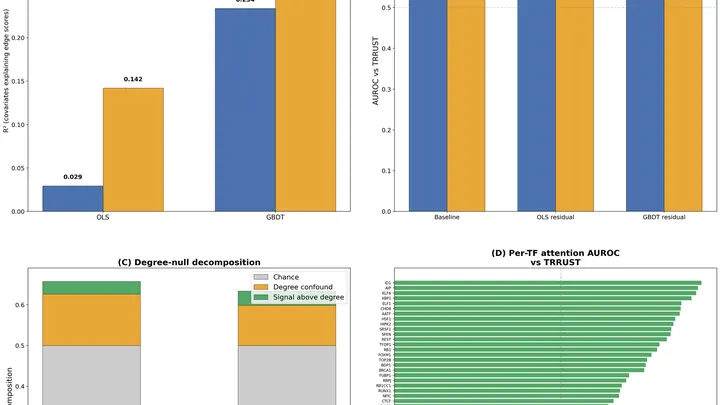
You buy a new kitchen scale, but instead of exact weight, it only shows deviations from some "norm." To find out how much an apple weighs, you first have to weigh dozens of other apples and calculate the average.
Imagine a flashlight that only lights up when you're near a road sign: that's roughly how drug discovery works when scientists follow genetic clues. A team of researchers examined over 26,000 target-disease pairs: combinations of a protein that a drug acts on and the disease it treats.
A hefty multi-volume reference book is the human reference genome. And the short sentence fragments scattered across the table are millions of sequenced DNA reads. The job of a navigator like BWA-MEM is to find the exact spot in the reference for each fragment.
When biologists measure the activity of thousands of genes, they usually just see a list of coincidences, like two ingredients in a soup that often end up together. The standard method looks for such pairwise connections but doesn't show who influences whom.
A new approach, like a detector of dark matter, uncovers hidden threads of causation.
Neural networks trained on genetic text can 'read' the DNA of bacteria. Scientists took the powerful Evo 2 model and added a tiny, tunable sensor, a genetic probe, without touching the model itself. The probe picks up signals associated with dangerous genes, like antibiotic resistance.
For a long time, biologists studied cells by listening to just one voice in a polyphonic choir: measuring gene activity while ignoring how DNA is packed. It's like trying to grasp a conversation knowing only one language. LATTICE fixes this: the program learns five molecular 'languages' at once — from gene activity to spatial markers.
Genes are like houses in a city: in some, life bustles; in others, silence reigns. This 'urban' genetic landscape was analyzed in a thousand women with breast cancer.
Blood stem cells are like spare keys to a house: they open the door to any room, but over time they wear down and start to stick. In an elderly person, such keys handle the locks worse, and the blood renews itself more slowly. Scientists have long been searching for a way to make a duplicate that stays new even after heavy use.
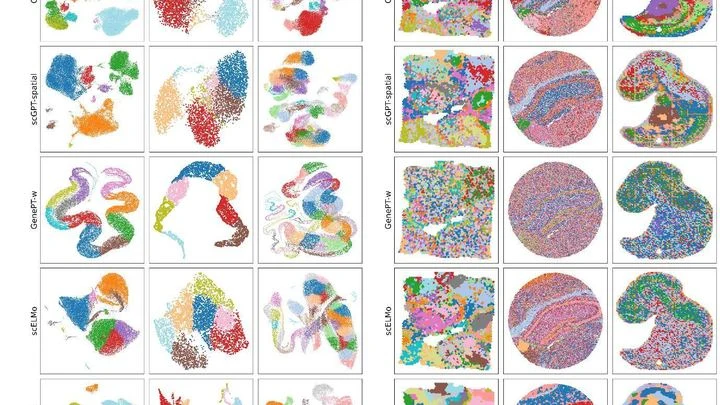
Biologists are increasingly trusting computers to read the "user manuals" of living cells. Six recent AI models (Nicheformer, CellPLM, scGPT-spatial, GenePT, scELMo, and Novae) are like six translators working from different dialects of the same cellular language.
By 2025, large language models like GPT are no longer just chatting: they're helping scientists run experiments. But the same tool could fall into the wrong hands. A team of researchers built a digital proving ground to find out.
A huge orchestra without a conductor. Each musician is a gene, and the melody is the cell's complex work. Previously, looking at a tissue photo, a computer tried to guess each instrument's part individually. It didn't know that violins usually play with violas, and trumpets with trombones. The program just output a list of notes, without sensing the harmony.
In any complex community, whether an orchestra or a colony of microbes, you can notice a rhythm. In the mouse gut, bacteria change their abundance every day, and for a long time it seemed they were syncing their internal clocks with the host's. But when researchers looked closely at hourly measurements, the familiar picture fell apart.
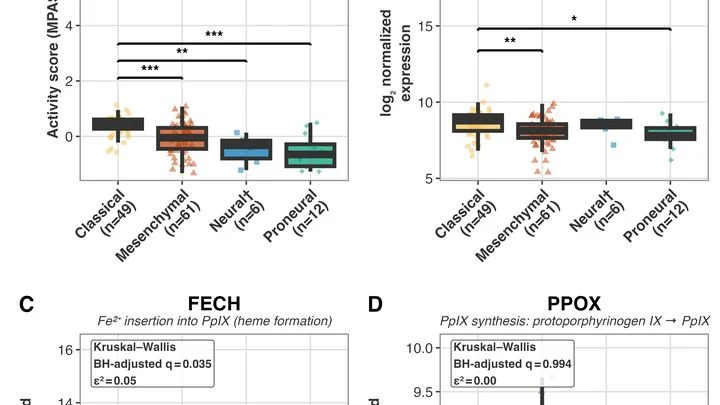
Imagine a workshop where glowing paint is assembled. A worker takes a precursor, adds the right pigment, and the paint is ready. Nearby, a supervisor redirects some of the paint to another warehouse and dumps the rest as waste. Similarly, brain tumor cells themselves produce the substance that makes them glow under the surgeon's blue lamp.
At the end of every chromosome sits a cap made of repeating DNA letters: the telomere. For a long time it was measured as an average length across all chromosomes, as if judging a library by the average thickness of its books. But in humans, three ends, 17p, 20q, and 12p, are consistently shorter than the rest, and they are the ones more often linked to genome damage.
In a house where different families live, some age faster, others slower. The same goes for the brain: neurons of different types age at different rates. Some cells vanish by middle age, others hold out into deep old age. Why this happens remained a mystery for a long time.
Picture an old house where every room ages in its own way: in one, the wallpaper has faded; in another, the floorboards creak; and in a third, everything looks brand new. The brain ages much the same way: different cell types accumulate changes at different rates, and until recently we had no tool to peer into each "room" and measure its age separately.
The liver is an orchestra in which every cell plays its part from a shared score. Males and females have different scores: in males, the genes responsible for detoxifying foreign substances and steroid hormones sound louder, while in females, the genes for fat metabolism and bile acids do.
On a crowded train, some passengers ride in silence while others push toward the exit, shoving their neighbors aside. In every person's blood, mutant cells appear with age, and their fate is much the same: most changes are neutral, like passengers who are simply along for the ride, but some give a cell an edge, and it starts dividing faster than the rest.
In the orchestra of our immunity there are three conductors, and each has a score of their own. One tells the musicians to play softer when a threat appears in the hall, another does the opposite and cranks up the noise, and the third conducts in such a way that the hall fills with sound, though nobody can say why.
In an orchestra that has been playing the same symphony for years, the musicians gradually start to drift: each one plays on their own, yet the notes remain the same. That is roughly what happens to cells as they age. Scientists have come up with a way to measure this discord, that is, how faithfully each cell follows the shared program of gene expression.
Two different microphones are recording the same concert. One microphone stands by the stage and mostly picks up the loud sounds from the front row; the other hangs from the ceiling and hears the whole hall, but with the bass muffled. If you compare the recordings, you can figure out how much of the noise in them comes from the microphone and how much from the orchestra itself.
An old cell is like a house where one room has been locked for decades: the door shut, the lights off, and everyone has long forgotten what's inside. In female mammals, that locked room is the inactive X chromosome, one of two copies that the cell switched off early in development to avoid a double dose of genes. But with age, the lock starts to wobble, and genes from that room speak up again.
A book draft before printing often carries extra pages: marginal notes, repetitions, crossed-out paragraphs. The print shop doesn't include them, but the author keeps them in case of revisions. The genome of the nematode Auanema rhodense works in much the same way: its germ cells hold the complete draft at 180.9 megabases, while the body cells retain only 60 megabases of clean text.
A thousand candidates are sitting in the interview room, but only two hundred will be hired. It used to seem that to accurately estimate age from DNA, you had to interview every one of the thousand sites where a chemical mark alters gene activity. Now it's clear: you can hear out just a fifth of them, and the final decision barely changes.
Seven books in one language, each with different notes in the margins. That is what the genomes of seven Indonesian rice varieties look like after scientists read them letter by letter. Every variety is a separate translation of the same book, and the task was to find the places where the translations diverge.
First, the researchers grew the rice in a greenhouse and extracted DNA from the leaves.