Speedy quantum bubbles mimic the early universe ⚡ экспресс
Original: "Resonant false vacuum decay in two dimensions on a 4000-qubit quantum annealer"
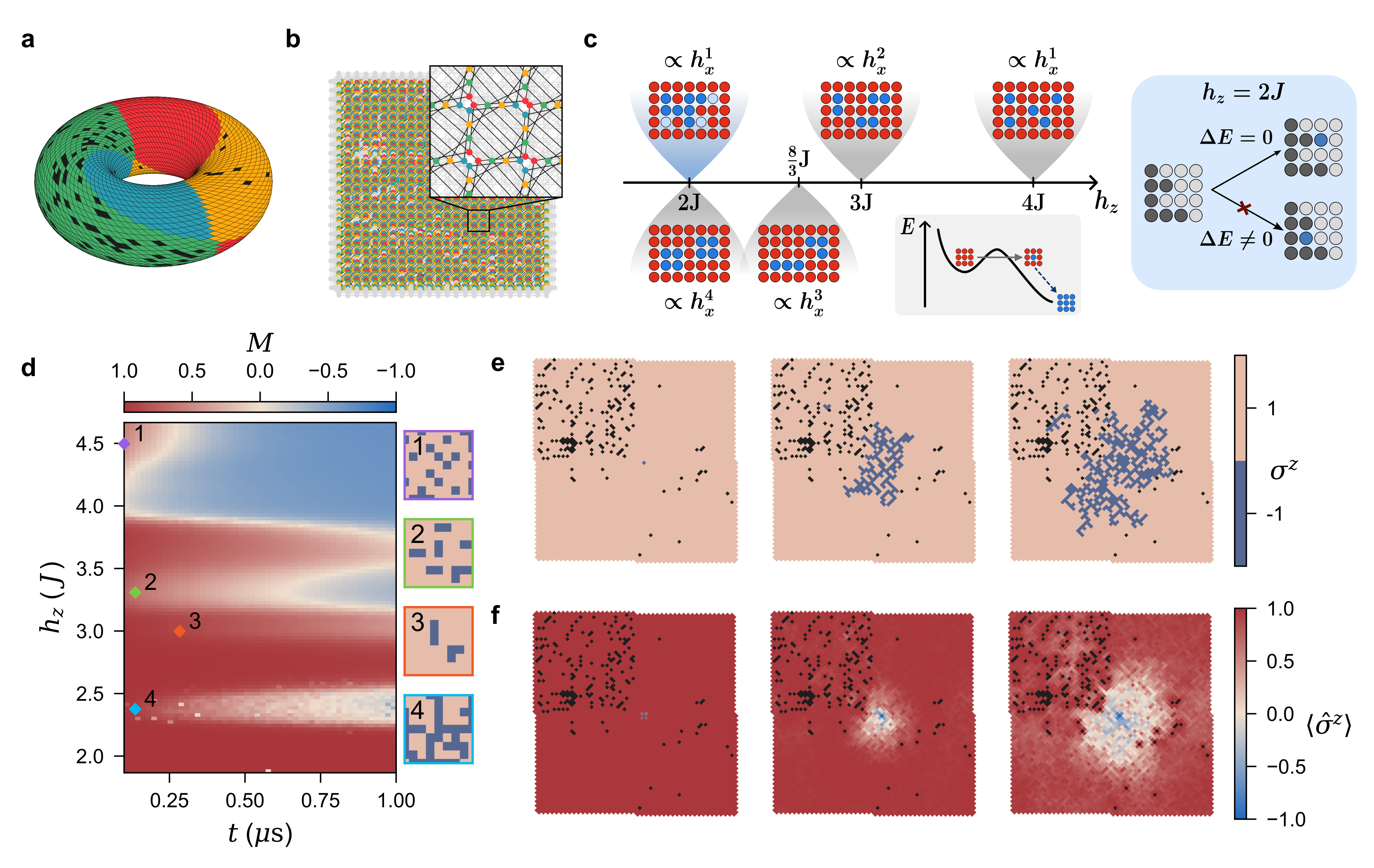
A chip with 4000 tiny magnets reenacts how a runaway bubble of space could stretch the early cosmos.
Links in the knowledge graph 1
Like a single popcorn kernel triggering an instant chain reaction, a quantum bubble of ‘true vacuum’ can race across a chip at incredible speed. This shows that the early universe might have expanded not by random sparkles, but by runaway growth — a find that could also change how we study new materials.
🎯 The physicist [scientist:Stephen Hawking] once explored how a false vacuum decay could spawn a whole new baby universe inside a black hole.
🎬 Science fiction envisions a stray bubble of true vacuum as reality's off switch, instantly erasing everything — a terrifying notion from 'The Three-Body Problem'.