Ловцы тёмной материи: как увидеть невидимое экспресс
Тёмная материя — невидимое вещество, которое держит галактики вместе, но не испускает свет. Поймать её частицы — всё равно что услышать шёпот в шумном зале. Обычные детекторы слышат только громкие удары, а слабые сигналы тонут в помехах.
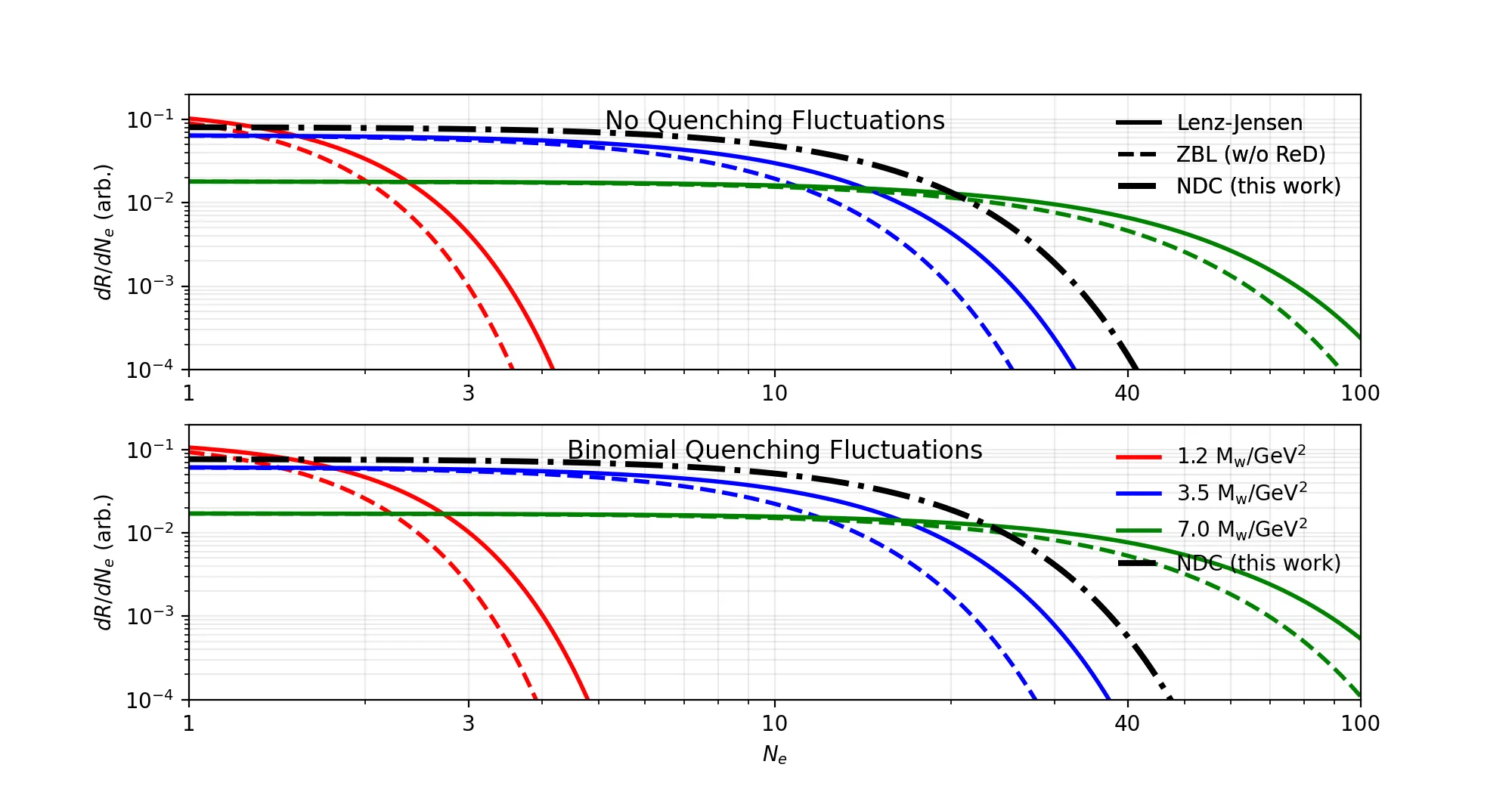
В жидком аргоне частица тёмной материи, столкнувшись с ядром атома, выбивает искру света и облако зарядов. Но при слабом толчке искра едва тлеет. Учёные добавили поправку к расчётам, которая учитывает, как электрическое поле внутри ядра усиливает взаимодействие при медленных столкновениях. Это как подстроить микрофон, чтобы он улавливал тихие звуки. Теперь детектор с кремниевыми фотоумножителями (они считают каждый фотон) может заметить толчок в тысячу раз слабее, чем раньше.
Другой подход — детектор на квантовых битах. Квантовый бит (кубит) — это как сверхчувствительный маятник, который качается от малейшего дуновения. Два чипа рядом: один ловит колебания, другой их считывает. Пролетающая частица тёмной материи заставляет атомы в чипе дрожать, и кубит это замечает. Такой детектор может почувствовать энергию в 30 миллиэлектронвольт — в миллиард раз меньше, чем нужно, чтобы поднять пылинку на волосок.
Эти уловки помогут искать лёгкие частицы тёмной материи, которые раньше проходили сквозь детекторы незамеченными. Возможно, скоро мы впервые услышим их шёпот.
Оригинальная аннотация
как её написали авторы, на английском arXiv:2601.05397
We investigate novel strategies to extend the sensitivity of dark matter direct detection experiments to energy deposits well below the thresholds of conventional detectors. In liquid-argon time-projection chambers equipped with silicon photomultipliers (SiPMs), we show that improved optical readout, combined with a nuclear dielectric constant (NDC) correction to the WIMP nucleus interaction, enhances the response to low-momentum-transfer nuclear recoils. The NDC effectively amplifies the interaction strength at small recoil energies, increasing the expected ionization and scintillation yields without modifying the high-energy behavior constrained by calibration data. When coupled to SiPM based light collection, this mechanism lowers the effective detection threshold to the subKeV regime, significantly improving sensitivity to low-mass WIMPs and other weakly interacting particles. Complementarily, we present the design and projected performance of a qubit-based detector optimized for ultra-low-energy depositions. A novel two-chip architecture is employed to minimize signal dissipation, while quantum parity measurements enable enhanced single-phonon sensitivity. Full simulations of phonon propagation and quasiparticle dynamics demonstrate that energy deposits at the level of $$\gtrsim 30 meV$$ can be detected with nearly unit efficiency and high energy resolution. This capability is expected to advance sensitivity to dark-matter scattering for masses $$m_\chi \gtrsim 0.01 MeV$$ by several orders of magnitude for both light and heavy mediators, and to enable competitive searches for axion and dark-photon absorption in the $$0.04 - 0.2 eV$$ mass range.
Энергия 30 миллиэлектронвольт настолько мала, что её хватило бы лишь на то, чтобы сдвинуть один электрон на расстояние в несколько атомов.