كيف نرى رقصة الإلكترونات في الخلايا الحية سريع
داخل كل خلية حية تحدث تحولات كيميائية باستمرار. بعضها ينتج جسيمات غير مستقرة، تتصرف إلكتروناتها مثل مغناطيسات صغيرة مزدوجة. تفاعلها يشبه رقصة: كل حركة للزوج تستجيب للمجالات المغناطيسية الخارجية، كإيقاع متغير.
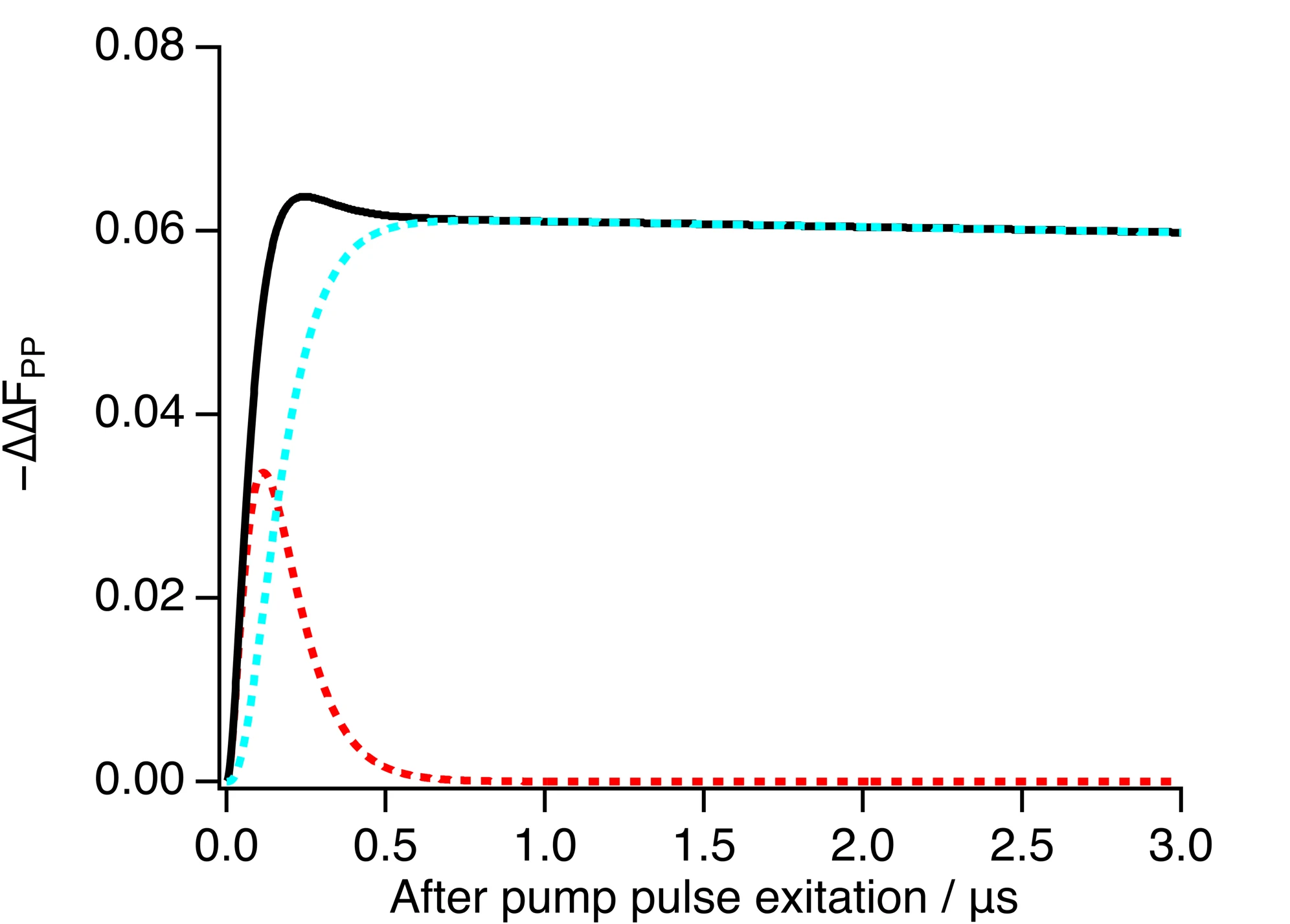
كانت رؤية هذه الرقصة مباشرة متعذرة بسبب خفائها. أما الآن، فيقوم العلماء بتسليط زوج من ومضات الليزر فائقة القصر على الخلية. الأولى تجعل الراقصين يبدأون الحركة، والثانية، التي تأتي بعد لحظة محددة بدقة، تجعل نواتج التفاعل تتوهج. وبتحليل تغير سطوع هذا التوهج، يُعاد بناء كل 'خطوة' — وتظهر صورة كيمياء التفاعلات المغناطيسية.
تم اختبار الطريقة على خلايا تحتوي على جزيء حساس للمغناطيسية. والمبدأ نفسه يفسر ملاحة الطيور المهاجرة: خلاياها البصرية تلتقط رقصة الإلكترونات، محولة المجال المغناطيسي للأرض إلى صور محسوسة. وفي المستقبل — أجهزة استشعار محمولة وعلاج يُدار بواسطة نبضات مغناطيسية ضعيفة.
الملخص الأصلي
كما كتبه المؤلفون، بالإنجليزية arXiv:2510.05600
The importance of spin-correlated radical pairs in biology is increasingly recognized, with roles in biological effects of weak magnetic fields and emerging quantum spin-based biomedical applications. Fluorescence microscopy offers sufficient sensitivity to study magnetic field effects on radical pair reactions in living cells, but conventional techniques cannot directly resolve their dynamics because most biologically relevant radical pairs are non-emissive. To overcome this challenge, we introduce two novel microscopy techniques: single color pump-probe (PP) and pump-field-probe (PFP) fluorescence. Here, we describe their working principles, provide their mathematical formulation, and validate both techniques through theoretical analysis and experiments on well-established flavin-based magnetic field sensitive reactions. These approaches offer a sensitive and broadly applicable platform for quantifying and visualizing the quantum spin dynamics of radical pair chemical reactions in biological systems.
تستخدم الطيور المهاجرة الآلية نفسها: أعينها تلتقط رقصة الإلكترونات، محولة المجال المغناطيسي للأرض إلى إشارات بصرية.