قطرات تثبت على شعرة سريع
قطرة ماء محصورة بين سطحين متقاربين تتحول إلى جسر صغير. توجد هذه الجسور في كل مكان: فهي تمسك حبيبات الرمل في الرمل الرطب، وتجعل الشعر يتلاصق بعد الاستحمام، بل وتساعد الحشرات على المشي على الجدران.
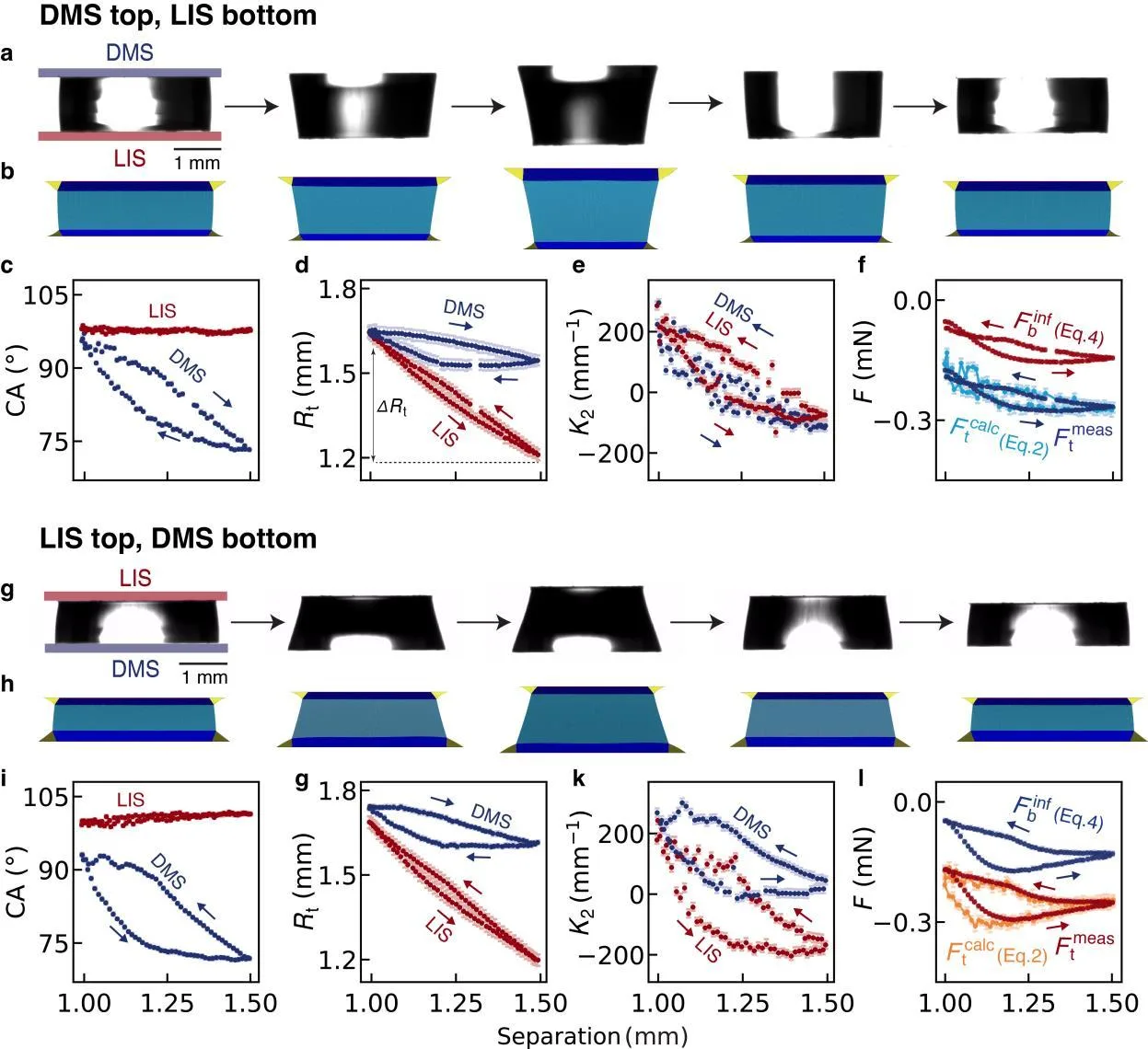
أخذ العلماء ثلاثة أنواع من الأسطح: زجاجًا عاديًا، وزجاجًا بطلاء طارد للماء، وزجاجًا مشبعًا بزيت السيليكون. قاموا بتحريك الأسطح معًا وتباعدهما ببطء، وراقبوا كيف يتغير الجسر وبأي قوة يسحب. على الزجاج العادي، يلتصق الجسر بمكان واحد ويتحرك بنمط متقطع، مثل قطرة ملتصقة بالطاولة. على الطلاء الطارد للماء، ينزلق بحرية أكبر، لكن عند الحركة ذهابًا وإيابًا تتمدد حوافه وتنكمش. أما على السطح الزيتي، فالجسر لا يلتصق تقريبًا: فهو ينزلق بسهولة بل ويغير شكله تحت تأثير الجاذبية.
تساعد هذه التجارب في فهم كيفية التحكم في القطرات الدقيقة. وهذا مفيد في الموائع الدقيقة، حيث تتحرك السوائل عبر قنوات رفيعة، وفي صناعة الطلاءات التي تنظف نفسها من الماء.
الملخص الأصلي
كما كتبه المؤلفون، بالإنجليزية arXiv:2601.00345
Aqueous capillary liquid bridges are ubiquitous in nature and in technological processes. Here, we comparatively investigate capillary bridges formed between three distinct types of surfaces: (i) hydrophilic glass, (ii) hydrophobic dichlorodimethylsilane (DMS)-functionalized glass, and (iii) silicone-oil-infused LIS. We combine experimental measurements and computer simulations of the capillary bridge evolution upon changes in the gap size between the surfaces, deriving in each case the bridge geometry and the resulting capillary force. The results, also compared with predictions from the existing theory, follow expected trends on glass and DMS-functionalized surfaces: contact line pinning dominates the bridge behavior on glass with a characteristic stick-slip motion, whereas a pronounced advancing and receding hysteresis is observed on DMS surfaces. On LIS, the absence of pinning leads to minimal force variation, gravity-driven breaking of the bridge symmetry, and possible liquid exchange between LIS through bridge cloaking. These effects become particularly significant in asymmetric bridge configurations combining LIS and DMS surfaces, where the transfer of lubricant from LIS to DMS modifies the effective surface tension and alters bridge-surface interactions. Our systematic comparison of the capillary bridge behavior across solid and liquid interfaces with varying wettability provides a foundation for designing functional surface applications with controlled bridge-surface interactions.
الجسور الشعرية تمسك حبيبات الرمل في قلاع الرمل الرطب — ولهذا السبب يكون بناءها على الشاطئ ممتعًا للغاية.