الحرارة تكسر النظام المغناطيسي سريع
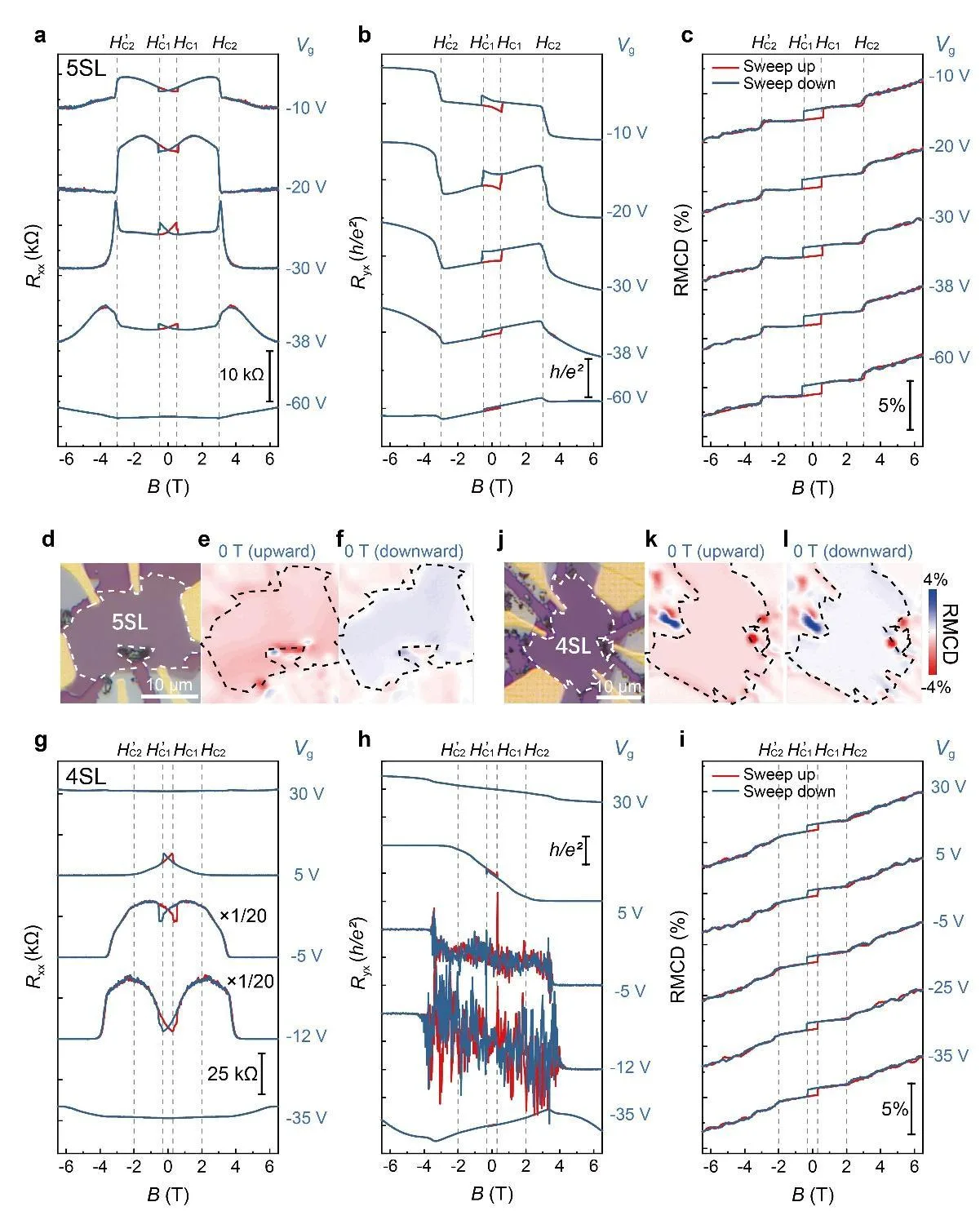
الغشاء الرقيق من مركب المنغنيز والبزموت والتيلوريوم يشبه كعكة الطبقات: كل طبقة هي مستوى ذري، والعزوم المغناطيسية داخل الطبقة مصطفة مثل إبر البوصلات. عند درجة حرارة الغرفة، تحافظ هذه الإبر على اصطفافها، لكن يكفي تسخين العينة إلى 45°م فقط حتى يبدأ النظام في التفسخ.
العيوب العشوائية في البلورة تعمل كمغناطيسات صغيرة تجذب الإبر المجاورة في اتجاهات مختلفة. كلما زاد عدد هذه العيوب، كان من الأسهل للحرارة تدمير الاصطفاف العام. قارن العلماء عينات بكثافات مختلفة من العيوب ولاحظوا: الخصائص المغناطيسية تتدهور عند التسخين كلما زاد عدد العيوب.
هذا الاكتشاف يفسر الخلافات القديمة بين المختبرات: بعضها حصل على حالات مغناطيسية "مثالية" والبعض الآخر لم يحصل. الآن أصبح واضحًا أن الأمر كله يتعلق بالحرارة والعيوب. لذا، لتصنيع أجهزة تعتمد على هذه المادة، يجب التحكم بدقة في درجة الحرارة وجودة البلورة.
الملخص الأصلي
كما كتبه المؤلفون، بالإنجليزية arXiv:2602.07976
As the first experimentally discovered intrinsic magnetic topological insulator, MnBi2Te4 has attracted widespread attentions, providing a unique platform for the exploration of topological quantum phases, such as quantum anomalous Hall effect and axion insulator state. Despite the increasing number of potential factors affecting samples being identified, obtaining the high-quality device performance with desired topological quantum phases remains a challenge. In this work, by comparing the reflective magnetic circular dichroism (RMCD) of crystals with different defect densities that are characterized by atomically resolved scanning tunneling microscopy, we demonstrate that anti-site defects play an essential role in achieving ideal magnetic states. By measuring RMCD hysteresis loops with operando heating, we find that MnBi2Te4 few-layer samples are highly susceptible to thermal impact, even at temperature as low as 45{\deg}C. The magnetic behavior of heating-treated samples is akin to that of samples fabricated into devices, revealing the thermal impact on devices as well. Starting from few-layers with ideal layer-dependent magnetic order, thermal heating leads to the convergence of magnetization and transition fields between odd- and even-layers. The observed heating-induced magnetic evolution can serve as a valuable reference for assessing the sample quality or the density of anti-site defects. Our findings not only point out the long-standing hidden factor that arose controversies in MnBi2Te4, but also pave the way for controllably engineering the topological quantum phenomena.
التسخين إلى 45°م يشبه درجة حرارة يوم صيفي دافئ. بالنسبة للأغشية الرقيقة من MnBi2Te4، يكفي ذلك لتغيير النظام المغناطيسي بشكل ملحوظ.