Jing Wang

8 articles · 30 co-authors · latest: 2026-08-31
38 citations · h-index 3 · 9 papersData: Semantic Scholar

We have retold 8 papers by this author. 1 of them with a full read. most often about: gamma-ray burst, X-ray radiation, fast radio burst. 30 co-authors across our retellings.

Links in the knowledge graph
High Energy2026-01-201 minarXiv:2601.14137express
X-ray Thunder After Gamma-ray Lightning
The Einstein Probe space telescope detected a celestial storm: after a short (0.4-second) gamma-ray burst — a cosmic lightning bolt — came a long roll of X-ray thunder. It lasted nearly 10 minutes. This is the first direct proof that such explosions leave a lingering X-ray afterglow.
Materials2026-02-081 minarXiv:2602.07976express
Heat Breaks Magnetic Order
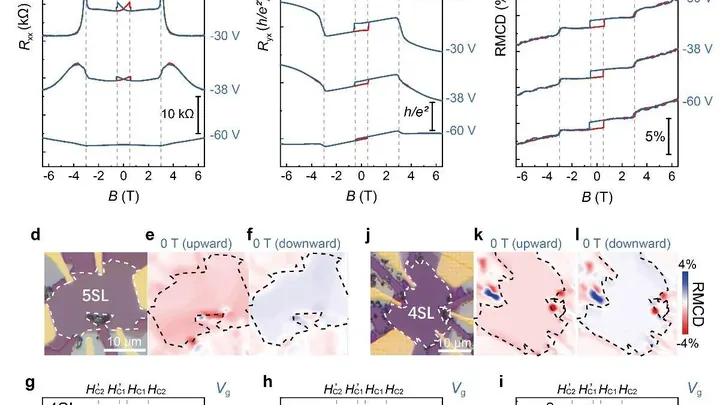
A thin film of the compound of manganese, bismuth, and tellurium resembles a layered cake: each layer is an atomic plane, and the magnetic moments within the layer are aligned like compass needles. At room temperature, these needles hold formation, but just heating the sample to 45°C makes the order start to fall apart.
Materials2026-03-031 minarXiv:2603.02717express
A Chemist Computer Hunts for the Recipe for a Better Solar Cell
Testing molecules for solar cells is like trying a new sauce in a restaurant where the chef changes every five minutes. Disturbances (humidity, substrate cleanliness, deposition method) hide the true effect. To extract real benefit from noisy data, scientists created a 'smart sieve'—an algorithm that sifts through the results and leaves only reliable improvements.
Superconductivity2026-07-051 minarXiv:2607.04104express
A Vortex That Flips a Superconducting Diode
In a superconducting ring shaped like a washer, current sometimes flows more easily in one direction than the other. This property is called the diode effect. Usually, its direction is rigidly set by the material's structure. But in new work, physicists showed that it can be switched, and the switch is the number of magnetic vortices trapped in the ring.
Networking2026-07-131 minarXiv:2607.11231express
Cloud Gaming: Stop Pouring Water into a Full Glass
When a glass of water is full, pouring more is pointless waste. Cloud gaming often does the same with video data: encoders push the stream to maximum, even though the eye stops noticing improvements long before the limit. This overconsumption means extra traffic and entropy in the network — useless noise clogging the channel.
Signal Processing2026-07-141 minarXiv:2607.12656express
Shrinking 3D Scenes 160x with Blazing-Fast Unpacking
Three-dimensional worlds are made of millions of semi-transparent specks, like a giant tapestry woven from glowing droplets. Transmitting such a canvas usually takes ages and a beefy data pipe. SpeedyGS squeezes it into a tiny file, and it unfurls in a flash, like yanking a drawstring from a pouch.
Nuclear Experiment2026-08-151 minarXiv:2608.14957express
Lead Instead of Carbon: A Sharper Way to Size Up the Nucleus
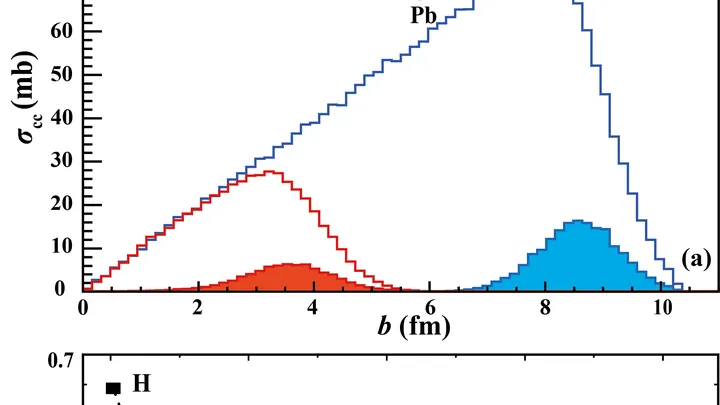
To determine the size of the proton cloud in an atomic nucleus, physicists collide an unstable nucleus with a target and observe how many protons it loses. The larger the projectile nucleus, the more often it grazes target nuclei and loses particles.
A Treasure Map for Superconductors: How Two Numbers United Different Families
Old treasure maps were drawn from hearsay: someone found gold by a river, someone else in the mountains, and each person dug in their own spot. High-temperature superconductors went the same way: cuprates were found in some compounds, iron pnictides in others, nickelates in yet others, and there was no common map.