ضوء يفحص العين سريع
يمكن للضوء أن يرسم أنماطًا داخل العين مباشرة — دون شاشة أو نظارات. عندما يدخل شعاع ذو شكل خاص إلى بؤبؤ العين، فإنه يُنشئ في مجال الرؤية أشعة داكنة تشبه قضبان عجلة دوّارة. يرى الشخص هذه الأشعة بنفسه، لأنها تولد في خلايا الشبكية وليس من الخارج. يُسمى هذا النمط "بالنمط الداخلي الرؤية" (entoptic) — أي "مرئي من الداخل".
في هذه الدراسة الجديدة، طُبِّق هذا التأثير لفحص صحة البقعة الصفراء — وهي منطقة صغيرة جدًا في مركز الشبكية مسؤولة عن الرؤية الحادة. عرض العلماء على المشاركين نمطًا دوّارًا مكونًا من 22 شعاعًا، وقاموا بتقليص حجمه تدريجيًا حتى أصبح الشخص غير قادر على تحديد اتجاه الدوران. هذا الحجم الأدنى هو العتبة التي قد تتغير في أمراض البقعة الصفراء، مثل التنكس البقعي المرتبط بالعمر.
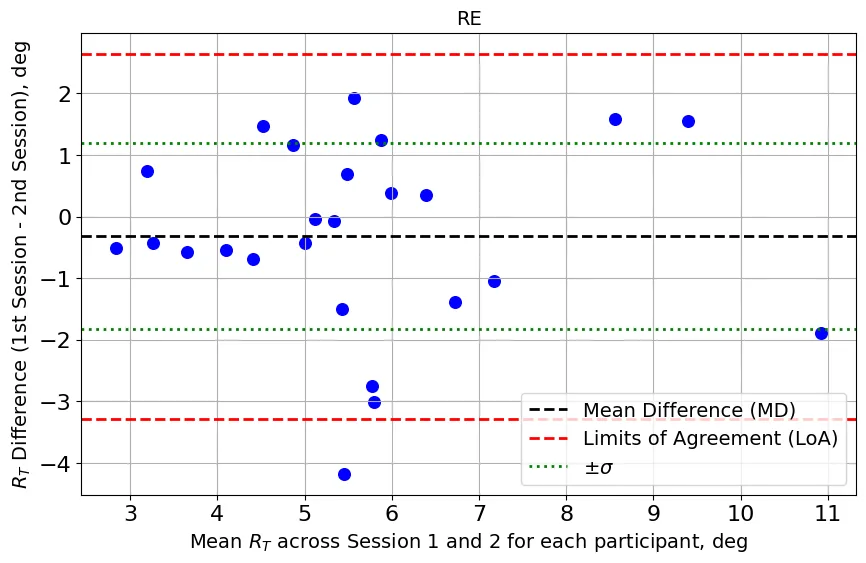
لكي تكون الطريقة قابلة للاستخدام في العيادة، يجب أن تعطي نتائج متطابقة عند التكرار. لذلك، خضع 25 شخصًا سليمًا تتراوح أعمارهم بين 21 و75 عامًا للاختبار مرتين بفاصل زمني يتراوح بين يوم واحد و14 يومًا. أظهرت المقارنة تكرارية ممتازة: معامل الموثوقية 0.83 للعين اليمنى و0.93 للعين اليسرى (حيث 1 يعني تطابقًا مثاليًا). كان الفرق بين الجلستين أقل من درجة واحدة — أقل من سُمك الظفر على ذراع ممدودة.
هذا الاختبار لا يتطلب معدات باهظة الثمن أو قطرات لتوسيع حدقة العين. يعتمد على كيفية إدراك العين نفسها للضوء المستقطب — وهو الضوء الذي تهتز موجاته في مستوى واحد. إذا تأكدت الطريقة على مرضى في مراحل مبكرة من المرض، فقد تصبح وسيلة بسيطة للفحص مباشرة في عيادة طبيب العيون.
الملخص الأصلي
كما كتبه المؤلفون، بالإنجليزية arXiv:2602.08836
Structured light (SL)-induced polarization perception presents a promising method for the early detection of macular diseases such as age-related macular degeneration. We investigated the test-retest reliability of a psychophysical task using SL-based stimuli to induce entoptic patterns in individuals with healthy vision. Twenty-eight participants underwent thorough eye examinations to confirm they had healthy eyes and good vision (logMAR BCVA ~0.00). Of these, 25 participants (n=50 eyes) aged 21 to 75 completed two identical tasks separated by 1 to 14 days. Using SL-based stimuli that produced a rotating entoptic pattern containing 22 azimuthal brushes, we measured the retinal eccentricity threshold $$R_T$$ at which participants could reliably identify the direction of rotation by varying the size of a central obstruction. This threshold reflects the visual angle of the pattern for each participant. We calculated the reliability coefficient (intraclass correlation coefficient, ICC) using a two-way mixed-effects model and conducted a Bland-Altman analysis to assess test-retest reliability. The ICC was 0.83 [95% CI: 0.62 - 0.93] for right eyes (RE) and 0.93 [95% CI: 0.84 - 0.97] for left eyes (LE), indicating good reliability. The Bland-Altman analysis showed a mean difference of -0.32{\deg} (SD: 1.51) and -0.12{\deg} (SD: 1.03) for RE and LE respectively between the first and second sessions, with limits of agreement ranging from -3.28{\deg} to 2.64{\deg} and -2.14{\deg} to 1.89{\deg} for RE and LE respectively, confirming strong agreement and no significant bias. These results demonstrate that SL-based psychophysical tasks are a reliable method for assessing polarization perception, potentially improving screening for diseases affecting macular health.
الأنماط الداخلية الرؤية شاهدها الجميع: "الذباب الطائر" أمام العينين هو أيضًا ظلال لخلايا داخل العين، وليس شيئًا خارجيًا.