خريطة الأمراض: كيف نربط الجينات والأسقام؟ سريع
داخل كل خلية، يجري عمل متواصل: البروتينات تتحاور، الجينات تُفعَّل وتُثبَّط، وأي خلل في هذا النظام يؤدي إلى الأمراض. للعثور على المسؤول عن الداء، كان العلماء سابقًا يقلّبون الأبحاث وقواعد البيانات يدويًا، مثل محقق يستجوب الشهود واحدًا تلو الآخر. لكن العلاقات كثيرة جدًا لدرجة يصعب معها التعامل بمفردك.
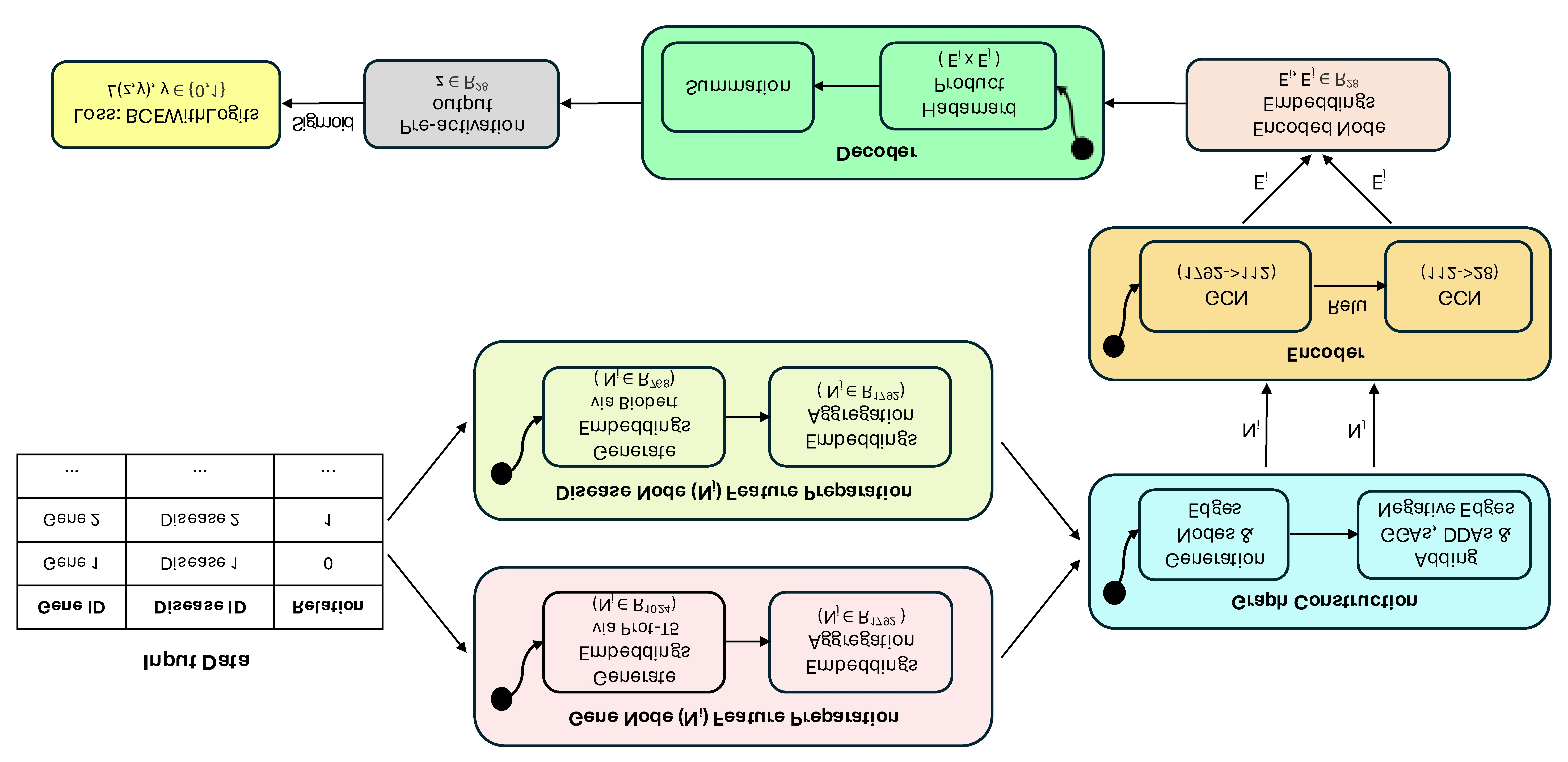
النموذج الجديد GLaDiGAtor يعمل كرسم بياني ذكي: يبني خريطة تكون فيها النقاط جينات وأمراضًا، والخطوط بينها تفاعلات معروفة. ثم يتعلم من هذه الخريطة كما يتعلم من الأمثلة، ويتنبأ بالمكان الذي يجب أن تكون فيه الخطوط المفقودة. الخريطة تتضمن أيضًا تلميحات نصية: أوصاف الأمراض وتسلسلات البروتينات التي يقرؤها النموذج كملاحظات على النقاط. بفضل هذا، يرى ليس فقط العلاقات المباشرة بل أيضًا الأنماط الخفية.
هذا الأسلوب يسرّع البحث عن الجينات المستهدفة للأدوية. فبدلًا من شهور من العمل اليدوي، نحتاج فقط بضع ساعات من الحساب. وكلما زادت البيانات التي تدخل إلى الخريطة، أصبحت التنبؤات أدق. ربما قريبًا سنتمكن من رؤية مسبقًا أي جين سيتعطل في مرض معين، ونستعد للعلاج قبل ظهور الأعراض.
الملخص الأصلي
كما كتبه المؤلفون، بالإنجليزية arXiv:2602.18769
Understanding disease-gene associations is essential for unravelling disease mechanisms and advancing diagnostics and therapeutics. Traditional approaches based on manual curation and literature review are labour-intensive and not scalable, prompting the use of machine learning on large biomedical data. In particular, graph neural networks (GNNs) have shown promise for modelling complex biological relationships. To address limitations in existing models, we propose GLaDiGAtor (Graph Learning-bAsed DIsease-Gene AssociaTiOn pRediction), a novel GNN framework with an encoder-decoder architecture for disease-gene association prediction. GLaDiGAtor constructs a heterogeneous biological graph integrating gene-gene, disease-disease, and gene-disease interactions from curated databases, and enriches each node with contextual features from well-known language models (ProtT5 for protein sequences and BioBERT for disease text). In evaluations, our model achieves superior predictive accuracy and generalisation, outperforming 14 existing methods. Literature-supported case studies confirm the biological relevance of high-confidence novel predictions, highlighting GLaDiGAtor's potential to discover candidate disease genes. These results underscore the power of graph convolutional networks in biomedical informatics and may ultimately facilitate drug discovery by revealing new gene-disease links. The source code and processed datasets are publicly available at https://github.com/HUBioDataLab/GLaDiGAtor.
يستخدم النموذج لغتين: واحدة "تقرأ" تسلسلات البروتينات، وأخرى النصوص الطبية، ويدمجهما في خريطة واحدة.