نجمة ترمش: غبار من اصطدام كواكب سريع
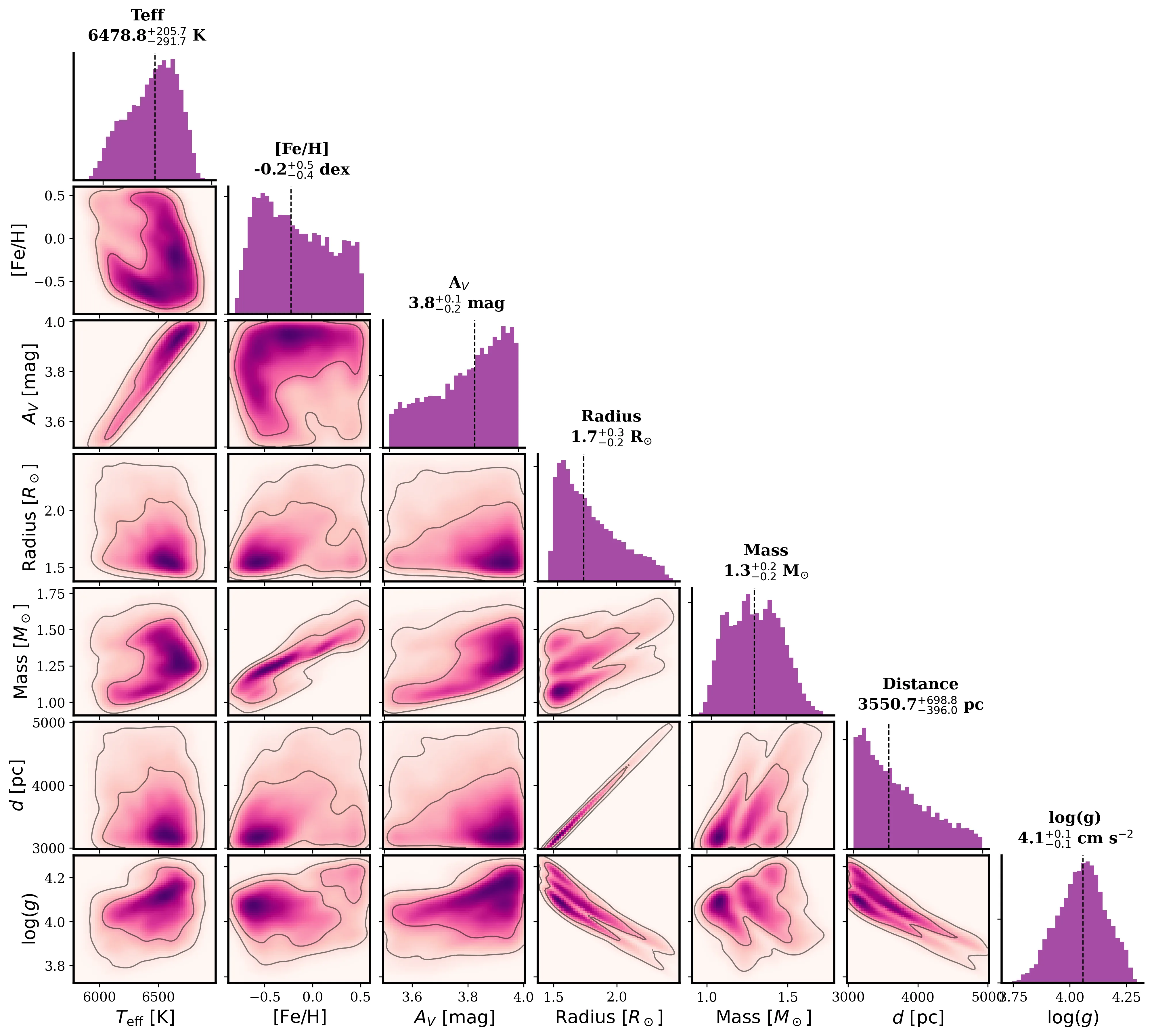
في كوكبة تولد فيها نجوم جديدة، تتصرف إحداها مثل مصباح تالف: تارة تضيء بثبات، وتارة تخفت فجأة عدة مرات. يتابع علماء الفلك النجمة Gaia-GIC-1 منذ عدة سنوات ويدركون الآن أن وميضها هو ظل سحابة غبار ضخمة تمر أمامها بين الحين والآخر. الغبار ليس مجرد حطام فضائي، بل شظايا حديثة: يبدو أن كوكبين اصطدما هناك مؤخرًا.
كل 380 يومًا تكمل السحابة دورة وتحجب النجمة مجددًا. قاس العلماء كمية الغبار فوجدوها كبيرة جدًا — بكتلة تعادل كويكبًا صغيرًا. وهي لا تتفرق بل تبقى متماسكة، مثل كتلة طين قُذفت في بركة. هذا يعني أن الشظايا لم تتشتت بعد وما زالت تتصادم مع بعضها، مولدة جسيمات جديدة.
هذه الرصدات فرصة نادرة. عادة نرى كواكب مكتملة، لكن هنا نرى عملية التكوين نفسها. ربما بعد ملايين السنين يتشكل من هذا الغبار كوكب جديد، مثلما تتشكل الفطيرة من العجين. وعندها ستتوقف النجمة عن الرمش.
الملخص الأصلي
كما كتبه المؤلفون، بالإنجليزية arXiv:2603.10952
We report the discovery of the optical dipper and low-luminosity infrared stellar transient Gaia20ehk (hereafter, Gaia-GIC-1), which is currently undergoing high-amplitude variability due to transiting dusty material. In this work, we identify Gaia-GIC-1 as a likely young F-type star based on the spectral energy distribution before the onset of the high-amplitude optical variability. We detect a significant periodic modulation of 380.5 days in Gaia-G band before the onset of the infrared brightening, consistent with a $$\sim$$1.1 AU orbit assuming circular orbits and a 1.3 M$$_{\odot}$$ star. The system has remained in an infrared bright state for $$>$$4 years since the last near-infrared detection, confirmed by recent SPHEREx observations, while continuing to undergo large amplitude irregular optical dimming. We measure the dust temperature from the freshly generated debris to be $$\sim$$900 Kelvin based on available WISE photometry, and the dust clump size to have a minimum cross-sectional area of 0.13 AU$$^{2}$$, and the dust mass $$4\times 10^{20}$$ kg. Currently, optical follow-up spectroscopy has not revealed any prominent features in the system, likely due to its highly variable nature. We hypothesize that Gaia-GIC-1 represents debris recently formed in a planetary collision, which produced a clumpy dust cloud on a bound orbit, producing the observed dimming events. The ongoing collisional activity in this system presents a unique opportunity for understanding terrestrial planet formation.
سحابة الغبار كثيفة لدرجة أنها تحجب أحيانًا أكثر من نصف ضوء النجمة — كما لو أن شخصًا غطى مصباحًا بكفه.