غشاء مثقوب يبرّد السيليكون سريع
حشد في شارع ضيق يتحرك ببطء لأن الناس يتصادمون ببعضهم البعض. في السيليكون، تنتقل الحرارة عبر «تصادمات» مشابهة — اهتزازات ذرية تُسمى الفونونات (phonons). إذا قُطعت ثقوب صغيرة في غشاء السيليكون، ستصطدم الفونونات بها كما يصطدم المشاة بالأعمدة، وسيصبح انتقال الحرارة أضعف.
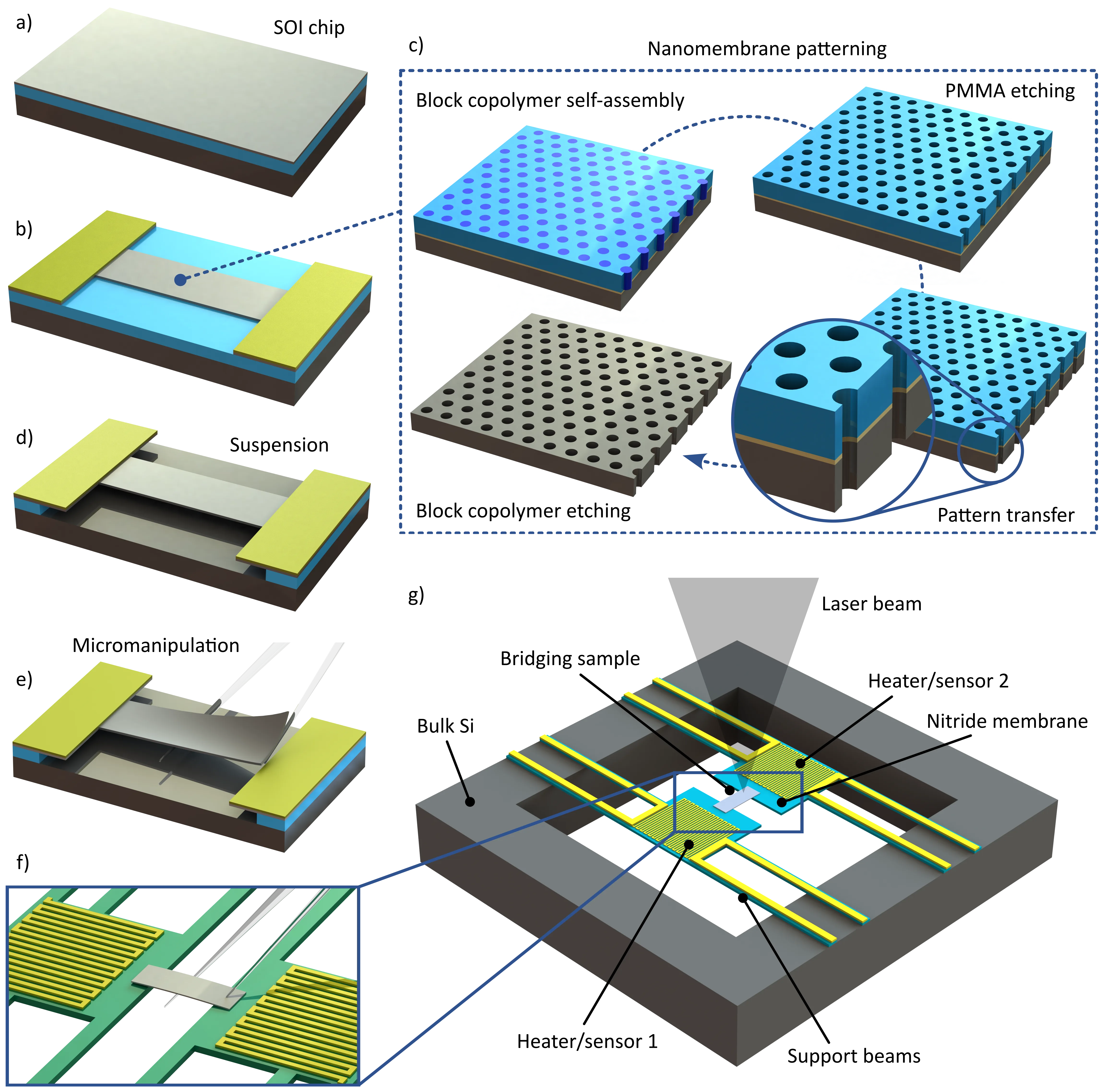
لقد فعل العلماء ذلك تمامًا: في غشاء سيليكوني بسمك 40 نانومترًا (أرق بألف مرة من شعرة الإنسان)، أحدثوا ثقوبًا بقطر 35 نانومترًا وبمسافة بينية 63 نانومترًا. الثقوب مرتبة بدقة مثل أقراص العسل، لأنها «رُسمت» بواسطة بوليمر ذاتي التنظيم — جزيئات طويلة ترتب نفسها بنفسها في نمط. ثم نُقش السيليكون وفق هذا النمط.
الحيلة الرئيسية هي عمق الثقوب. يمكن تغييره دون المساس بالقطر أو المسافة البينية. الثقوب النافذة تمامًا تعيق الحرارة بشدة، بينما الضحلة منها تعيقها بشكل أضعف. هكذا نحصل على «مفتاح تحكم في مستوى الصوت» لتدفق الحرارة: تدير العمق فتغير الموصلية الحرارية.
لقياس كمية الحرارة التي تمر عبر هذا الغشاء بدقة، كان لا بد من تحسين طريقة المسابير الثلاثة القديمة. عادةً ما تسبب التلامسات بين الغشاء والركيزة مشاكل — فهي تضيف مقاومة إضافية، مثل أبواب سيئة في طريق الحشد. الطريقة الجديدة تأخذ هذه «الأبواب» في الحسبان وتعطي قيمة صادقة.
في النهاية، حصلنا على تقنية بسيطة وقابلة للتحكم: يمكن ضبط السيليكون المثقوب لمهام مختلفة — من تبريد الرقائق الإلكترونية إلى المولدات الحرارية الكهربائية التي تحول فرق درجات الحرارة إلى كهرباء. الشارع المليء بالعقبات أصبح مفيدًا.
الملخص الأصلي
كما كتبه المؤلفون، بالإنجليزية arXiv:2604.14770
Phononic silicon structures have emerged as an integrable and scalable nanosystem for tailoring thermal transport. However, their widespread adoption has been limited by their complex fabrication pathways. Alongside, the reliable characterization of thermal properties in suspended nanostructured films remains challenging, as thermal contact resistances often hinder the accuracy of measurements. In this work, we demonstrate a clear and controllable reduction of thermal conductivity in nanopatterned silicon membranes. A block copolymer self-assembly approach is employed to fabricate nanoholed silicon films with a pitch of 63 nm and hole diameters of 35 nm. Additionally, we introduce an extension of the three-probe technique that enables robust, quantitative, and spatially resolved thermal conductivity measurements in complex thin-film systems, accounting for thermal contact artifacts. The method is validated through measurements on unpatterned 40 nm-thick silicon thin films between 30 and 350 K, yielding a room-temperature thermal conductivity of 46.5 W/m.K. Finally, we further show that controlled etching of the nanoholes provides a powerful means to tune thermal transport in the overall studied temperature range, establishing hole etch depth control as an effective parameter in phononic silicon. Specifically, a fivefold reduction in thermal conductivity is achieved, reaching 7.3 W/m.K for fully etched-through membranes at room temperature.
لا تُصنع الثقوب في السيليكون بمثقاب، بل باستخدام بوليمر يرتب نفسه بنفسه في نمط سداسي — مثل أقراص العسل، لكنه أصغر بألف مرة.