مجهر ليزري يرى مرونة الخلايا دون حجرة غاز سريع
يمر شعاع الليزر عبر الخلية، فتردّ على اللمس — مثل وتر مشدود يُضرب بإصبع. من تردد هذا «الرنين» يمكن معرفة مدى صلابة المادة أو مرونتها. هكذا يعمل الفحص المجهري بريلوين، المسمى تيمنًا بالفيزيائي الفرنسي ليون بريلوين. لكن لهذه الطريقة مشكلة: إنها بطيئة، لأن الشعاع يمسح نقطة بنقطة.
التسريع اقتُرح منذ زمن — وهو إطلاق ليس نقطة واحدة بل خطًا كاملًا من الضوء دفعة واحدة. لكن عندها يدخل إلى الجهاز الكثير من الضوء الشارد الذي يعيق رؤية الإشارة الضعيفة القادمة من الأنسجة. سابقًا، كان يُتعامل مع ذلك بحجرة غاز تبتلع الضوء الزائد. لكن الحجرة تطلبت ليزرًا بطول موجي واحد محدد — حوالي 780 نانومترًا. هذا مثل ميزان مطبخ لا يعمل إلا مع التفاح.
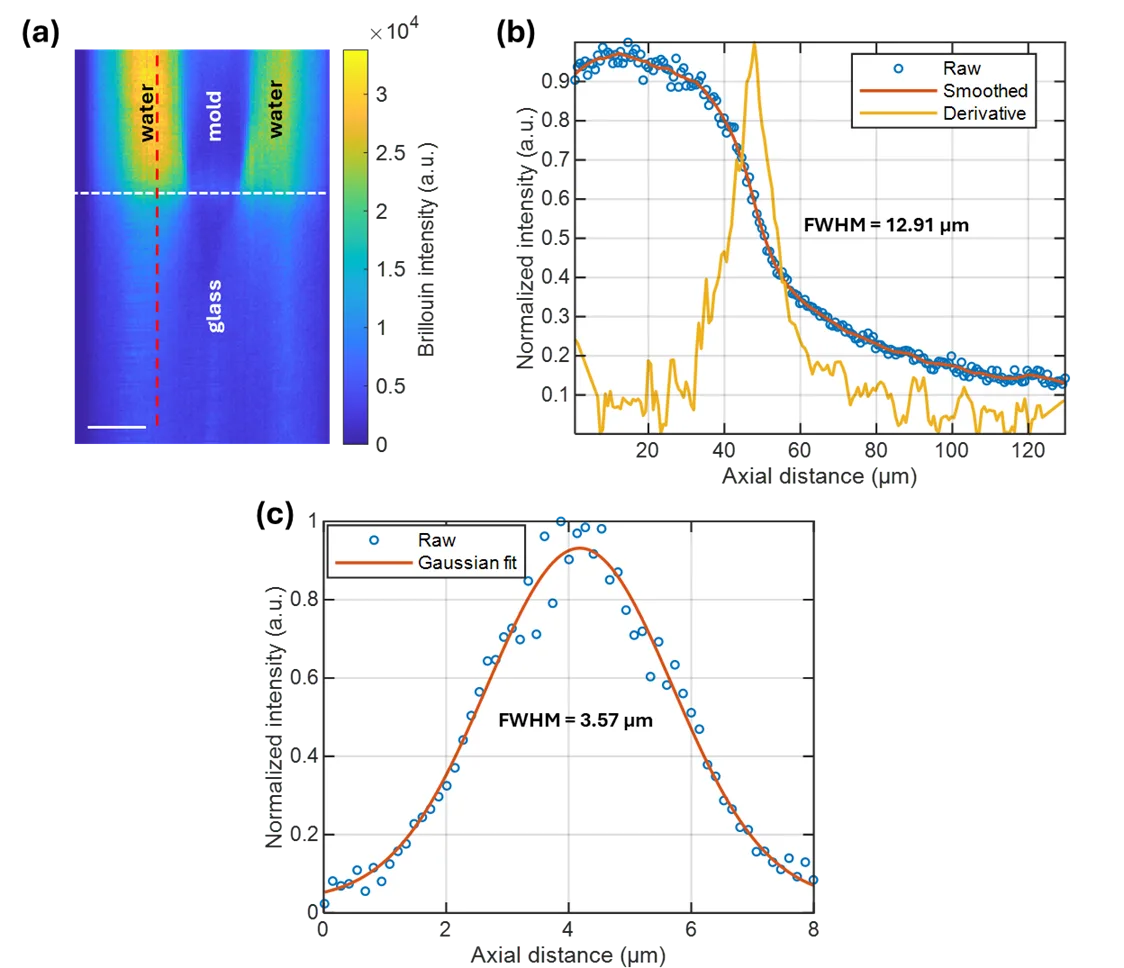
الآن أُلغيَت الحجرة الغازية. ووُضع بدلًا منها مرشحان بصريان على التوالي. الأول يقطع الضوء الزائد، والثاني يفكك الباقي إلى ألوانه. معًا يخفضان الضجيج بمقدار 57 ديسيبل — وكأن ضجيج موقع بناء خارج النافذة يخفت إلى همس. أصبح الجهاز أبسط ويعمل مع ليزرات عادية. أظهر الاختبار على هلاميات مطبوعة تحاكي الأنسجة الحية صورًا واضحة.
الآن يمكن صنع مثل هذه المجاهر بتكلفة أقل ووضعها في المختبرات العادية. والأهم — الانتقال إلى أطوال موجية أخرى حيث التشتت أقوى والإشارة أسطع. هذا مثل الانتقال من مصباح خافت إلى ضوء الشمس: ترى أكثر وأسرع.
الملخص الأصلي
كما كتبه المؤلفون، بالإنجليزية arXiv:2604.17101
Confocal Brillouin microscopy enables high-resolution mechanical imaging but has low acquisition speed, partly due to its pixel-by-pixel mapping strategy. Line-scanning Brillouin microscopy (LSBM) significantly improves imaging speed by utilizing a multiplexing approach. However, current method is limited to a single-stage virtually imaged phased array (VIPA) spectrometer with insufficient capability of suppressing noise. Consequently, an absorptive gas chamber is often used to help reject excessive elastically scattered light. This approach requires specific tunable laser sources whose frequencies (e.g., around 780 nm) are locked to the absorption line of the gas chamber. Here, we developed a multiplexed Brillouin spectrometer for LSBM that increased the noise suppression to 57 dB without using any gas chamber. This is achieved by cascading two VIPA etalons with parallel dispersion axes in the spectrometer, where the first VIPA acts as a band-pass filter and the second as spectrum analyzer. We demonstrated its performance by acquiring Brillouin images of bio-printed phantoms with an inverted co-axial LSBM. This gas-chamber-free approach can expand the implementation of LSBM to other wavelengths where Brillouin scattering is more efficient and commercial laser sources are readily available.
انزياح بريلوين الترددي للماء حوالي 5 غيغاهرتز — أي أعلى بمليار مرة من نغمة «لا» في الأوكتاف الأول.