آلة لا تعيق نفسها بنفسها سريع
أوركسترا يعزف كل عازف فيها دوره، لكنه لا يسمع إلا جاره. ما إن يخطئ أحدهم حتى تتدحرج موجة الأخطاء عبر القاعة كلها. هكذا تعمل آلات إيزينج — أجهزة خاصة لحل المسائل التي تتطلب إيجاد الخيار الأفضل من بين العديد. عناصرها، أو «السبينات»، مترابطة، وإذا حُدِّثت في آن واحد، تبدأ بالتداخل مع بعضها مثل موسيقيين دخلوا في غير موعدهم.
عادةً تُحدَّث السبينات تباعًا، لكن هذا بطيء. ابتكر مؤلفو المقال إضافة قليل من القصور الذاتي لكل سبين — مثل دولاب الموازنة الذي يمنع الاهتزاز المفاجئ. مع القصور الذاتي، تتوقف السبينات عن الاستجابة لكل همسة من جيرانها ويمكن تحديثها جميعًا في وقت واحد دون إفساد النتيجة الإجمالية. اختُبرت على مسائل قص المواد (Max-Cut) ونموذج الزجاج (Sherrington-Kirkpatrick)، وكذلك على كشف الإشارات في الاتصالات اللاسلكية.
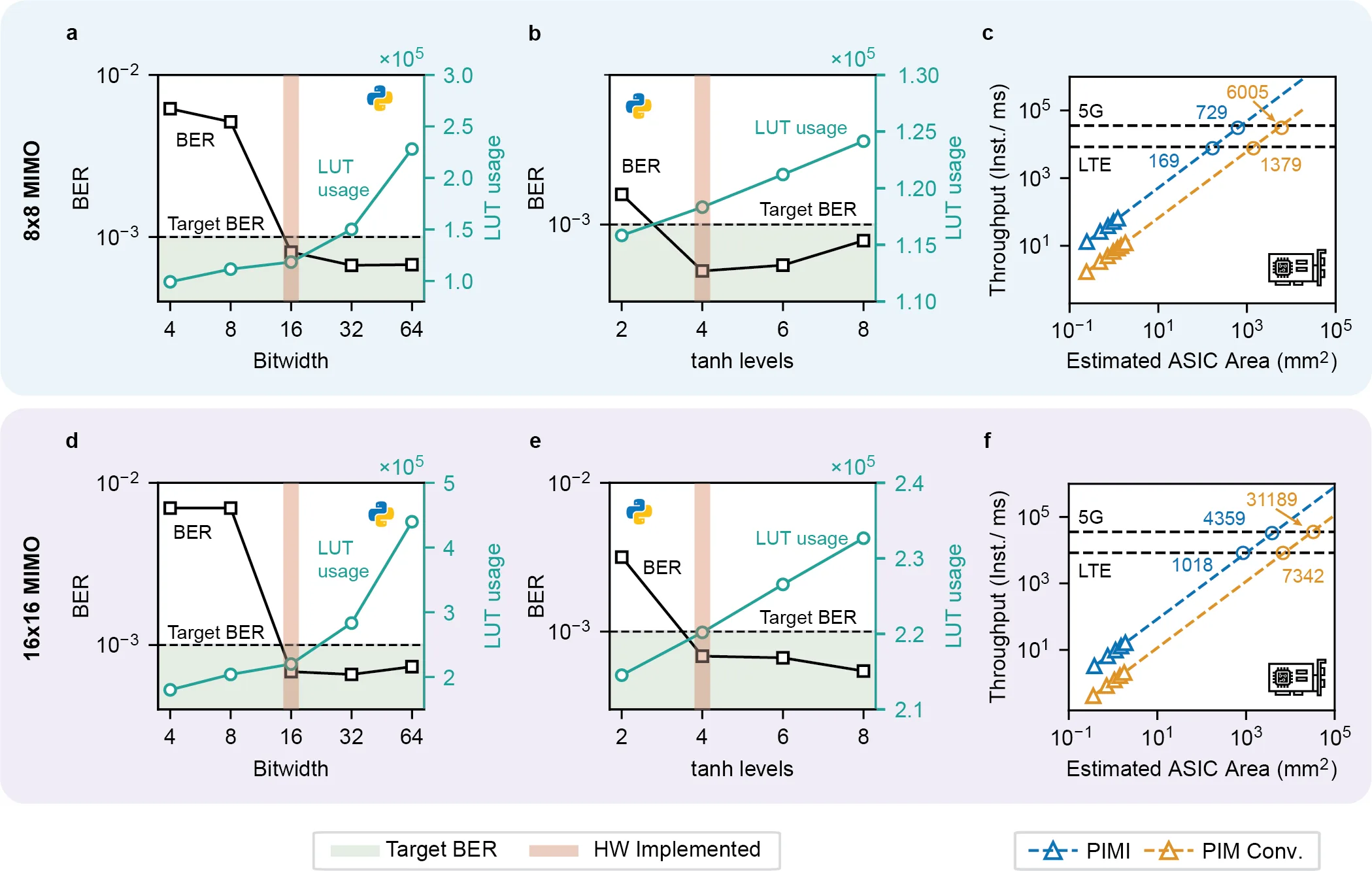
الفائدة العملية تظهر في الجيل الخامس 5G: كشف الإشارة في الزمن الحقيقي يتطلب حلولًا سريعة. آلة إيزينج ذات القصور الذاتي استوفت المتطلبات الصارمة للجودة والسرعة، مع احتلال مساحة معقولة على الرقاقة. أوركسترا يعزف الجميع فيها معًا بتناغم — هذا ما تحقق.
الملخص الأصلي
كما كتبه المؤلفون، بالإنجليزية arXiv:2604.17109
Ising machines -- special-purpose hardware for heuristically solving Ising optimization problems -- based on probabilistic bits (p-bits) have been established as a promising alternative to heuristic optimization algorithms run on conventional computers. However, it has -- until now -- been thought that Ising spins that are connected in probabilistic Ising machines cannot be updated in parallel without ruining the machine's solving ability. This has been a major challenge for using probabilistic Ising machines as fast solvers for densely connected problems. Here, we circumvent this by introducing a modified Ising spin dynamics with an added inertia term, and verify in algorithm simulations, FPGA hardware emulation, and FPGA experiments that it enables fully parallel, synchronous updates while improving rather than degrading success probability. We evaluated on various types of abstract (Max-Cut and Sherrington-Kirkpatrick-model) and application-derived (MIMO, wireless detection) dense Ising benchmark instances. Performing fully parallel updates results in a speed advantage that grows faster than linearly with the number of spins, giving rise to large time-to-solution increases for practical problem sizes. For both Max-Cut and the SK-1 model at a problem size of 200, our approach achieved an average speedup of $$\approx 35\times$$, with the best single-instance speedup reaching $$150\times$$. As an example of the practical utility of our approach in an application where speed is critical, we further show by co-designing the algorithm dynamics with the hardware implementation -- co-optimizing for solver ability and silicon resource usage -- that probabilistic Ising machines based on our approach satisfy the stringent solution quality and latency/throughput requirements for real-time MIMO detection in modern 5G cellular wireless networks while using a practically reasonable silicon area.
نموذج شيرينغتون-كيركباتريك الذي اختُبرت عليه الآلة يصف زجاج السبين — مادة تكون فيها العزوم المغناطيسية مجمدة في اتجاهات عشوائية، مثل أشخاص عالقين في زحام يدفعون بعضهم في اتجاهات مختلفة.