كيف تشكّل الجينات والبيئة سلوك المراهق سريع
تعزف الأوركسترا دون قائد. لكل عازف نوتة موسيقية — وهي الجينات. أما شدة الصوت والإيقاع فيعتمدان على صوتيات القاعة والمزاج والجيران على المسرح. هكذا تقريبًا تخلق الوراثة والحياة اليومية معًا سلوك المراهق.
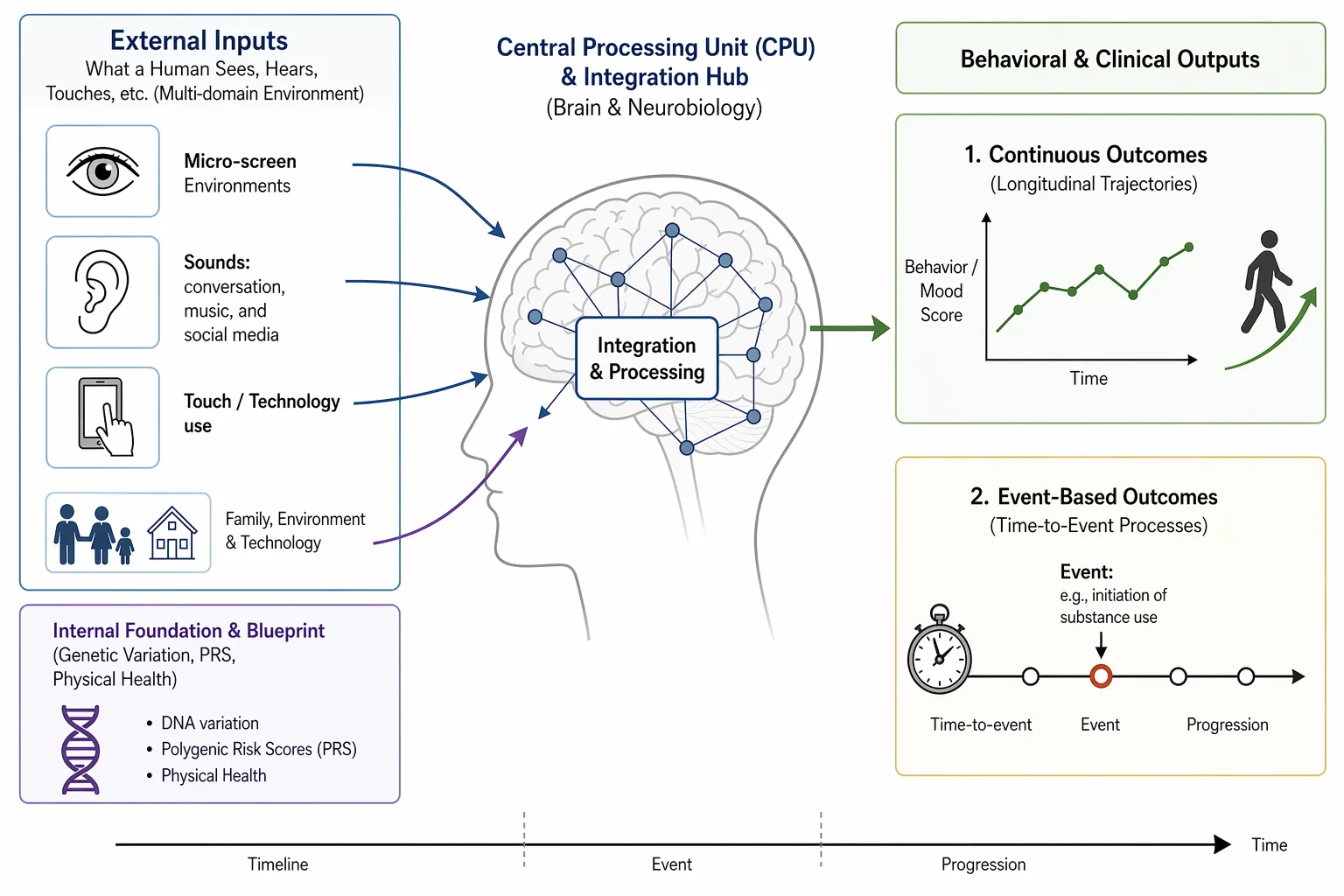
في الدراسة الجديدة، جمع العلماء بيانات آلاف الأطفال من مشروع ABCD طويل الأمد. أخذوا في الاعتبار المخاطر الوراثية (مؤشرات جينية خاصة)، وعشرات الخصائص البيئية — من العلاقات الأسرية إلى منطقة السكن — وصور الدماغ. ودمجوا كل ذلك في نموذج رياضي واحد. يلعب الدماغ فيه دور الوسيط: فهو يستقبل الإشارات من الجينات والأحداث الخارجية، وعلى المخرج تظهر الأفعال — مثل الميل إلى القلق أو أول تجربة للكحول.
طبق مؤلفو العمل عدة طرق لضغط البيانات المعقدة إلى مؤشرات بسيطة ولكنها معبرة. يشبه ذلك تحويل خريطة مدينة مفصلة إلى مخطط مترو واضح: الخطوط والمحطات هي نفسها، لكن التنقل أسهل. يساعد هذا النهج على عدم الغرق في بحر الأرقام ورؤية أدوات التأثير الرئيسية.
النتيجة ليست مجرد مجموعة معادلات، بل أداة عملية. إنها تُظهر أن الوراثة ليست حكمًا. يمكن للبيئة أن تعزز أو تضعف الاستعدادات الجينية، خاصة في سن المراهقة. وبالتالي، فإن تقديم يد العون في الوقت المناسب يمكن أن يغير مسار النضج.
هكذا تجد أوركسترا جسم المراهق قائدها. إنها الحياة نفسها — بتلميحاتها الهادئة وأحداثها الصاخبة. ولم تعد النوتة الموسيقية تُعزف بنفس الطريقة في قاعات مختلفة.
الملخص الأصلي
كما كتبه المؤلفون، بالإنجليزية arXiv:2605.02952
Understanding the development of adolescent behavioral and mental health outcomes requires integrating genetic predisposition, environmental exposures, and neurobiological processes over time. Here, we present a unified quantitative framework that models the human body as a dynamic system, where genetic factors form the foundational state, environmental exposures act as time-varying inputs, the brain might serve as a mediation processor, and behavioral phenotypes emerge as system outputs. Using longitudinal data from the Adolescent Brain Cognitive Development (ABCD) Study, we construct harmonized multi-domain representations across six phenotypes: externalizing behavior, internalizing behavior, and four substance use initiation outcomes (alcohol, nicotine, cannabis, and any substance use). We integrate polygenic risk scores (PRS), multi-domain environmental features, and multimodal neuroimaging representations derived through stability selection and dimensionality reduction. Our framework supports both continuous longitudinal modeling and survival-based event modeling through a unified data structure. We further develop interpretable domain-level representations using principal components, weighted risk scores, and cluster-based summaries. These representations enable downstream modeling using survival analysis, state-space models, and machine learning approaches. This work establishes a scalable and interpretable framework for studying how genetic and environmental factors interact over time to shape behavioral outcomes, providing a foundation for identifying modifiable risk factors and informing early intervention strategies.
استخدم النموذج بيانات عن أربعة أنواع من التجارب الأولى: الكحول، والنيكوتين، والقنب، وأي مادة نفسية التأثير. وتبين أن مجموعة العوامل البيئية الرئيسية تختلف قليلًا لكل منها — كما تُفتح الأقفال المختلفة بمفاتيحها الخاصة.