عيوبٌ فخاخ: لماذا لا تُطلق المادة الشمسية تيارها سريع
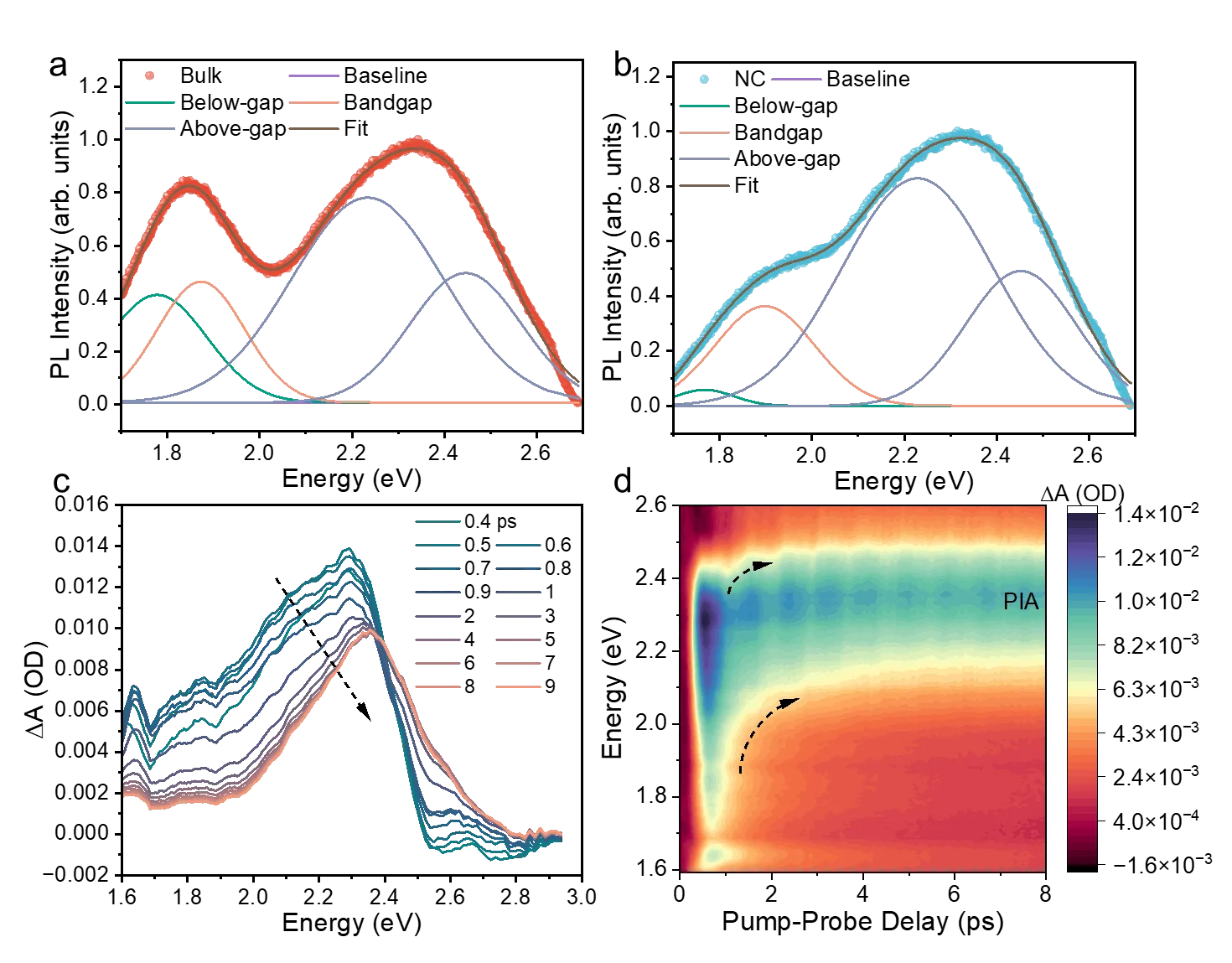
يسقط ضوء الشمس على البلورة، فيولد داخلها زوج — إلكترون سريع وفجوة. في الحالة المثالية، يتباعدان فورًا نحو القطبين ويُنتجان تيارًا. لكن في المادة التي درسها المؤلفون، تسير الأمور على نحو مختلف. فما إن تصطدم الشحنة بفراغ — ذرة غائبة في الشبكة البلورية — حتى تنضغط حولها سحابةٌ من الاهتزازات. تلتصق الشحنة بهذا الموضع، كأنها حذاءٌ على إسفلتٍ مُحمّى، ولا تتحرك بعدها.
الأمر ليس في المادة نفسها — فالبلورة النقية تسمح بمرور الشحنات بحرية. تظهر الفخاخ عندما تُفقد بعض الذرات أثناء التخليق أو المعالجة. عندها، قرب كل ثقب في الشبكة، ينشأ تسخينٌ موضعي — يسميه العلماء بولارونًا ساخنًا مرتبطًا بالعيب. تُنفِق الشحنة نشاطها في هزّ الذرات حول الفراغ وتفقد طاقتها بسرعة، دون أن تبلغ حافة البلورة. في النهاية، يستنزف التيار في صلب المادة، وتعمل البطارية بنصف طاقتها.
الآن، وقد عرفنا العدو وجهًا لوجه، يمكننا أن نتعلم كيف نُبطل عمل هذه الفراغات — على سبيل المثال، بزراعة البلورات بعناية أكبر أو بملء الثقوب بإضافات مناسبة. عندها، ستلحق هذه المادة الآمنة والرخيصة أخيرًا بنظيراتها الرصاصية في الكفاءة، وتصبح الألواح الشمسية في متناول الجميع.
الملخص الأصلي
كما كتبه المؤلفون، بالإنجليزية arXiv:2605.29925
Pnictogen-based solar absorbers have gained prominence as promising nontoxic and stable alternatives to lead-halide perovskites (LHPs), but are severely limited by carrier localization, preventing their performance from approaching those of LHPs. Recent efforts have uncovered routes to overcome carrier localization, but these early efforts only considered intrinsic factors. Herein, we push beyond these limited early efforts, examining the role of defects, not only on cold carriers but also hot carriers. Focusing on the structurally one-dimensional pnictogen chalcohalide BiSBr, we find that whilst this material intrinsically does not exhibit carrier localization, vacancies introduced during synthesis or post-treatment lead to pronounced extrinsic self-trapping via the formation of defect-bound hot polarons-excited charge-carriers strongly coupled to local defect-induced vibrational modes. These above-gap defect states divert hot carriers from cooling to the band edge, thus depleting the mobile carrier population. Our findings establish the key role of defect-bound hot polarons in mediating extrinsic localization and offer new mechanistic insights into the interplay between defects, lattice coupling, and excited-state charge-carrier transport, which are critical to designing efficient perovskite-inspired solar absorbers.
عيبٌ واحد في كل مليون ذرة يمكن أن يُفسد موصلية البلورة بقدر ما تُفسد شقوق الزجاج الأمامي الرؤية.
في رواية «سولاريس» لستانيسلاف ليم، يلتقط محيط الكوكب الطاقة ويعيد تدويرها — تمامًا كما تلتقط العيوب في البلورة الشحنات الشمسية وتُبددها.