كيف تولّد هندسة المدارات الإلكترونية ظاهرة الموصلية الفائقة سريع
في ممر طويل، يحاول حشد من الناس الابتعاد عن بعضهم البعض. في قاعة واسعة لكانوا تفرقوا ببساطة، لكن هنا تضغط الجدران بحيث يضطرون إلى التحرك في صف واحد، منسقين كل خطوة. بطريقة مماثلة تتصرف الإلكترونات في طبقات الغرافين الملفوفة بزاوية صغيرة جداً بالنسبة لبعضها البعض. حركتها محبوسة في نطاقات طاقة شبه مسطحة حيث يسود تفاعل قوي.
في هذا الزحام، يمكن للإلكترونات أن تنظم نفسها بطرق مختلفة. أحياناً تشكل عازلاً كسرياً — حالة تتدفق فيها الشحنة فقط على الحواف، وينشأ في الداخل نظام يشبه سائلاً من جسيمات ذات شحنة كسرية. لكن مؤلفي العمل الجديد اكتشفوا مشاركاً آخر: العازل المضاد، وهو انعكاس مرآوي للأول. كلتا الحالتين تتنافسان على الإلكترونات، لكن تنافسهما لا يدمر النظام، بل يولد شيئاً جديداً. قناتا التشتت، عندما تعملان معاً، تخلقان تجاذباً فعالاً بين الإلكترونات، ويتحول الممر فجأة إلى موصل فائق — مادة تنقل التيار دون أدنى فقدان.
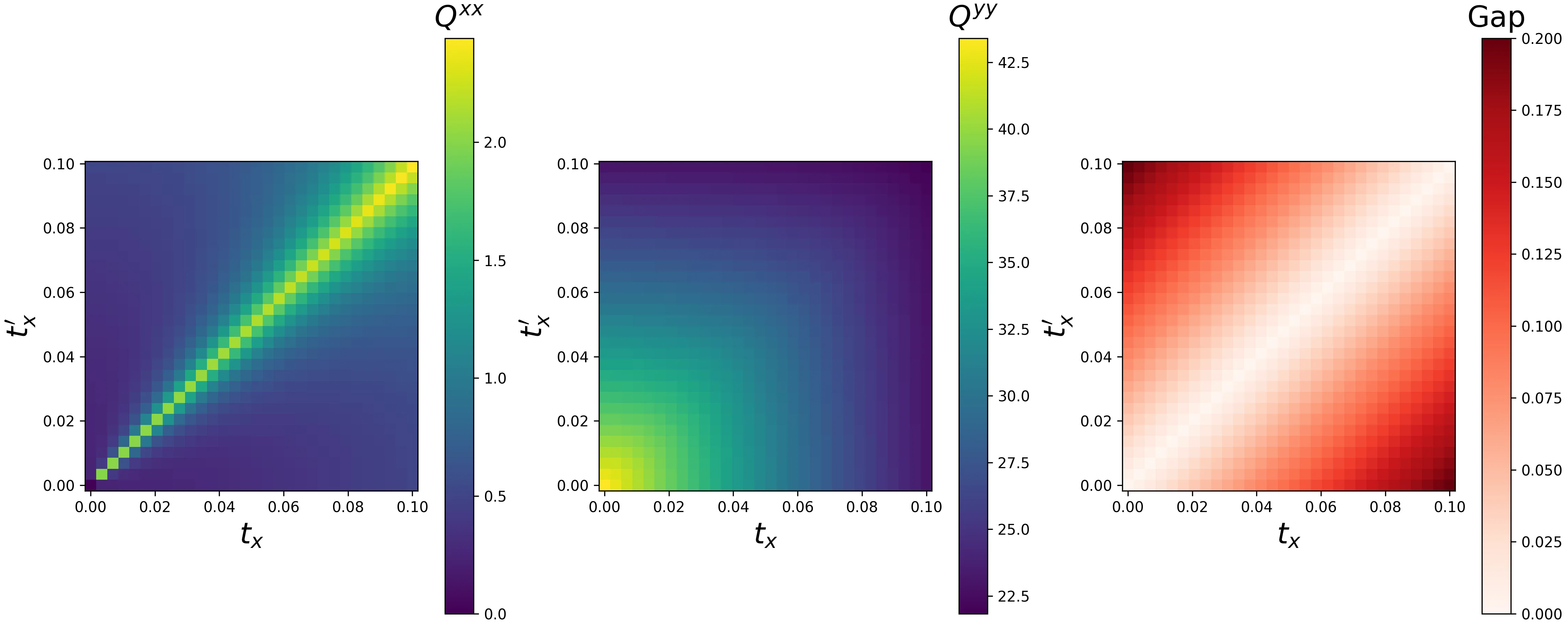
بنى الباحثون مخطط أطوار — خريطة للحالات اعتماداً على قوة التفاعل والمعاملات الهندسية. بجوار العازل الكسري وجدوا منطقة موصلية فائقة، وعند إعدادات أخرى — موجة كثافة شحنة، حيث تتجمع الإلكترونات في كتل دورية. هكذا تخرج الهندسة، التي عادة ما تبقى في الخلفية، إلى الواجهة وتملي أي سلوك جماعي ستختاره الإلكترونات.
الملخص الأصلي
كما كتبه المؤلفون، بالإنجليزية arXiv:2606.21166
Recent moir\'e experiments and numerical studies of interacting Chern bands have revealed fractional Chern insulators, charge-density-wave order, and superconductivity as proximate correlation-driven phases in topological systems. How these phases compete or intertwine, and how quantum geometry shapes their interplay, remain open questions. Here we present an analytic study of competing correlation-driven phases in a partially filled Chern band using a coupled-wire construction and bosonization. The key ingredient is the coexistence of interaction channels that favor, respectively, a fractional Chern insulator (FCI) and a closely related anti-FCI (aFCI) state. The aFCI channel is specific to lattice Chern bands and is enhanced by the quantum geometry of the underlying band structure. We show that when both FCI and aFCI scattering channels are present, their interplay generates an effective coupling that drives a superconducting instability near the FCI phase. The same mechanism can also favor a charge-density-wave phase, depending on microscopic parameters. Using a perturbative renormalization-group analysis, we obtain the phase diagram and identify a superconducting regime adjacent to the FCI phase. We further estimate the superconducting transition temperature and show that it is enhanced by quantum geometry. Our results establish quantum geometry as an organizing principle for the interplay among FCI, aFCI, and superconducting correlations.
على عكس الموصلات الفائقة التقليدية، حيث تتحد الإلكترونات في أزواج بفضل اهتزازات الشبكة البلورية، هنا يُصنع «الغراء» من ارتباطات إلكترونية بحتة — دون مشاركة الأنوية الذرية.
في رواية «العمى الكاذب» لبيتر واتس، تستخدم كائنات فضائية تأثيرات كمومية لمعالجة المعلومات بشكل فوري — تماماً كما تتحكم هندسة الحالات الإلكترونية في الأطوار الجماعية في هذه المواد.