الكهرباء تغيّر إحساس القدم سريع
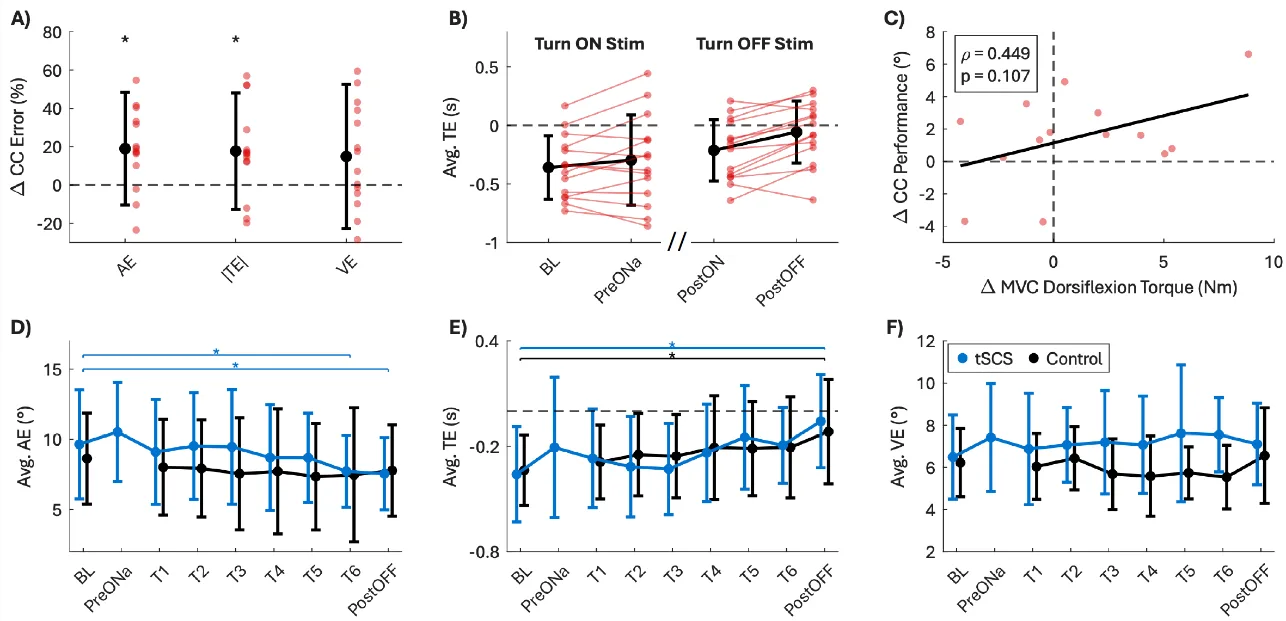
إذا مرّ تيار كهربائي خفيف عبر ظهرك، تبدأ قدمك في أن تعيش حياتها الخاصة. هذا بالضبط ما اكتشفه الباحثون عندما اختبروا كيف يؤثر التحفيز الكهربائي للنخاع الشوكي عبر الجلد على الأشخاص الأصحاء. حاول أربعة عشر متطوعًا تحريك كاحلهم بدقة، بينما كان روبوت تدريبي يقيس الأخطاء. اتضح أنه بعد تحفيز قصير، يتردى الإحساس بموضع القدم — يزداد الخطأ. وفي الوقت نفسه، تعمل العضلات بشكل طبيعي، ولا تتغير القوة.
كما تتغير المشية. بدأ الأشخاص يمشون بحذر أكبر: الخطوة تصبح أقصر، والجسم يتمايل أقل من جانب إلى آخر. هكذا، على ما يبدو، يتحوط الدماغ عندما يتلقى إشارات غير معتادة من القدمين. لكن الأكثر إثارة للاهتمام حدث بعد عدة جلسات تدريبية. أولئك الذين تدربوا مع التيار أصبحوا يشعرون بكاحلهم بشكل أفضل — وهذا التحسن استمر حتى عند إيقاف التحفيز. المجموعة الضابطة التي تدربت بدون تيار لم تكتسب هذه الذاكرة.
أما المشية فتغيرت بشكل مختلف حسب الاتجاه. عادت الحركات الأمامية-الخلفية إلى طبيعتها أو حتى تحسنت، بينما بقيت التمايلات الجانبية متيبسة. يبدو أن الجهاز العصبي اختار ممرًا أضيق وأكثر أمانًا للمشي، مضحيًا بالحرية في الاتجاه الجانبي. هكذا فتح التحفيز البسيط للجلد فوق العمود الفقري نافذة على قدرة مذهلة لأجسامنا على إعادة التعلم مع تدفق جديد من الأحاسيس.
الملخص الأصلي
كما كتبه المؤلفون، بالإنجليزية arXiv:2608.05635v1
Transcutaneous spinal cord stimulation (tSCS) modulates spinal sensorimotor circuits primarily through activation of afferent networks. While prior work has emphasized locomotor performance and spinal excitability, how tSCS affects conscious proprioceptive perception and the extent to which such effects parallel changes in locomotor control remain unclear. We investigated the acute and training-related effects of tSCS on ankle proprioception and gait in unimpaired adults (n = 14), with an independent control group (n = 14) completing identical proprioceptive training without stimulation. Proprioception was quantified using a bilateral robotic assessment of dynamic ankle localization ability (Crisscross), gross motor output using maximum dorsiflexion strength, and gait during normal and tandem treadmill walking using spatiotemporal, trunk-sway, and mediolateral center-of-mass (CoM) excursion measures. Acute tSCS increased ankle proprioceptive error (p < 0.001) while dorsiflexion strength was unchanged (p = 0.30). Gait shifted toward a modestly more constrained locomotor pattern, characterized by reduced step width and ML CoM excursion (p < 0.05). With continued training under stimulation, proprioceptive error decreased and, unlike the control group, the tSCS group showed progressive improvement that persisted after stimulation ended. Sagittal-plane gait measures recovered toward or beyond baseline, whereas mediolateral measures remained constrained, revealing a direction-dependent reorganization of locomotor control. Together, these findings show that tSCS influences multiple aspects of the sensorimotor control loop, disrupting conscious proprioception while reshaping locomotor behavior, and that the nervous system can adapt to altered afferent input through training.
الخطأ في الإحساس بالكاحل بعد التحفيز كان ذا دلالة إحصائية عالية جدًا (p < 0.001)، أي أن التأثير شبه مؤكد ليس عشوائيًا — التيار يربك بالفعل «أجهزة الاستشعار» في القدم.