ليزر حلزوني يسرّع الإلكترونات سريع
شعاع الليزر العادي يسير في خط مستقيم، مثل ضوء مصباح يدوي. لكن يمكن لفّ الضوء على شكل حلزوني — مثل خيط برغي. يحمل هذا الشعاع زخمًا زاويًا مداريًا: فهو لا يضيء فحسب، بل يُدير أيضًا كل ما يصادفه. وجّه الفيزيائيون هذا الضوء الملتوٍ إلى البلازما لتسريع الإلكترونات.
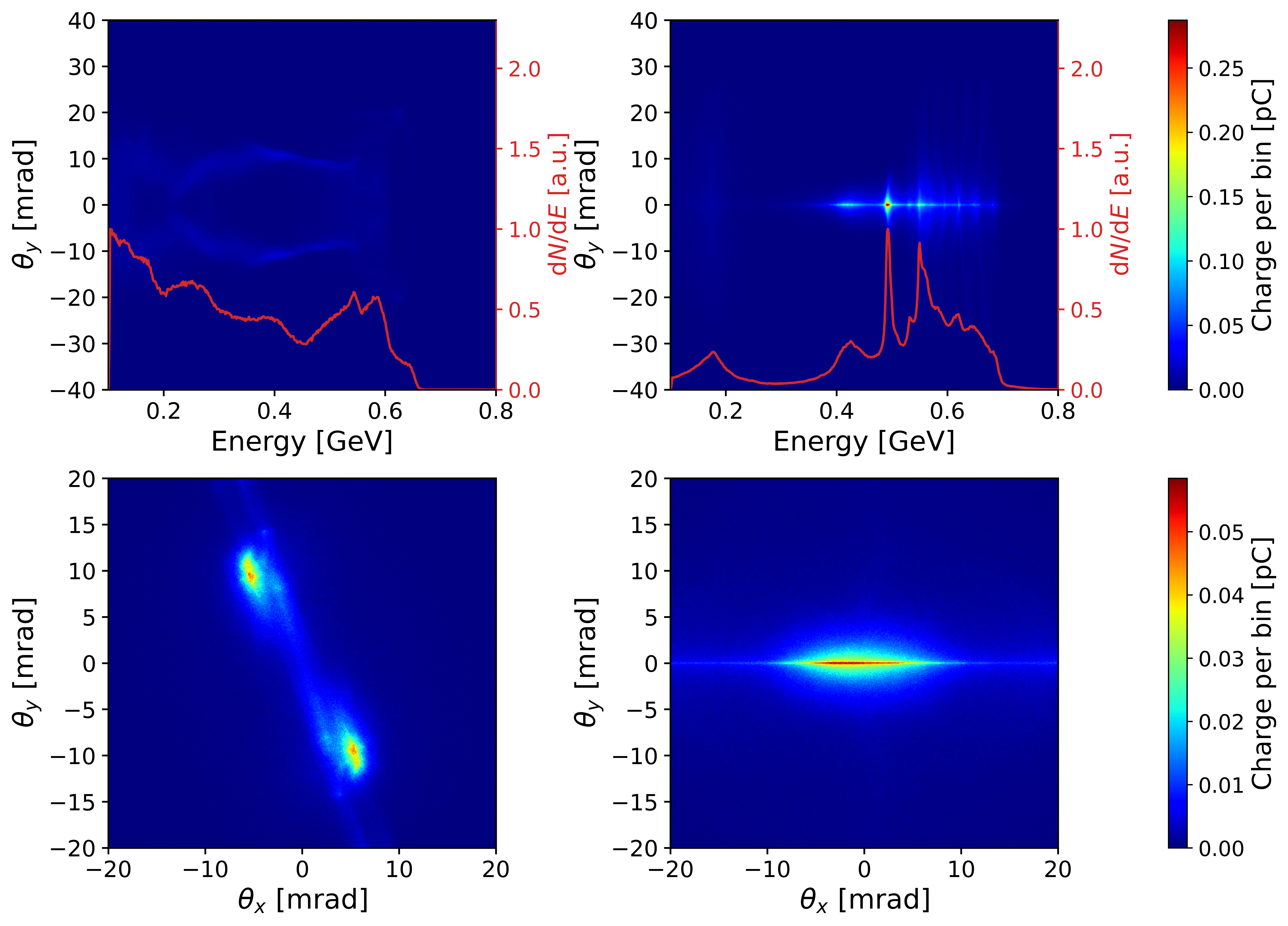
في البلازما، يُحدث الليزر موجة — أثرًا يشبه الموجة الخلفية لقارب سريع. تلتقط الإلكترونات هذه الموجة وتتسارع. مع الليزر الملتوٍ، يلتف الأثر أيضًا. في التجربة، انقسمت حزمة الإلكترونات إلى شعاعين يطيران بزوايا مختلفة وطاقات مختلفة. هذا يعني أن الإلكترونات التُقطت في أماكن مختلفة من الأثر الحلزوني.
أظهرت المحاكاة الحاسوبية أن الإلكترونات لا تطير في خط مستقيم، بل في خطوط حلزونية، مثل خيوط برغي. من خلال التحكم في لفّة الليزر، يمكن تغيير شكل الحزمة. هذه المسرعات المدمجة ستكون مفيدة في الطب وعلوم المواد.
الملخص الأصلي
كما كتبه المؤلفون، بالإنجليزية arXiv:2608.15039v1
Laser pulses carrying orbital angular momentum (OAM) provide a new degree of freedom for controlling plasma-based accelerators. Here, we demonstrate experimentally laser wakefield acceler- ation driven by OAM laser pulses, producing electron beams with distinct broad-band energy spectra and angularly structured phase space. The measured spectra exhibit a two-beamlet structure with correlated angular dispersion, indicating injection occurring at multiple azimuthal phases of the plasma wake. Particle-in-cell simulations reproduced the observed spectral features and revealed helical electron trajectories driven by the OAM-induced wakefields. These results show that the phase structure of the laser driver can shape electron injection and acceleration dynamics, opening a route toward optimal control of beam structure in compact laser-driven accelerators.
الضوء ذو الزخم الزاوي المداري يمكنه تدوير جسيمات مجهرية، مثل إعصار صغير.