How a Timeless World Gains a Past and a Future ⚡ экспресс
Original: "The problem of time: a path integral view"
Physicists have shown that the arrow of time is not baked into the laws of nature but emerges as soon as you identify a ‘clock’ within the Universe itself.
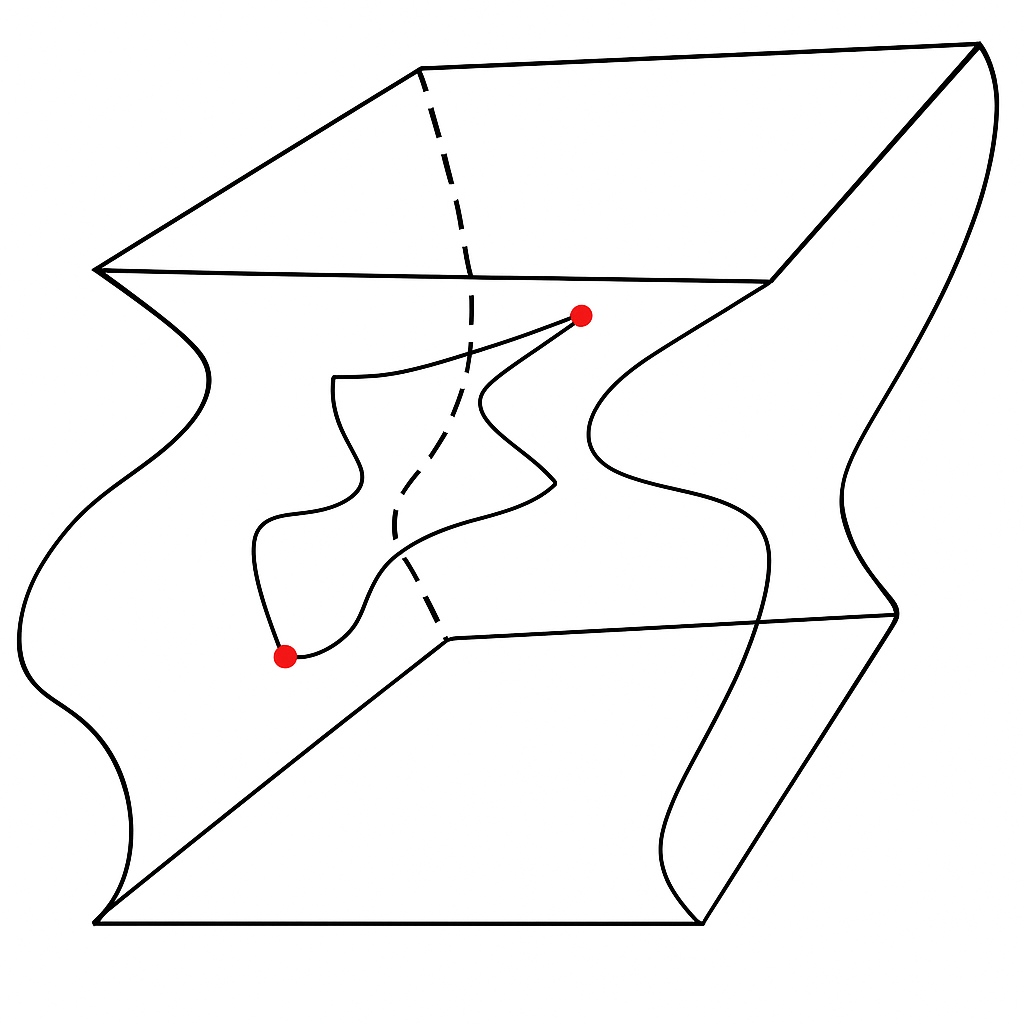
Links in the knowledge graph 1
Deep in the fabric of the cosmos, the equations of physics don’t know which way is past and which is future. Just as a film reel stores frames but needs a projector to give it direction, physicists have found how a ‘projector’—an internal clock—sets the arrow of time in motion without altering the fundamental rules.
🎯 Paradox: time doesn’t flow on its own—it requires an ‘observer’ in the form of a physical clock. Without one, all moments exist at once, like frames on a frozen film reel.
🎬 Just like in ‘Tenet’, where reversed entropy turns time backward, the new work shows that at a fundamental level, motion in either direction is equally valid—until a clock intervenes.
\exp(iS/\hbar)+\exp(-iS/\hbar)
sum of two quantum trajectories—one toward the future and one toward the past; S is the accumulated action, ħ is Planck’s constant