Columpios magnéticos: por qué no llega el orden exprés
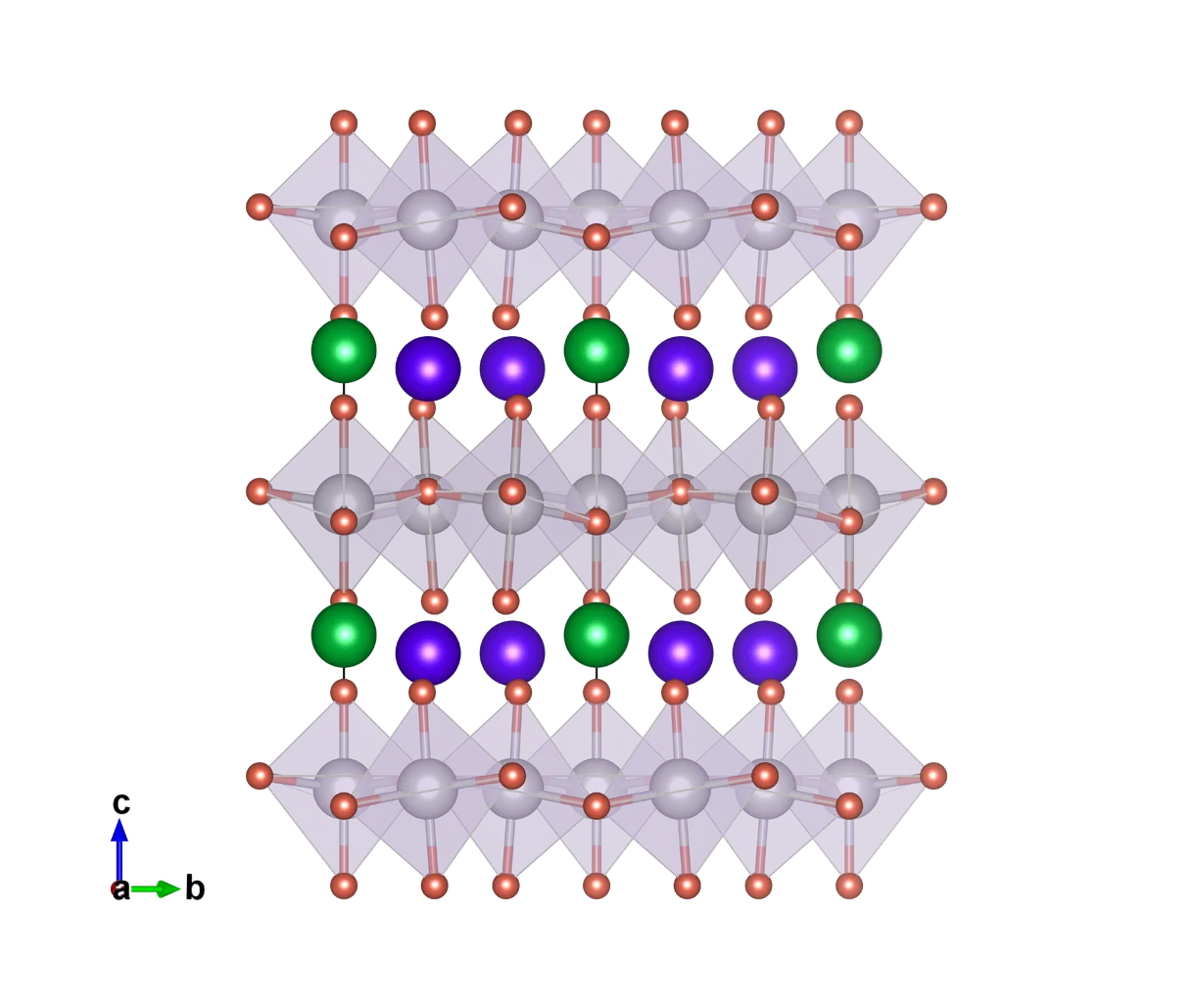
Los átomos magnéticos en un sólido se parecen a las agujas de una brújula: normalmente, al enfriarse, se alinean en una misma dirección, y así surge el magnetismo. Pero en el material TbInO3, las agujas de terbio se asientan en una red triangular donde es imposible complacer a todos los vecinos a la vez. Una aguja quiere apuntar al norte, otra al sur, y al final ninguna logra una posición estable.
Los científicos cultivaron una película finísima de este material y la enfriaron hasta 20 milikelvin, cien veces más frío que la temperatura a la que, según estimaciones simples, las agujas deberían haberse alineado. Incluso con ese frío, el orden no llegó: las agujas seguían oscilando, como un líquido que no se congela en hielo. Para verlo, los físicos usaron resonadores superconductores, dispositivos que captan señales magnéticas débiles de muestras diminutas, como un oído atento escucha un susurro en una habitación silenciosa.
Este resultado es un paso importante hacia la detección del líquido de espín cuántico. En ese estado, las agujas magnéticas no se inmovilizan ni siquiera en el cero absoluto, sino que fluctúan continuamente, formando un estado colectivo entrelazado. Comprender estos materiales podría ayudar a crear nuevas tecnologías cuánticas, donde la información se almacena en movimientos colectivos esquivos y no en partículas individuales.
Resumen original
tal como lo escribieron los autores, en inglés arXiv:2603.14545
Minimizing the energy of a many body system tends to favor order, but classical frustration and quantum fluctuations destabilize that order. The tension between these effects can produce exotic quantum states of matter. Quantum spin liquid (QSL) states emerge in models of localized magnetic moments where the crystal lattice connectivity frustrates ordering, and the exchange interaction of neighboring spins strengthens quantum fluctuations. Experimentally identifying a QSL in a real material is challenging from the lack of an order parameter. Piecing together evidence from varied techniques is necessary for diagnosing the nature of the ground state -- QSL or otherwise -- of a frustrated spin system. In this work, we use coplanar superconducting resonators to probe magnetic excitations in epitaxially grown thin films of a spin liquid candidate TbInO3. Adapting microwave techniques from the field of circuit quantum electrodynamics, we measure responses of these thin films whose volume is too low for applying conventional bulk techniques. In-plane susceptibility extracted from the spin resonance signal indicates extreme frustration of magnetic order down to 20 mK, over two orders of magnitude lower than the Curie-Weiss energy scale. Through a crystal field analysis, we identify the doublet eigenstates comprising the ground state. As a consequence of improper ferroelectricity, Tb moments split into two flavors with distinct g-factors reflecting the local crystal field environment of each site. Spin-orbit coupling, crystal fields, magnetic frustration and improper ferroelectricity distinctively combine to shape the magnetic ground state of TbInO3. This work establishes a measurement technique using superconducting resonators to probe thin films of frustrated magnets, and applies this technique towards building a coherent understanding of the magnetic properties of TbInO3.
La temperatura de 20 milikelvin es 0,02 grados por encima del cero absoluto. Es más frío que el espacio interestelar, donde la temperatura ronda los 2,7 kelvin.