Как телескоп ловит фокус без яркой звезды экспресс
Ночное небо дрожит. Поток тёплого и холодного воздуха колышет картинку звезды, и большой телескоп видит мутное пятно вместо точки. Чтобы вернуть резкость, астрономы зажигают в небе искусственную звезду — лазерный луч, отражённый от слоя атомов натрия на высоте около 90 километров. По её мерцанию зеркало телескопа изгибается сотни раз в секунду, компенсируя дрожь.
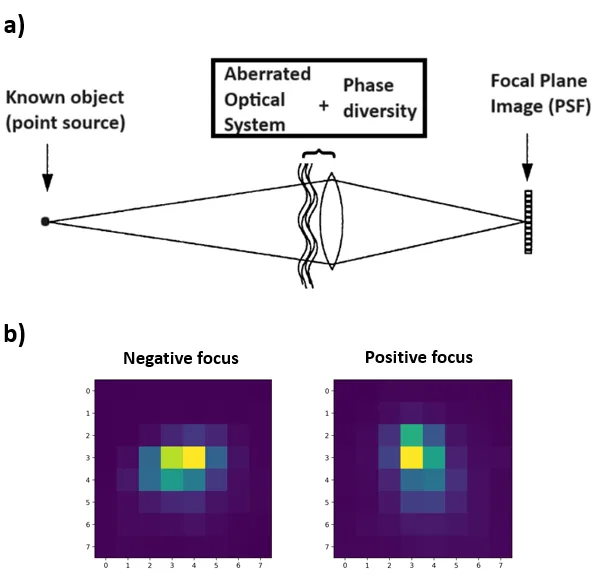
Но у лазерной звезды есть каприз: сам светящийся слой натрия медленно ползёт вверх-вниз, и фокус телескопа уплывает. Раньше для поправки нужна была настоящая звезда рядом — а она есть не всегда. Инженеры на телескопе Кек на Гавайях испытали другой путь: следить за фокусом прямо по снимку с камеры, без второй звезды. Три алгоритма сравнивали, как поваров на кухне: кто точнее, кто быстрее, кто не сломается при слабом сигнале. Победил метод, который восстанавливает форму светового пятна, как мы угадываем монету по её отблеску.
Испытания в небе показали: даже когда воздух бурлил особенно сильно, алгоритм возвращал чёткость.
Теперь у Кека появится больше ночей, когда он видит далёкие галактики резко, а не как сквозь воду. Тот же приём сгодится и для будущих гигантских телескопов с зеркалами в тридцать метров.
Оригинальная аннотация
как её написали авторы, на английском arXiv:2602.15746
Laser guide stars (LGSs) have been deployed for the last 20-30 years in ground-based astronomical telescopes to overcome the limited sky coverage of classical adaptive optics (AO) systems. Unfortunately, slow altitude drifts of the sodium layer compromise focus measurements, generating the so-called slow focus error, and, consequently, a natural guide star (NGS) is needed to compensate for that error. Our goal is to develop and operationalize a focal plane wavefront sensing (FPWFS) technique for slow focus tracking for the Keck I telescope, which can significantly increase sky coverage and allow slow focus tracking at higher frequencies, reducing the lag error. We develop, characterize, and compare three different FPWFS algorithms, namely Gerchberg-Saxton (GS), linearized focal plane technique (LiFT), and Gaussian fit (Gf). These algorithms were studied for the specific purpose of slow focus sensing in the NIR (H and K bands) using numerical simulations and data collected at Keck in 2025 (bench and on-sky). The three algorithms were studied and characterized against different criteria such as linearity, computational costs, and resistance to low signal-to-noise ratio and/or residuals. From the results obtained, the main candidate for an on-sky deployment was GS. On-sky tests showed promising results, with GS successfully compensating for purposely introduced focus errors, even under the presence of high turbulence conditions. This work can also be extrapolated to other existing 8-10 m class telescopes, or even future 30-40 m class telescopes, where the use of FPWFS can significantly improve sky coverage and reduce the lag error.
Слой натрия, который подсвечивает лазер, находится на высоте около 90 км — это выше, чем летают метеоры, но ниже орбиты МКС.