ساعة ألماسية بلا ترمومتر سريع
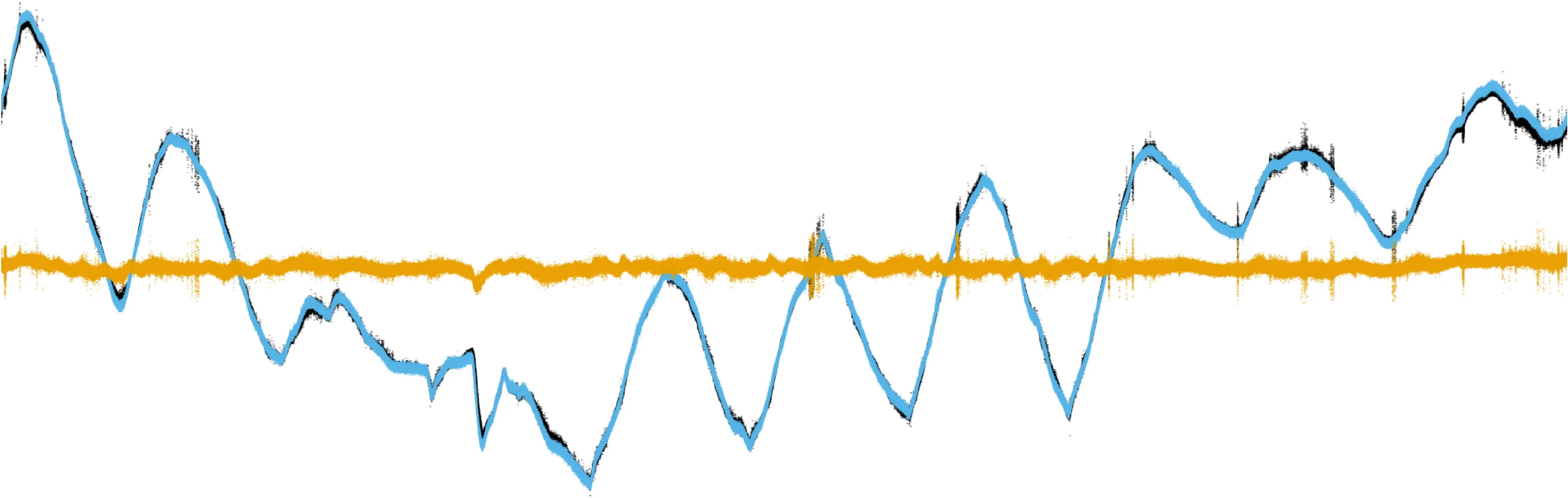
سخّن ساعة كوارتز عادية بعشر درجات، وستبدأ بالتأخر ثوانٍ في اليوم. الساعات الذرية أدق، لكنها تشغل خزانة كاملة. الألماس بعيب صغير — الفراغ النيتروجيني — يعد بدقة الساعات الذرية في حجم حبة رمل. مشكلة واحدة: هذا العيب حساس جداً للحرارة، مثل شوكة رنانة تغيّر نغمتها مع حرارة الهواء.
في العمل الجديد، جعلوا العيب يصدح بصوتين في آنٍ واحد. الصوت الأول إلكتروني، ويعتمد بشدة على الحرارة. والثاني نووي، ولا يكاد يلاحظ الحرارة. إذا قِسنا الاثنين وطرحنا أحدهما من الآخر، يتقلص الاضطراب الحراري مئتي مرة. هذه الحيلة تشبه ما كان يفعله البحّارة قديماً لتحديد خط الطول: مقارنة الوقت المحلي بوقت الميناء، والفرق يعطي الموقع الدقيق.
اختبروا ساعة من هذا الألماس عشرة أيام متتالية في درجة حرارة الغرفة، مقارنةً بساعة ذرية روبيدية. كان استقرار السير أفضل من أي ساعة صلبة أخرى بهذا الحجم. والأهم أن العدو الرئيسي للدقة الآن ليس الحرارة، بل المجالات المغناطيسية الضعيفة وتقلبات قدرة الليزر.
هذه الساعة الألماسية لن تحل محل المعايير الذرية الكبيرة، لكنها قد تدخل في الهواتف الذكية والمسيّرات والأقمار الصناعية، حيث يهم الحجم والمتانة. ألماسة صغيرة لا تخاف الحرارة — خطوة نحو أن يكون الوقت فائق الدقة في متناول اليد دائماً.
الملخص الأصلي
كما كتبه المؤلفون، بالإنجليزية arXiv:2601.00157
Frequency references based on solid state spins promise simplicity, compactness, robustness, multifunctionality, ease of integration, and high densities of emitters. Nitrogen-vacancy (NV) centers in diamond are a natural candidate, but the electronic zero-field splitting exhibits a large fractional temperature dependence, which has precluded its use as a stable clock transition. Here we show that this limitation can be overcome by forming a composite frequency reference that combines measurements of the electronic splitting D with the nuclear quadrupole splitting of the $$^{14}$$N nuclear spin intrinsic to the NV center. We further benchmark this composite approach against alternative strategies for mitigating temperature sensitivity. By implementing a specially designed pulse sequence with an eight-phase control scheme that suppresses pulse imperfections, we interleave measurements of D and Q in a high-density NV ensemble and demonstrate a temperature-compensated composite frequency reference. The stability of this composite diamond clock is characterized over a 10-day period at room temperature through a comparison to a Rb vapor-cell clock, yielding a fractional instability below $$5 \times 10^{-9}$$ for an averaging time of $$\tau = 200$$ s and below $$1 \times 10^{-8}$$ at $$\tau = 2 \times 10^5$$ s, corresponding to measured improvements by a factor of 4 and 200, respectively, over a clock based purely on the single frequency D for the same periods. By characterizing the residual sensitivity to magnetic fields, optical power, and radio-frequency drive amplitudes, we find that temperature is no longer the dominant source of instability. These results establish complementary electron- and nuclear-spin transitions in diamond as a viable route to thermally robust frequency metrology, providing a pathway toward compact, multifunctional solid-state clocks and quantum sensors.
الفراغ النيتروجيني في الألماس حساس لدرجة أنه يستطيع رصد المجال المغناطيسي لإلكترون منفرد على بُعد عشرات النانومترات.