العثور على الماء في صخر مريخي دون كسره سريع
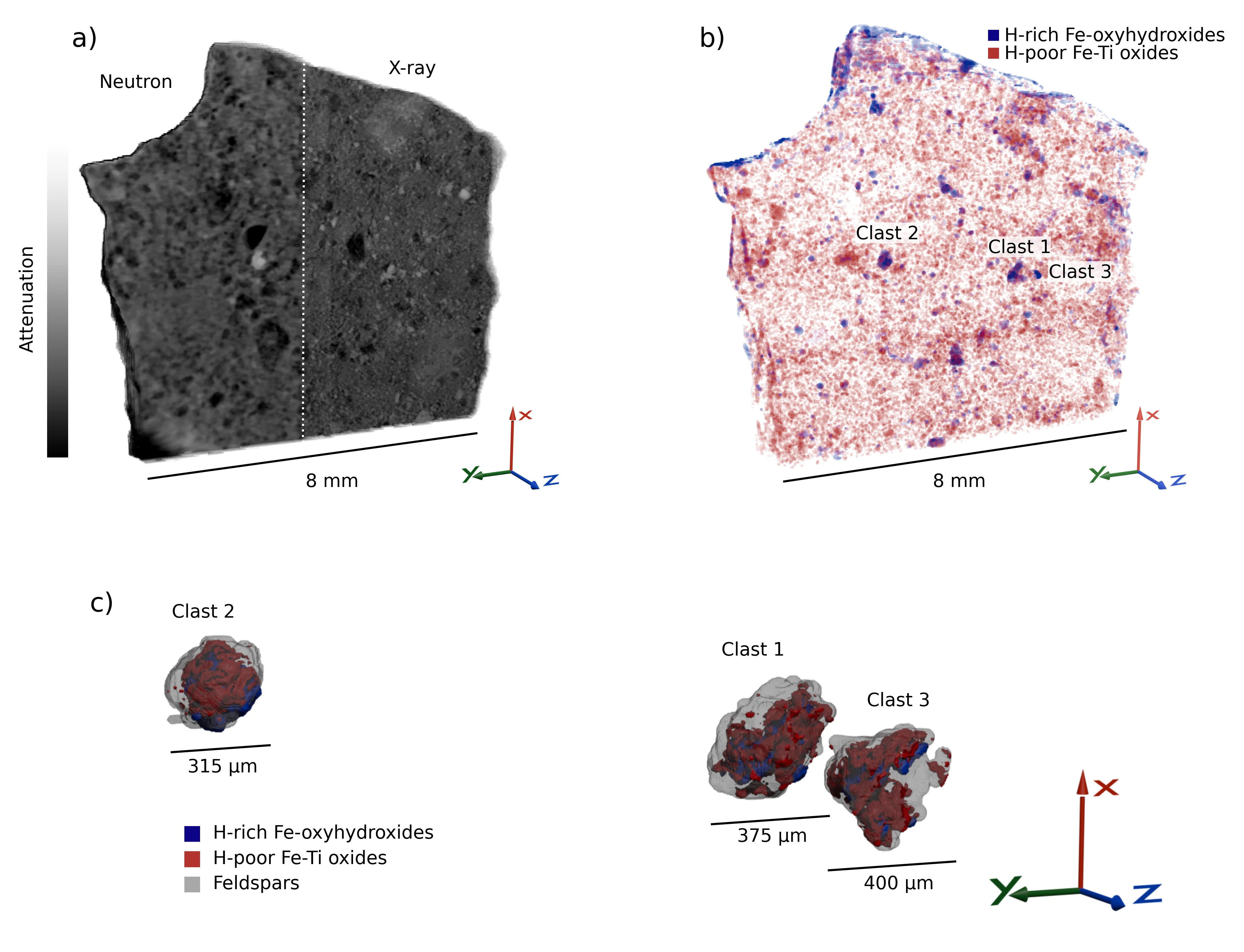
لمعرفة ما إذا كان هناك ماء في صخرة من المريخ دون كسرها، استخدم العلماء التصوير بالنيوترونات والأشعة السينية - على غرار ما يحدث في المستشفيات عند التقاط الصور. تلتقط النيوترونات الهيدروجين، الذي هو أساس الماء، مما يسمح برسم خريطة للرطوبة داخل العينة. في النيزك NWA 7034، وهو قطعة من قشرة المريخ، عُثر على معادن تشبه الصدأ ولكنها مشبعة بالماء. تعمل أكاسيد الحديد هذه مع الهيدروجين كإسفنجة صخرية: امتصت الماء القديم عندما تسرب إلى الحمم المتصلبة. وحتى اليوم، بعد مليارات السنين، تحتفظ بالرطوبة عند درجات حرارة تتجاوز 100 درجة مئوية - الماء محصور ليس فقط على شكل جليد، ولكن أيضًا داخل الصخور ذاتها. تجد عربة 'بيرسيفيرانس' آثارًا مماثلة في فوهة جيزيرو، مما يشير إلى أن المريخ المبكر كان مليئًا بجيوب مائية. ستساعد مثل هذه الطريقة يومًا ما في دراسة عينات المريخ على الأرض دون إتلاف أي جزء منها، والبحث عن أدلة مجهرية على حياة قديمة.
الملخص الأصلي
كما كتبه المؤلفون، بالإنجليزية arXiv:2601.08390
The next great leap in Martian exploration will be the return of samples to Earth. To ensure the maximum scientific return from studying these samples, the development and utilisation of nondestructive analytical techniques are essential to enable early three-dimensional characterisation of their interiors. Neutron computed tomography is a powerful method in this context: it is highly sensitive to hydrogen and complements the more conventional X-ray computed tomography. Because the distribution and nature of hydrous phases are central to understanding the habitability, the climatic and geological evolution, and potential biosignatures of Mars, identifying hydrogenbearing phases in Martian crustal rocks is of particular importance. Using the only Martian crustal material available on Earth, the NWA 7034 meteorite and its pairs, we show that combined neutron and X-ray computed tomography enables non-destructive sample-wide mapping of hydrogen and reveals the distribution and petrographic contexts of hydrous phases. We identify hydrogen-rich iron oxyhydroxides within ancient igneous clasts, forming a macroscopic mineralogical water reservoir within the meteorite. These alteration assemblages closely resemble those observed in samples collected by the Perseverance rover in Jezero crater, where hydrated iron oxyhydroxides are also present. This similarity suggests that such phases may represent a widespread near-surface water reservoir on early Mars.
«لعصر» الماء من هذه الإسفنجة الصخرية، يلزم حرارة تفوق 400 درجة مئوية - وهي حرارة لا تصل إليها سطح المريخ.
مثل بطل رواية «المريخي» الذي يستخرج الماء من تربة المريخ، يجد العلماء رطوبة خفية محبوسة في المعادن.