التوائم الرقمية تعلّم جهاز التصوير المقطعي سريع
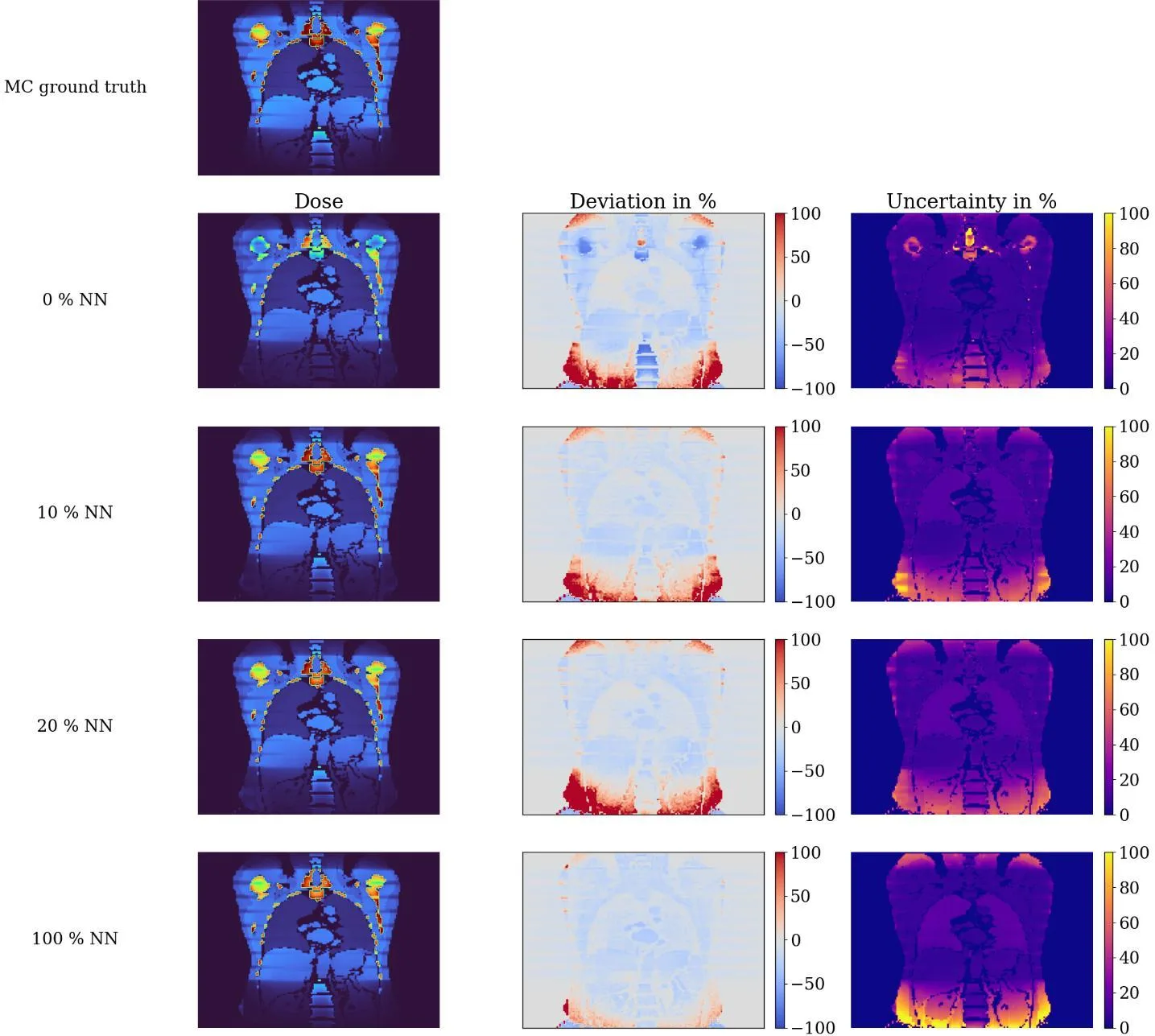
التصوير المقطعي المحوسب يشبه الأشعة السينية التي تلتقط مئات الصور من زوايا مختلفة ثم تجمعها في صورة ثلاثية الأبعاد للجسم. لكن كل صورة تعني جرعة صغيرة من الإشعاع، ويحتاج الأطباء إلى معرفة مقدار ما يتلقاه كل عضو. حاليًا، غالبًا ما يُقدَّر هذا بشكل تقريبي باستخدام جداول متوسطة، وليس بناءً على حالة المريض نفسه.
درّب الباحثون شبكة عصبية على التنبؤ بالجرعة لكل عضو. وللتدريب، نحتاج إلى أمثلة، لكن البيانات الحقيقية قليلة: لا يمكن إخضاع إنسان للإشعاع من أجل تجربة. لذلك، أنشأوا آلاف الأجسام الافتراضية — نماذج حاسوبية (Phantoms) بأحجام أعضاء وأشكال أجسام مختلفة. النموذج الذي دُرب على هذه البيانات الاصطناعية فقط أخطأ في الأعضاء الصغيرة مثل عدسة العين أو الغدة الدرقية.
هذا النهج الهجين يشبه تدريب الطيار: أولاً مئات الساعات على جهاز محاكاة، ثم بعض الرحلات مع مدرب. الأجسام الافتراضية توفر تنوعًا، بينما البيانات الحقيقية تربط النموذج بالواقع. هذا يقلل الحاجة إلى السجلات الطبية الحقيقية ويساعد في جعل قياس الجرعات (Dosimetry) شخصيًا.
الملخص الأصلي
كما كتبه المؤلفون، بالإنجليزية arXiv:2601.09235
Personalized computed tomography (CT) dosimetry has great potential in assessing patient-specific radiation exposure, supporting risk assessment, and optimizing clinical protocols. The aim of this study is to evaluate the potential of synthetic anatomical data for improving machine learning-based personalized computed tomography (CT) dosimetry. It is investigated whether the combination of synthetic human body geometries with real patient data can improve model accuracy and generalization for CT organ dose estimation while maintaining the uncertainty requirements outlined in IAEA TRS-457. Deep learning models for organ dose prediction are trained using datasets with varying proportions of real and synthetic data. Synthetic datasets are generated from computational human phantoms with controlled distributions of organ volumes and body. A dedicated model uncertainty evaluation method is implemented to quantify prediction reliability and verify compliance with TRS-457 accuracy limits. Model performance and uncertainty are compared across different training data compositions, including a model trained solely on real patient data. As baseline validated Monte Carlo simulation is used. Models trained solely on synthetic data show limited predictive accuracy, particularly for small or peripheral organs. Incorporating as little as 10 % real patient data significantly improves both statistical accuracy and uncertainty estimates, achieving a performance comparable to that of real-only models. The hybrid training approach improves robustness across different anatomies while maintaining TRS-457-compliant uncertainty levels (k=2 uncertainty < 20% for adults). The results indicate that the combination of real and synthetic data in combination with a systematic uncertainty assessment supports the development of CT dosimetry models and at the same time reduces the amount of real data required.
لإنشاء النماذج الافتراضية للتدريب، تم توليد أحجام الأعضاء بتباين مضبوط — من صغيرة جدًا إلى كبيرة جدًا — حتى لا يفاجأ النموذج بتنوع الأجسام البشرية.