خشونة السطح التي تحدد مصير الرحلة سريع
أسطوانة حادة الرأس تحلق بست سرعات صوتية — ليست أكثر الأجسام أناقة، لكنها أصبحت البطل الرئيسي لحساب جديد. سطح مثل هذا الجسم لا يكون أملس تمامًا: عند دخول الغلاف الجوي، يحترق الدرع الحراري وتظهر نتوءات وانخفاضات. كيف تحوّل هذه النتوءات التدفق الهادئ إلى اضطراب عاصف، كان يُرى سابقًا فقط في تجارب منفردة وكان يكاد لا يخضع لنمذجة دقيقة. الآن أجرى العلماء لأول مرة تجربة رقمية مفصلة، بوضع صفوف من حبيبات رمل اصطناعية على الأسطوانة — مثل ورق الصنفرة.
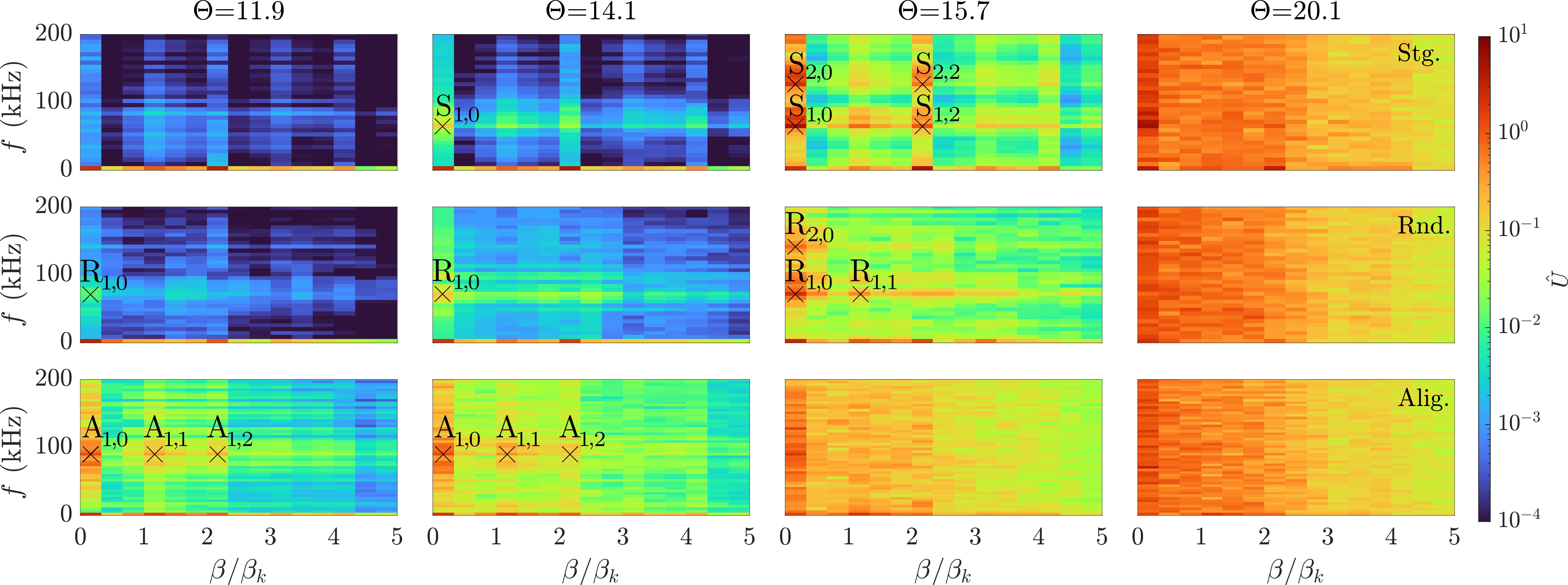
اتضح أن مصير الرحلة يحدده نمط النتوءات. عندما كانت الحبيبات مرتبة في صفوف منتظمة، بدأ الانتقال إلى الاضطراب بخطوط متعرجة — حيث كان التدفق يهز نفسه بنفسه، مثل علم في مهب الريح. أما إذا أزحت الصفوف بنمط رقعة الشطرنج أو وُضعت عشوائيًا، فاستيقظت أولًا موجات تشبه أمواج البحر — كانت تتدحرج على النتوءات وتزداد قوة. كلتا الآليتين في النهاية ولّدتا دوامات تشبه دبابيس الشعر، وانفصل التدفق إلى فوضى.
للمهندسين هذا يعني: بتغيير ترتيب النتوءات على الدرع الحراري، يمكن تأخير أو تقريب لحظة الانتقال إلى الاضطراب. وهذا يحدد مدى شدة تسخين المركبة عند دخول الغلاف الجوي. ربما يومًا ما سيُصنع سطح المركبات الفضائية ليس أملس تمامًا، بل بنمط ذكي يبقي التدفق هادئًا لأطول فترة ممكنة.
الملخص الأصلي
كما كتبه المؤلفون، بالإنجليزية arXiv:2602.03617
Surface roughness significantly impacts transition to turbulence, especially over high-speed, blunt geometries where surface ablation is necessary to mitigate heat loads during atmospheric entry. Inspired by sand-grain roughness experiments performed by Hollis (2017), we perform the first direct numerical simulation (DNS) of a blunt cylinder in Mach 6 cross-flow with roughness elements distributed along the entire surface. Such simulations aimed to uncover the precise means by which laminar-turbulent transition occurs given the limited measurements attainable from experiments and non-existent high-fidelity simulations. Element heights were held fixed at approximately 35% boundary layer thickness, while the relative phasing between streamwise rows was varied. All configurations exhibited convective instabilities driving the transition process, with the mode type being set by the roughness configuration. A fundamental sinuous streak mode dominated the aligned roughness element case, whereas both the staggered and randomly phased cases saw 2D T-S waves dominating. These instability waves, when grown to sufficient amplitude, triggered the steady streaks seeded by the underlying roughness pattern to begin forming hairpin vortices and breakdown occurred soon thereafter. The roughness arrangement was found to dramatically influence the degree to which the waves were destabilised, as well as the strength of the underlying steady streaks, thereby combining to dictate the position along the surface where LTT occurred. Finally, exogeneous forcing was not required for the T-S dominated cases as the acoustics generated by the turbulence in the subsonic flow excited T-S waves on the other side - a feedback mechanism hitherto unknown.
كان ارتفاع النتوءات في الحساب حوالي ثلث سمك الطبقة الحدودية فقط — مثل نتوءات بجزء من المليمتر على سطح كرة الجولف. هذه التفاصيل الصغيرة جدًا هي التي تحدد ما إذا كان التدفق سيصبح مضطربًا.
في فيلم «المريخي»، يبدو الدرع الحراري لسفينة «هيرميس» أملس تمامًا، لكن في الواقع سطحه بعد دخول الغلاف الجوي مغطى بآلاف النتوءات — وهي التي قد تتحكم في الانتقال إلى الاضطراب.