كيف تولد المذنبات ذات الرأسين سريع
الجسم الجليدي أروكوث يشبه رجل الثلج: كرتان ملتصقتان ببعضهما. هناك العديد من هذه الأجسام ذات الرأسين خلف مدار نبتون، في حزام كايبر. لفترة طويلة، كان يُعتقد أنها تنشأ من تصادم بطيء بين جسمين منفصلين.
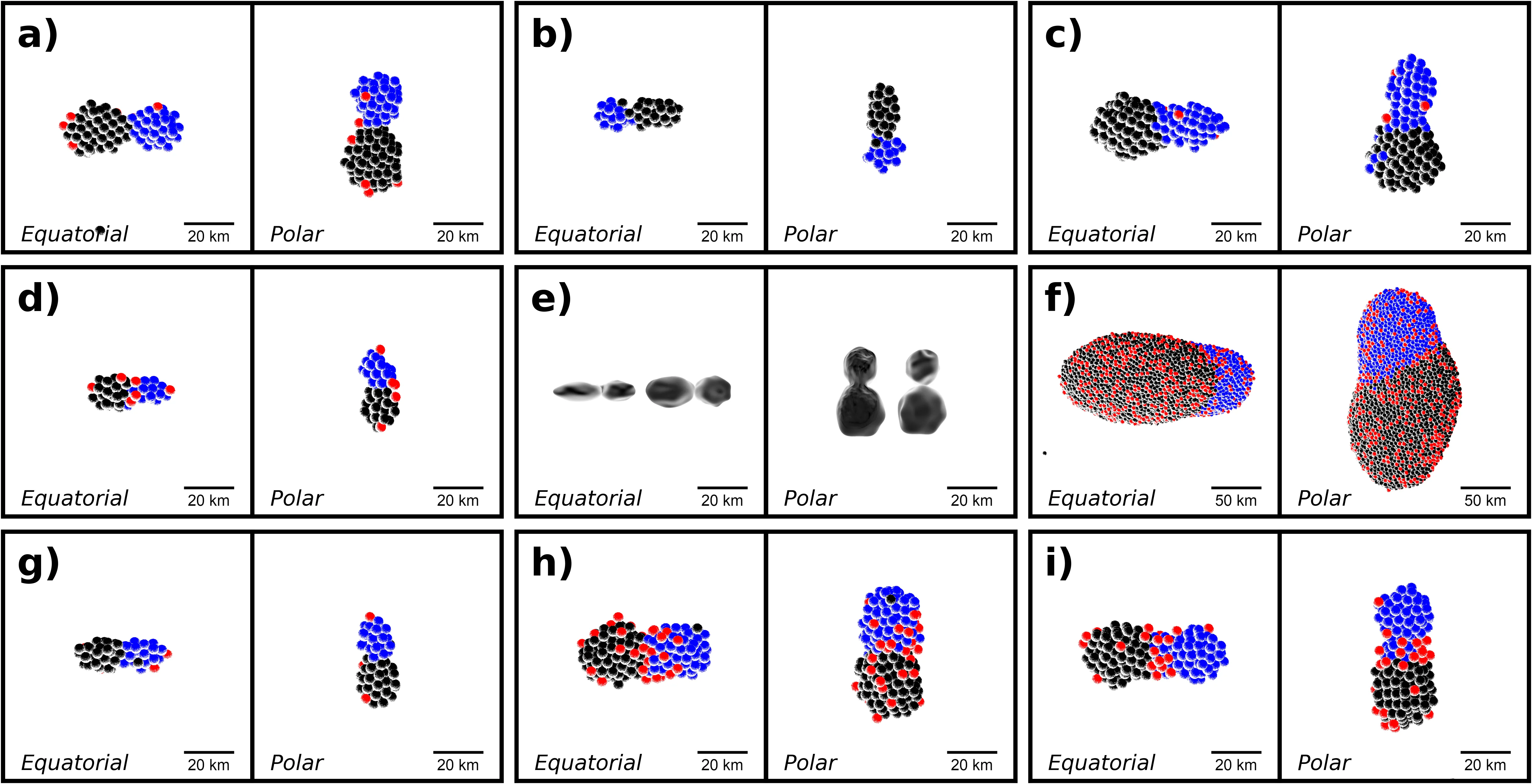
النمذجة الجديدة تُظهر مسارًا مختلفًا. سحابة من الحصى الصغيرة حول الشمس الفتية تنضغط بفعل جاذبيتها الذاتية. لا تتكتل الحصى في كرة واحدة، بل في كتلتين متجاورتين تلتحمان معًا بلطف. هكذا يولد رجل الثلج دون أي اصطدام.
تكرر الحسابات شكل أروكوث والأجسام ذات الرأسين الأخرى في حزام كايبر. إذن، شكلها ليس مصادفة، بل سجل لكيفية تجمع الأجنة الكوكبية الأولى.
الملخص الأصلي
كما كتبه المؤلفون، بالإنجليزية arXiv:2602.16056
Bilobate contact binaries comprise a significant fraction of the relict Kuiper Belt, which includes the exemplary contact binary (486958) Arrokoth. The surfaces of its lobes contain similar amounts of highly volatile chemical species and few craters, indicating formation in a homogeneous and gentle environment. Arrokoth's bilobate shape was initially hypothesized to have formed via the direct gravitational collapse of a pebble cloud in the solar system's protoplanetary disk. However, alternative hypotheses have proposed that Arrokoth may be the result of binary planetesimal formation and the subsequent dynamical evolution of the binary components into contact through external perturbations over long timescales. Here, we show that contact binary planetesimals like Arrokoth can form directly from the gravitational collapse of pebble clouds. We used a soft-sphere discrete element method (SSDEM) to discover that planetesimals form a wide variety of shapes, including bilobate contact binaries. This method creates planetesimals as particle-aggregates with particles resting upon each other's surfaces via mutual surface penetration. The formation of contact binaries in our simulations strengthens the hypothesis that Arrokoth, and perhaps many other contact binaries in the Kuiper Belt, formed directly as bilobate objects from gravitational collapse, and so their shapes and surfaces record the era of planet formation.
نصفا أروكوث لهما تركيب جليدي متطابق تقريبًا — وكأنهما صُنعا من عجينة واحدة.
في رواية «موعد مع راما» لآرثر كلارك، السفينة الفضائية الغريبة لها أيضًا شكل أسطوانتين متصلتين.