كيف تتدفق أيونات الهيدروجين عبر بلورة صلبة سريع
في بلورة صلبة تشبه كعكة طبقات من ذرات اللانثانم والأكسجين والهيدروجين، لا تنقل الكهرباء الإلكترونات، بل أيونات الهيدروجين نفسها. عادةً، يستقر الأيون في البلورة داخل خليته، كحبة بازلاء في قرنها، ولا يقفز إلا نادرًا إلى خلية مجاورة فارغة. لكن في هذه المادة، الأمر مختلف.
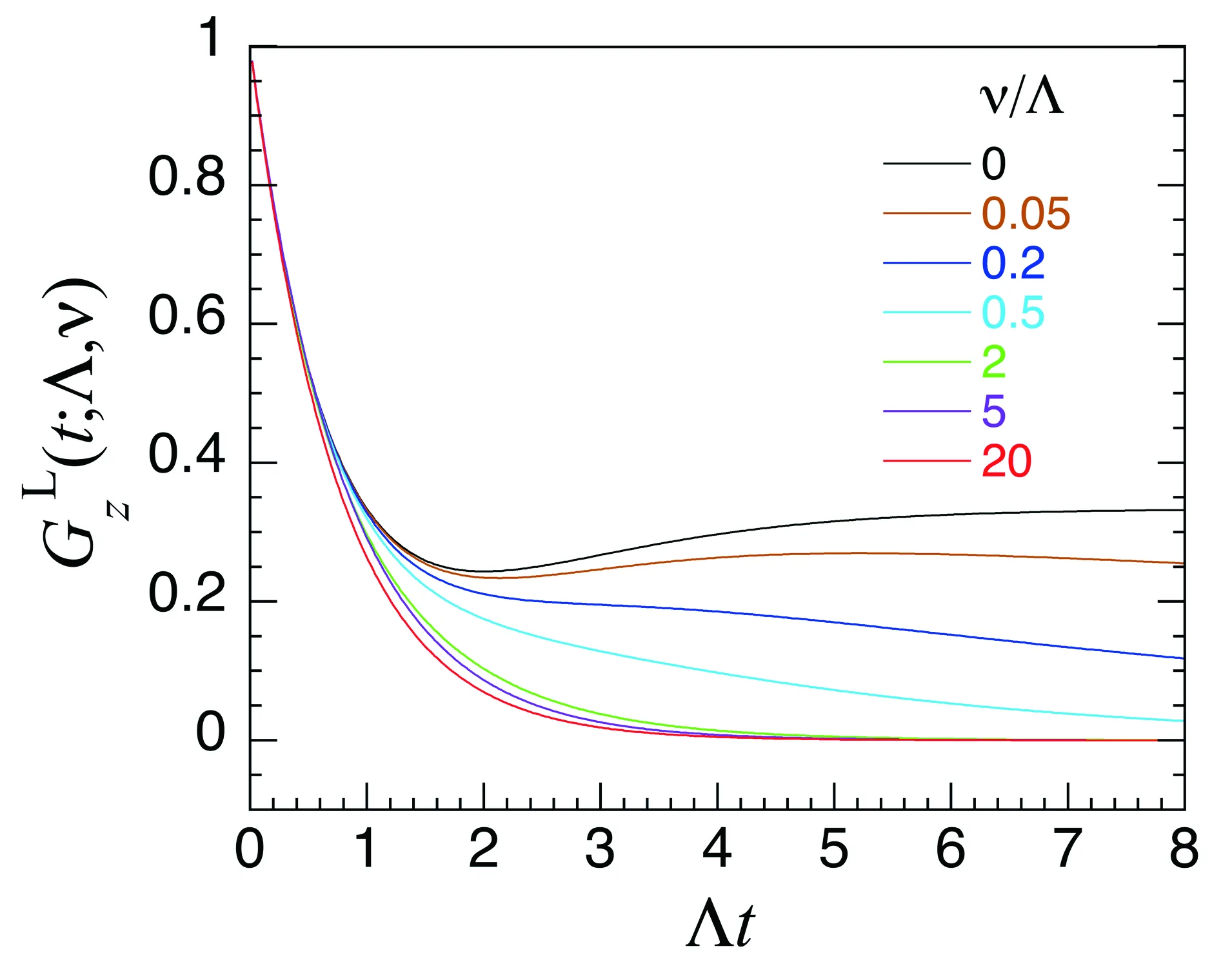
قام الفيزيائيون بتشعيع البلورة بجسيمات دون ذرية — الميونات — التي احتلت مواقع بين الذرات و«استشعرت» حركة الجيران. واتضح أنه عند حوالي 160 كلفن (أي نحو 113 درجة مئوية تحت الصفر)، تبدأ أيونات الهيدروجين بالتحرك بتناسق، كجزيئات في عسل كثيف. وتعتمد قفزاتها على وجود مواقع شاغرة قريبة: لا خلية فارغة، لا قفزة.
هذا التناقض قاد العلماء إلى فكرة أن أيونات الهيدروجين عند التسخين تتوقف عن التصرف كجسيمات منفردة وتتحول إلى ما يشبه سائلًا لزجًا «يتجمد» عند التبريد، كالزجاج. هذا السلوك يفسر لماذا توصل البلورة التيار بأيونات الهيدروجين بهذه الكفاءة.
الآن أصبح فهمنا أوضح لكيفية عمل الإلكتروليتات الصلبة المحتوية على الهيدروجين. وإذا تمكنا من التحكم في هذا «السائل» داخل البلورة، يمكننا صنع بطاريات وخلايا وقود تعمل بشكل أسرع وأكثر موثوقية.
الملخص الأصلي
كما كتبه المؤلفون، بالإنجليزية arXiv:2603.00852
We performed muon spin rotation and relaxation ($$\mu$$SR) experiments to investigate the microscopic mechanism behind the high ionic conductivity ($$\sigma$$) exhibited by hydride (H$$^-$$) ions in lanthanum hydroxide LaH$$_{3-2x}$$O$$_x$$. The $$\mu$$SR spectra observed at 5--300 K in a sample with $$x\approx0.25$$ consist primarily of two components which are attributed to muons occupying tetrahedral (Tet) and octahedral (Oct) sites common to H$$^-$$. The spectra also indicate that muons at the Oct sites (Mu$$_{\rm O}$$) appear nearly stationary in the time scale of $$\mu$$SR ($$\sim$$10$$^{-5}$$ s), whereas those at the Tet sites (Mu$$_{\rm T}$$) are subject to the fluctuating local fields. The cusp-like peak in the fluctuation rate around 160 K and the decrease in linewidth at higher temperatures probed by Mu$$_{\rm T}$$ suggest that the jump motion of both Mu$$_{\rm T}$$ (via the vacant Oct sites) and surrounding Oct-site H$$^-$$ contributes to spin relaxation and that the fluctuation frequency is widely distributed. These results indicate that the implanted Mu behave as Mu$$^-$$ and that the jump motion of Mu$$^-$$/H$$^-$$ is restricted by the availability of nearby vacant sites. On the other hand, the activation energy for the jump is estimated to be 0.11(3) eV, which is significantly different from $$\sim$$1.3 eV evaluated from the temperature dependence of $$\sigma$$ at high temperatures ($$\gtrsim400$$ K). In our attempt to resolve this discrepancy, we discuss problems inherent in interpreting $$\sigma$$ using the Arrhenius equation, and demonstrate that the behavior of H$$^-$$ ions can be better explained as a viscous fluid exhibiting a glass transition.
الميون الذي استُخدم «لإضاءة» البلورة يعيش لمدة جزء من مليونين من الثانية فقط، لكنه في هذا الوقت القصير يتمكن من إخبارنا عن حركة الأيونات المجاورة.
في رواية آرثر كلارك «موعد مع راما»، تستخدم سفينة فضائية غريبة مواد صلبة ذات سيولة داخلية غير عادية — وهو ما يشبه إلى حد ما هذه البلورة.